

Our Verdict
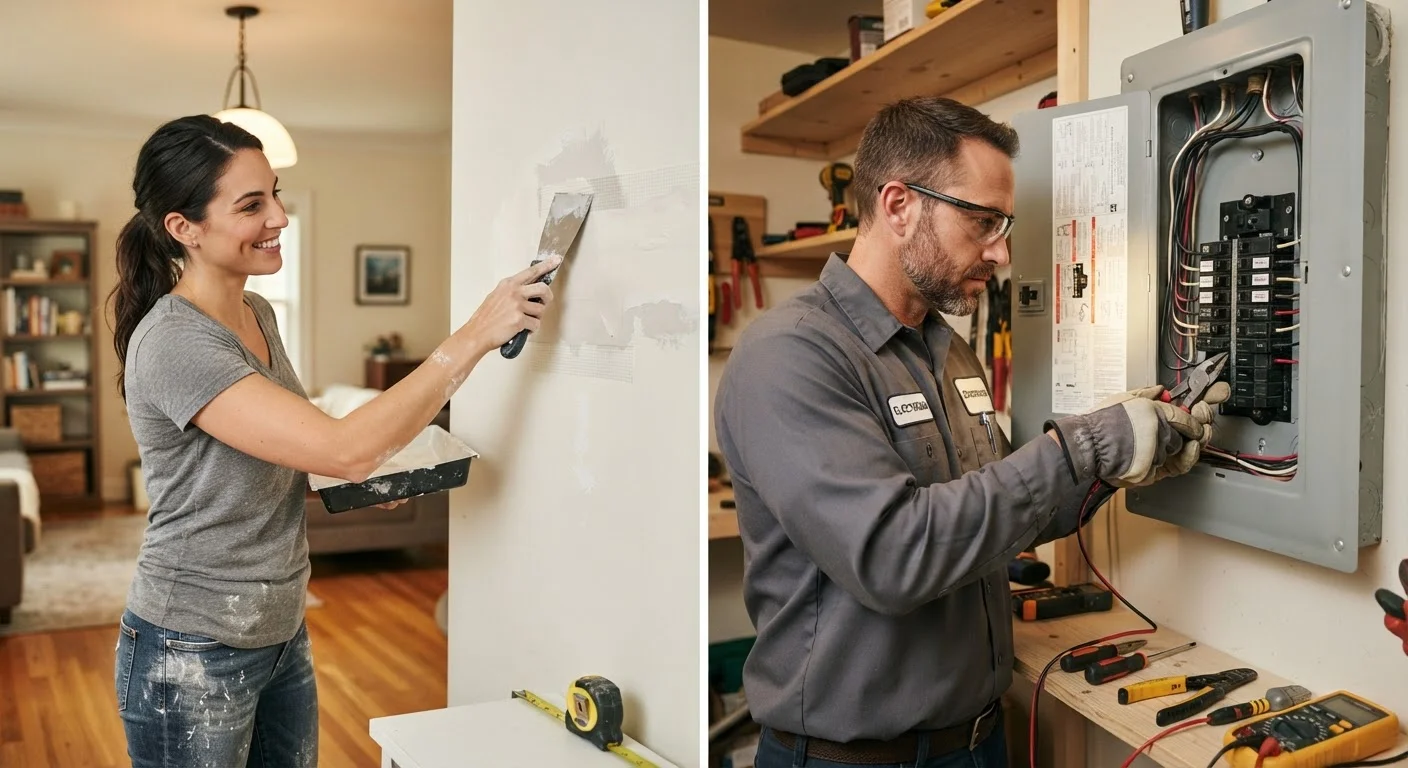
Most homeowners and renters can confidently handle low-stakes maintenance tasks like patching small holes, unclogging drains, or sealing drafts. But work that touches electrical systems, gas lines, load-bearing structures, or requires a municipal permit is firmly in professional territory — not because of skill alone, but because of safety codes, liability, and insurance implications that exist regardless of how handy you are.
| Best for | Recommended |
|---|---|
| Renters and new owners comfortable with basic tools | DIY |
| Anything involving electrical panels, gas lines, or structural elements | Licensed Professional |
| Work requiring permits or inspections | Licensed Professional |
| Cosmetic fixes like painting, caulking, or minor patching | DIY |
Why the DIY vs. Pro Decision Matters More Than You Think
Tackling a home repair yourself can feel empowering — and often it genuinely is. But the stakes aren't the same for every task. Painting a wall wrong costs you an afternoon. Wiring a circuit wrong can start a fire. Understanding that difference before you pick up a tool is the whole game.
This isn't about discouraging hands-on learning. It's about recognizing that certain repairs carry safety, legal, and financial consequences that exist regardless of how confident or capable you feel. For renters, there's an additional layer: many repairs aren't yours to make at all. See our guide on who is responsible for what repairs before you touch anything in a rental.
| DIY | Licensed Professional | |
|---|---|---|
| Typical cost | Materials only; labor is your time | Labor + materials; higher upfront cost |
| Permit required | Rarely for minor repairs | Often required for regulated work |
| Insurance implications | Unpermitted work may void coverage | Licensed work typically satisfies insurer requirements |
| Safety risk | Low for cosmetic/maintenance tasks | Required for electrical, gas, structural work |
| Skill level needed | Basic to intermediate for most tasks | Trade certification or license required |
| Resale / inspection impact | Unpermitted work can flag on inspection | Permitted work is documented and transferable |
What DIY Actually Makes Sense
A wide range of maintenance tasks are genuinely appropriate for a non-professional — provided you're working safely and within your abilities. These tend to share a few characteristics: they're cosmetic or low-risk, they don't require a permit, and a mistake is recoverable without endangering anyone.
- Patching small drywall holes (nail holes, minor dings)
- Unclogging drains using a plunger or drain snake — see our guide to clearing slow drains safely
- Sealing drafts with caulk or weatherstripping — the right method depends on the gap type
- Replacing light fixtures or outlet covers (with power off at the breaker — not panel-level wiring)
- Touching up paint, regrouting tile, or replacing a showerhead
- Basic yard and exterior upkeep like gutter cleaning and weatherproofing decks
Start With a Honest Skill Assessment
Before starting any repair, ask yourself: Have I done this before, or watched it done step-by-step? Do I have the right tools — not improvised substitutes? Can I stop midway if something goes wrong without making it worse? If the honest answer to any of these is no, that's useful information, not a failure.
If you're a new homeowner building these habits from the start, the first-year homeowner maintenance guide outlines which tasks matter most and when to do them.
Where You Must Call a Professional
Some categories of work are off-limits for DIY — not as a suggestion, but as a matter of safety law and insurance. These include:
- Electrical panel work, new circuit runs, or rewiring — requires a licensed electrician and typically a permit and inspection
- Gas line connections, repairs, or appliance hookups — licensed plumber or gas fitter required; errors can be fatal
- Structural modifications — removing walls (especially load-bearing), adding rooms, or altering the roofline
- Main plumbing line work — connections to municipal supply or sewer lines require licensed plumbers in most jurisdictions
- HVAC installation or major repairs — refrigerant handling requires EPA certification; improper installs void warranties
Permits Exist for Your Protection
Skipping a required permit isn't just a technicality — it can void your homeowner's insurance policy for claims related to that work, create legal liability if someone is injured, and trigger costly correction requirements when you sell. Always check with your local building department before beginning work that may be regulated.
It's also worth noting that the tasks most often deferred by new homeowners — like ignoring a slow roof leak or a flickering breaker — frequently escalate into exactly the kind of professional-only work described above.
~35%
DIY home repairs that result in a follow-up pro call
Industry estimates suggest roughly a third of DIY repair attempts require professional correction, often at greater cost than the original fix would have been.
$1,000–$5,000+
Typical cost of unpermitted work corrections
Homeowners who sell a property with unpermitted improvements may be required to bring the work up to code, with remediation costs ranging from hundreds to thousands of dollars.
The Hidden Costs of Getting It Wrong
The calculation isn't just labor cost versus DIY savings. Factor in:
- Tool investment
- A one-time repair requiring $150 in tools you'll rarely use again may cost more than hiring someone.
- Insurance and resale risk
- Unpermitted work can surface during a home inspection or insurance claim at exactly the wrong moment.
- Time and error correction
- A botched repair often costs more to fix than the original problem would have. This is especially true for tile, drywall finishing, and plumbing.
For renters, unauthorized repairs can result in losing your security deposit or being held liable for damages. Review our guide to handling maintenance requests properly to understand your rights and obligations before acting.
Home maintenance decisions get easier with experience, but they always benefit from honest judgment. The goal isn't to avoid DIY — it's to do it where it genuinely serves you, and to recognize the line before you've already crossed it. For a broader look at where conventional wisdom leads homeowners astray, see our piece on home maintenance myths that cost money.
The content provided on our blog site traverses numerous categories, offering readers valuable and practical information. Readers can use the editorial team’s research and data to gain more insights into their topics of interest. However, they are requested not to treat the articles as conclusive. The website team cannot be held responsible for differences in data or inaccuracies found across other platforms. Please also note that the site might also miss out on various schemes and offers available that the readers may find more beneficial than the ones we cover.