

Our Verdict
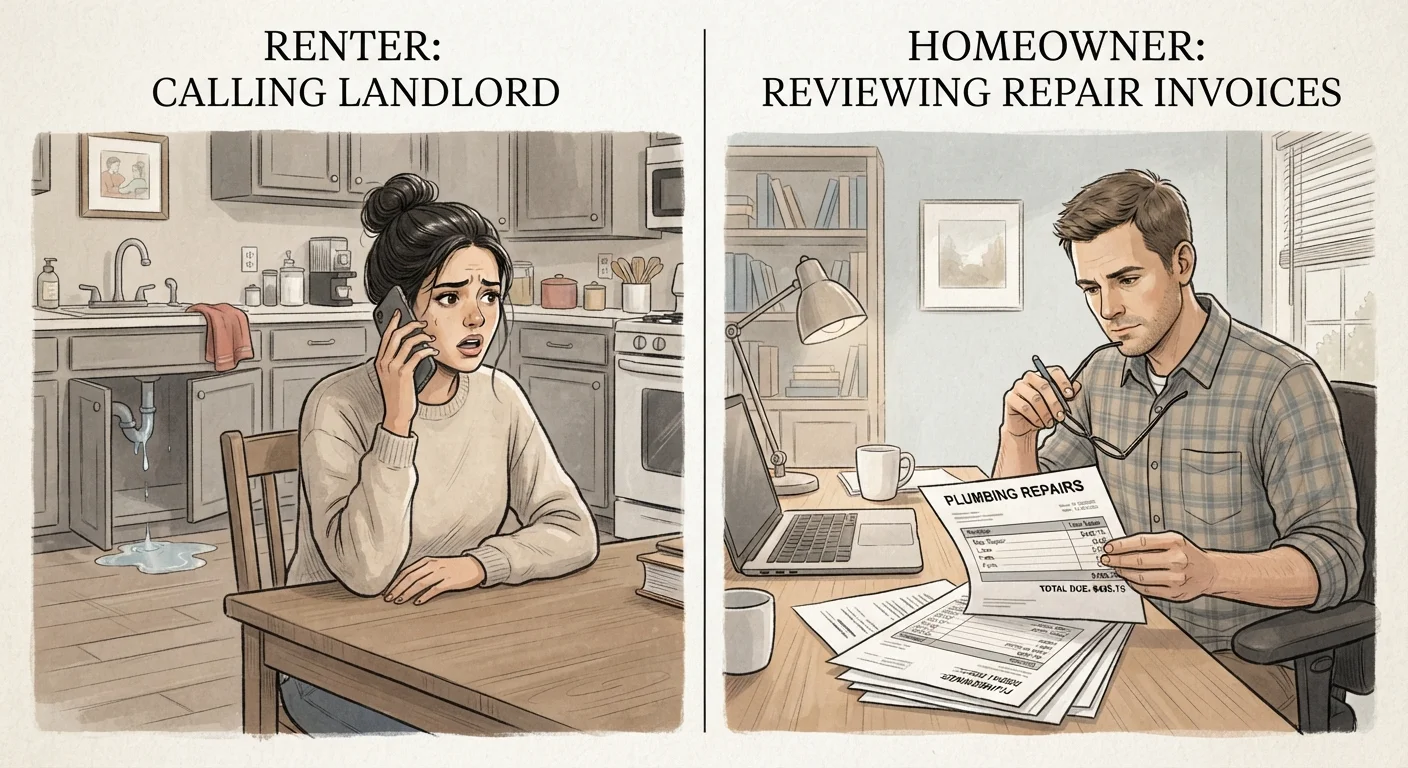
Renters benefit from landlord-covered major repairs but must maintain the unit and report issues promptly to avoid liability. Homeowners have full control but absorb every repair cost themselves. Understanding your specific obligations — and getting them in writing — is the single most important step regardless of which side you're on.
| Best for | Recommended |
|---|---|
| Those who want predictable housing costs and fewer repair surprises | Renting |
| Those who want full control over their living space and long-term investment | Owning |
| Anyone navigating a dispute over who pays for a specific repair | Lease or purchase agreement review |
The Core Principle: Habitability vs. Ownership
The dividing line between renter and owner responsibilities comes down to one legal concept: the implied warranty of habitability. In most U.S. states, landlords are legally required to keep rental properties in a livable condition. That means functioning plumbing, adequate heat, a weathertight structure, and freedom from serious health hazards like mold or pest infestations.
Homeowners, by contrast, have no such safety net. When you own, every system failure — from a cracked foundation to a failing water heater — lands on your to-do list and your budget. The upside is full decision-making authority. The downside is full financial exposure.
For a broader look at what these two paths actually cost over time, see the true financial picture of owning vs. renting.
| Responsibility Area | Renter | Homeowner | |
|---|---|---|---|
| Structural repairs (roof, walls) | Landlord's responsibility | Owner's responsibility | |
| Plumbing & electrical systems | Landlord's responsibility | Owner's responsibility | |
| HVAC maintenance | Landlord (typically) | Owner's responsibility | |
| Damage caused by tenant | Renter pays | Owner pays (self-inflicted) | |
| Appliance replacement | Landlord (if provided) | Owner's responsibility | |
| Routine cleaning & upkeep | Renter's responsibility | Owner's responsibility | |
| Code compliance for renovations | Landlord's responsibility | Owner's responsibility | |
| Pest control | Landlord (unless tenant-caused) | Owner's responsibility |
What Landlords Are Typically Responsible For
Landlord obligations vary by state, but as a general rule, they cover:
- Structural integrity — roof, walls, floors, and foundation
- Plumbing systems — pipes, water heaters, and sewage
- Heating and cooling — central HVAC or required heating systems
- Electrical systems — wiring, panels, and outlets up to code
- Common area maintenance — hallways, stairwells, and exterior lighting
- Pest control — unless the infestation was caused by the tenant's behavior
Landlords must also address repairs within a reasonable timeframe after being notified — typically in writing. If a landlord fails to act, many states allow tenants to pursue remedies such as rent withholding or repair-and-deduct (subject to strict legal conditions). Learn how to report problems correctly in our guide on handling maintenance requests the right way.
Always Notify Your Landlord in Writing
Even if you mention a repair verbally, follow up with a text or email that summarizes the issue and the date you reported it. This creates a timestamped record that protects you if the repair goes unaddressed or a dispute arises later. Some states require written notice before tenants can pursue legal remedies for unresolved repairs.
What Renters Are Typically Responsible For
Renters are not off the hook entirely. Standard renter obligations include:
- Keeping the unit clean and free of conditions that attract pests
- Replacing light bulbs and smoke detector batteries
- Reporting maintenance issues promptly — delays that worsen damage can shift liability
- Repairing or paying for damage caused by the renter, guests, or pets
- Basic appliance upkeep, such as cleaning refrigerator coils or dryer lint traps, if specified in the lease
Importantly, if a renter causes damage — even accidentally — the landlord can deduct repair costs from the security deposit or pursue additional compensation. The distinction between normal wear and tear (landlord's responsibility) and tenant-caused damage (renter's responsibility) is one of the most contested areas in landlord-tenant disputes.
If you share a unit, maintenance responsibility can get complicated. Our guide on renting with roommates and shared responsibility covers how liability is typically divided.
What Homeowners Must Handle Alone
Once you own, there is no landlord to call. Homeowners are responsible for every system and surface, including:
- All structural maintenance — roof replacement, foundation repair, siding
- HVAC servicing and replacement
- Plumbing and electrical work (which often requires licensed professionals and permits)
- Appliance repair and replacement
- Exterior upkeep — gutters, driveways, landscaping
- Code compliance for any renovation or addition
Most financial advisors suggest budgeting roughly 1–2% of your home's value annually for maintenance, though actual costs vary significantly by home age, location, and condition. Certain deferred tasks carry outsized consequences — see the maintenance tasks new homeowners consistently put off for a breakdown of what tends to backfire.
Before attempting any repair yourself, consider the risk level. Electrical, gas, and structural work typically require licensed contractors and permits. Our guide to DIY vs. hiring a professional can help you decide when to call in help.
Don't Skip Permits on Major Home Repairs
Unpermitted electrical, structural, or plumbing work can void your homeowner's insurance coverage, create liability during resale, and expose you to fines. Many jurisdictions require licensed contractors for specific categories of work. Always check your local building department requirements before starting significant repairs or renovations.
What to Put in Writing — and Why It Matters
Verbal agreements about repairs are notoriously difficult to enforce. Whether you rent or own, documentation is your best protection:
- Renters: Document the unit's condition at move-in with dated photos. Submit all repair requests in writing — text or email creates a paper trail. Keep copies of all communications.
- Homeowners: Keep records of all repairs, contractor invoices, permits, and warranties. This protects you during resale and in insurance claims.
Lease agreements can also modify default responsibilities. A landlord might require tenants to handle lawn care or minor appliance maintenance — provisions that are generally enforceable if clearly stated. Read every clause before signing. For a broader foundation on navigating rental agreements, the Renting Basics hub is a solid starting point.
Finally, consider renter's insurance if you rent — it covers your personal belongings and liability, not the structure itself, but that distinction matters when something goes wrong.
The content provided on our blog site traverses numerous categories, offering readers valuable and practical information. Readers can use the editorial team’s research and data to gain more insights into their topics of interest. However, they are requested not to treat the articles as conclusive. The website team cannot be held responsible for differences in data or inaccuracies found across other platforms. Please also note that the site might also miss out on various schemes and offers available that the readers may find more beneficial than the ones we cover.