

Why Deferral Is the Default — and Why It's Costly
First-time homeowners are frequently overwhelmed. Between mortgage payments, moving costs, and learning how everything in a new house works, routine upkeep can feel like a low-priority item. The problem is that most home systems are designed to be maintained on a schedule — skip that schedule and the system degrades quietly, often invisibly, until it fails in a way that's far more disruptive and expensive than the original task would have been.
The pattern is well-documented: a task that costs a few dollars and an hour of attention gets deferred for a season, then another, until a small issue becomes a structural or mechanical failure. Our first-year homeowner maintenance guide walks through the tasks that matter most in the early months — many of which new owners routinely skip.
Understanding why these deferrals backfire is the first step toward building better habits. Below are the tasks new homeowners most consistently delay, and what the consequences actually look like.
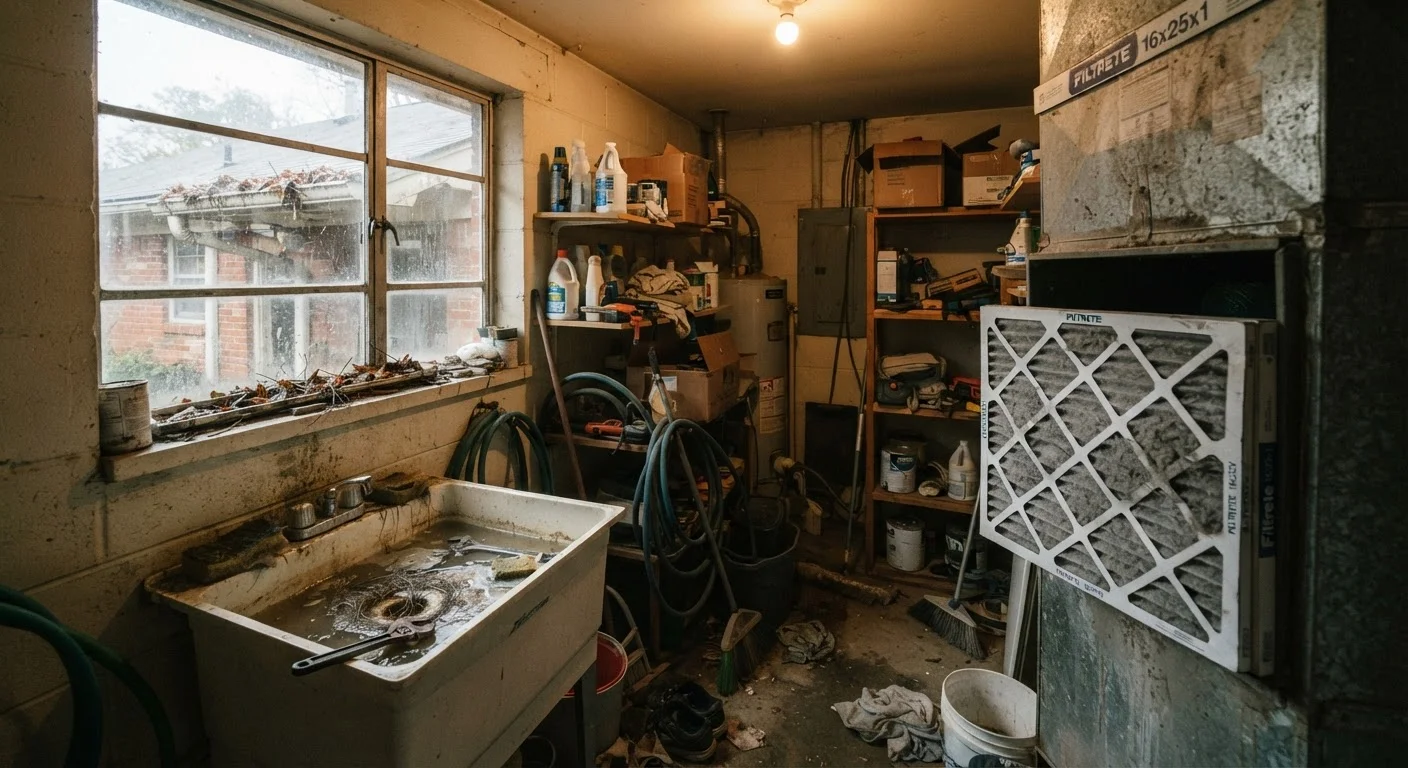
Ignoring HVAC filter replacements for months at a time.
Why it happens: The filter is out of sight and there's no immediate symptom when it gets dirty, so it's easy to forget — especially when you don't have a set schedule.
Letting gutters go uncleaned through fall and winter.
Why it happens: Gutters look fine from the ground and climbing a ladder isn't appealing, so the task gets pushed until spring — by which time water damage may already be underway.
Never testing or replacing smoke and carbon monoxide detector batteries.
Why it happens: Detectors feel like set-it-and-forget-it devices, and the low-battery chirp is easy to silence and then forget about entirely.
Ignoring slow drains until the pipe fully clogs or backs up.
Why it happens: A slow drain still drains, so it doesn't feel urgent. Most people treat it as a minor nuisance rather than an early warning sign.
Skipping caulk and grout inspection in bathrooms and kitchens.
Why it happens: Small cracks or gaps in caulk don't look serious, and re-caulking seems like a cosmetic job rather than a structural one.
Never flushing or inspecting the water heater.
Why it happens: Water heaters work silently in the background and most homeowners don't know they require periodic maintenance until the unit fails.
The Financial Reality of Deferred Maintenance
The math on deferred maintenance is rarely favorable. A clogged gutter that costs almost nothing to clean can lead to fascia rot, foundation water intrusion, or basement flooding — repairs that can run into the thousands. An HVAC filter that costs a few dollars to replace, when left unchanged for a year, forces the system to overwork, shortening the life of a unit that might cost several thousand dollars to replace. To understand how your heating and cooling system actually works, see our explainer on HVAC filters, coils, and vents.
1%–4%
Annual home value recommended for maintenance
A commonly cited rule of thumb among housing experts suggests setting aside 1%–4% of your home's value annually to cover expected maintenance and repairs.
3x
Cost multiplier for ignored minor repairs
Industry estimates suggest that deferred maintenance issues often cost three times more to fix once they've progressed to a larger failure, compared to early intervention.
One of the most effective buffers against repair sticker shock is a dedicated reserve fund. Our guide on building a home maintenance reserve fund explains how much to set aside and how to start even on a tight budget. For broader financial preparedness, the Saving & Emergency Funds hub offers practical frameworks for building a financial cushion.
Electrical Warning Signs Shouldn't Wait
Flickering lights, frequently tripping breakers, or outlets that feel warm to the touch are not minor inconveniences — they can signal wiring problems that pose a fire or shock hazard. Do not attempt to diagnose or repair electrical issues yourself unless you are a licensed electrician. Review our guide on electrical warning signs that need a professional and call a licensed electrician if you notice anything unusual.
Many of these tasks also follow a seasonal rhythm. A quarterly maintenance checklist can help you stay ahead of problems before they compound. And when you're uncertain whether a repair is something you can handle yourself, our guide on DIY vs. hiring a professional draws a clear line between owner-friendly fixes and work that requires a licensed tradesperson.
This article is for general informational purposes only. Costs, timelines, and maintenance requirements vary by home, region, and system type. Always verify local code requirements and consult a qualified professional before undertaking regulated or hazardous repairs.
The content provided on our blog site traverses numerous categories, offering readers valuable and practical information. Readers can use the editorial team’s research and data to gain more insights into their topics of interest. However, they are requested not to treat the articles as conclusive. The website team cannot be held responsible for differences in data or inaccuracies found across other platforms. Please also note that the site might also miss out on various schemes and offers available that the readers may find more beneficial than the ones we cover.