

Our Verdict
Plant-based eating on a budget is genuinely viable and can support good health — but only when approached thoughtfully. The cost savings are real when you center your diet on whole plant foods, yet the nutritional gaps are equally real and worth actively managing. With a little planning, most people can navigate both challenges successfully.
Best suited to budget-conscious young adults willing to invest some time learning which nutrients to monitor and how to source them affordably from whole foods or low-cost supplements.
The Budget Case for Eating More Plants
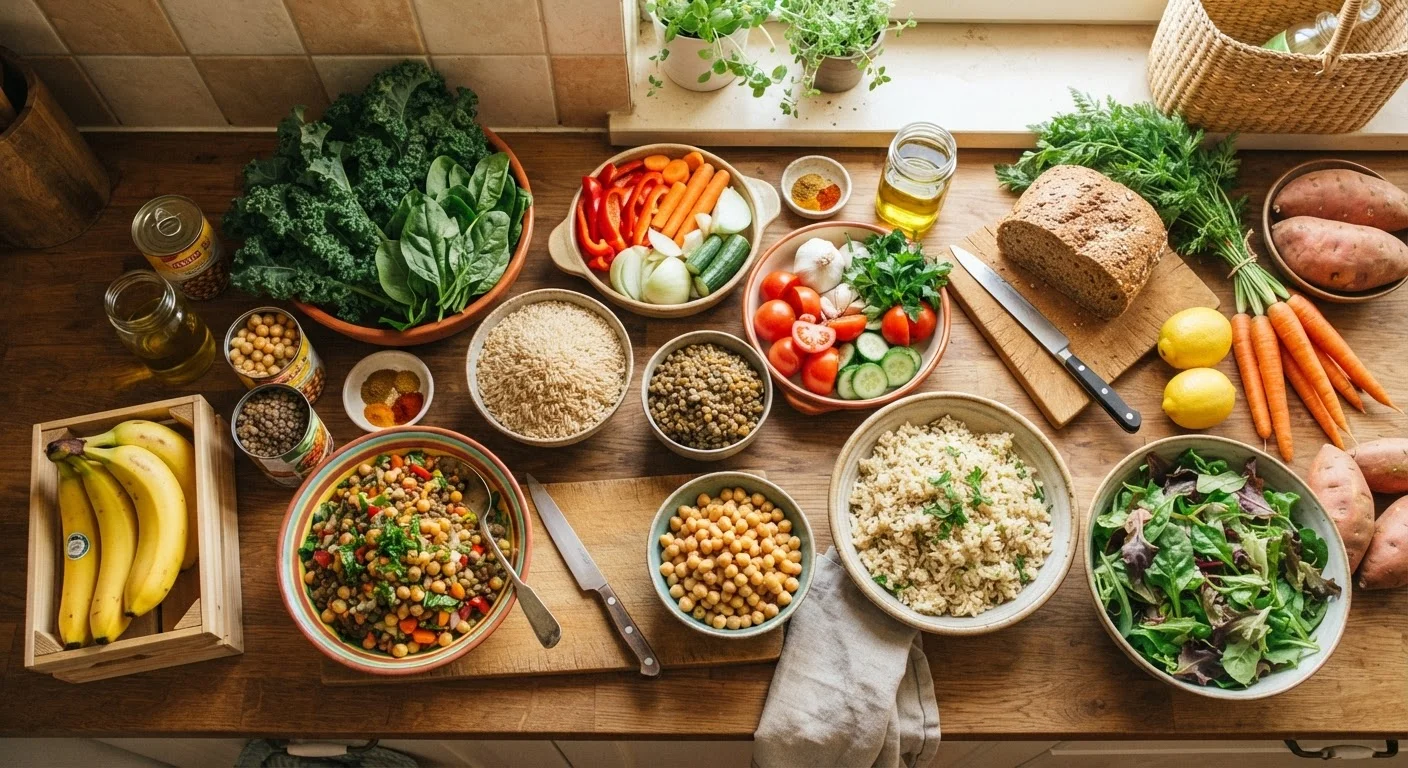
Dried lentils, canned chickpeas, rolled oats, frozen spinach, brown rice — these are some of the most affordable foods in any grocery store, and they also happen to form the backbone of a plant-based diet. When your meals revolve around whole plant foods rather than meat, dairy, and packaged convenience items, your weekly grocery bill can drop noticeably.
Eating well on a tight weekly budget becomes significantly more manageable when you lean into plant staples. Beans and lentils in particular deliver impressive protein and fiber at a fraction of the cost of chicken or beef. If you're curious why these foods punch so far above their weight, our piece on cheap proteins and their nutritional value breaks that down in detail.
Whole plant foods are among the cheapest groceries available
Dried beans, lentils, oats, and frozen vegetables consistently cost less per serving than meat or dairy equivalents, making them natural allies for a tight food budget.
High fiber intake supports digestive and metabolic health
Plant-centered diets tend to be significantly higher in dietary fiber, which is associated with better digestive health and more stable blood sugar levels according to nutrition research.
Lower saturated fat from eliminating most animal products
Replacing fatty meats and full-fat dairy with plant sources generally reduces saturated fat intake, which public health guidance broadly links to cardiovascular health.
Reduces reliance on expensive convenience proteins
Building meals around legumes and grains instead of pre-marinated meats or deli products removes some of the priciest items from a weekly grocery run.
The savings potential is genuine — but it depends heavily on which plant-based foods you choose. Ultra-processed vegan alternatives like plant-based burgers, dairy-free cheeses, and packaged meat substitutes can cost more than their conventional counterparts and offer less nutritional value than whole foods.
Nutritional Gaps That Deserve Attention
A well-planned plant-based diet can meet most of your nutritional needs, but certain nutrients are harder to obtain — or less readily absorbed — from plant sources alone. Understanding these gaps before they become deficiencies is the smartest move you can make.
Vitamin B12 is absent from unfortified plant foods
B12 deficiency can develop gradually and cause neurological and blood-related problems; people eating plant-based need to obtain it through fortified foods or speak with a provider about supplementation.
Plant-based iron absorbs less efficiently than meat-based iron
Non-heme iron from plants is absorbed at a lower rate than heme iron from animal sources, meaning intentional food pairing or higher intake is often needed to meet requirements.
Complete protein requires combining multiple food sources
Most plant proteins lack one or more essential amino acids in sufficient amounts, so variety across legumes, grains, and nuts is important for meeting the body's full protein needs.
Specialty vegan products can be costly and less nutritious
Packaged meat and dairy alternatives are often heavily processed and priced higher than whole plant foods, which can undercut both the budget and health benefits of plant-based eating.
Zinc and calcium can be harder to absorb from plants
Compounds called phytates in legumes and grains can reduce absorption of zinc and calcium; soaking, sprouting, or fermenting these foods can help reduce this effect.
Vitamin B12 is the most critical gap: it exists naturally only in animal products. People eating predominantly plant-based should seriously consider whether supplementation is right for their situation — this is one area where a conversation with a healthcare provider is genuinely worthwhile.
Iron from plants (non-heme iron) is absorbed less efficiently than iron from meat. Pairing iron-rich plant foods like lentils or fortified cereals with vitamin C sources — think bell peppers, citrus, or tomatoes — can meaningfully improve absorption. For a broader look at common shortfalls in young adult diets, see our guide on micronutrients most young adults are missing.
A Note on Supplements and Individual Needs
Nutritional needs vary considerably based on age, health status, activity level, and existing dietary habits. What works well for one person may leave another deficient. Before adding supplements to address plant-based nutritional gaps — particularly B12, vitamin D, or omega-3s — it's worth discussing your specific situation with a registered dietitian or healthcare provider. General guidance is useful for awareness, but it isn't a substitute for personalized assessment.
Omega-3 fatty acids present a subtler challenge. Plant foods like flaxseeds and walnuts contain ALA, a precursor to the EPA and DHA forms found in fatty fish, but conversion in the body is limited. Algae-based omega-3 supplements exist as a direct plant-derived source of EPA and DHA, though whether supplementation is appropriate for you is a question for a healthcare professional.
Making It Work: Practical Strategies
The good news is that most nutritional challenges on a plant-based budget diet are solvable with some intentional planning — not expensive overhauls.
~$750
Estimated annual savings on plant-based diet
Research published in the Journal of Hunger & Environmental Nutrition estimated that a vegetarian diet could cost around $750 less per year than a comparable omnivore diet in the U.S.
92%
Americans falling short on dietary fiber
According to the Dietary Guidelines for Americans, dietary fiber is considered a nutrient of public health concern, with most Americans consuming far below the recommended amount.
Diversify your protein sources. Relying on one or two foods for protein increases your risk of amino acid gaps. Rotating between lentils, edamame, tofu (when affordable), quinoa, and beans helps cover a wider amino acid profile. Building a balanced plate with limited ingredients offers a practical starting framework.
Plan before you shop. Impulse buying is where plant-based budgets unravel — especially when flashy packaged vegan products catch your eye. A nutrition-focused grocery checklist can help you stay on track and ensure your cart covers key bases. Batch cooking also stretches your ingredients further — see how meal prepping supports more consistent eating on a busy schedule.
Know when to consider fortified foods. Many plant milks, cereals, and nutritional yeasts are fortified with B12, vitamin D, and calcium. Reading labels — something our guide on whole vs. processed foods addresses honestly — can help you identify which processed options actually add nutritional value.
This article is for general informational and educational purposes only and is not a substitute for professional medical or dietary advice. Always consult a qualified healthcare provider before making significant changes to your diet, especially if you have a health condition.
The content provided on our blog site traverses numerous categories, offering readers valuable and practical information. Readers can use the editorial team’s research and data to gain more insights into their topics of interest. However, they are requested not to treat the articles as conclusive. The website team cannot be held responsible for differences in data or inaccuracies found across other platforms. Please also note that the site might also miss out on various schemes and offers available that the readers may find more beneficial than the ones we cover.