

The Price-Nutrition Myth Worth Busting
A common assumption in grocery store culture is that more expensive foods are automatically healthier. In reality, price is largely driven by branding, processing, packaging, and marketing — not nutritional content. When it comes to protein in particular, some of the least expensive options per serving are genuinely outstanding from a nutrition standpoint.
Understanding why requires a basic shift in how you evaluate food. Rather than looking at price alone, nutritionists often use the concept of nutrient density — how many beneficial nutrients a food provides relative to its calories and cost. By that measure, cheap proteins don't just hold their own. They frequently outperform pricier alternatives. For a deeper look at this framing, see our guide on calorie density vs. nutrient density.
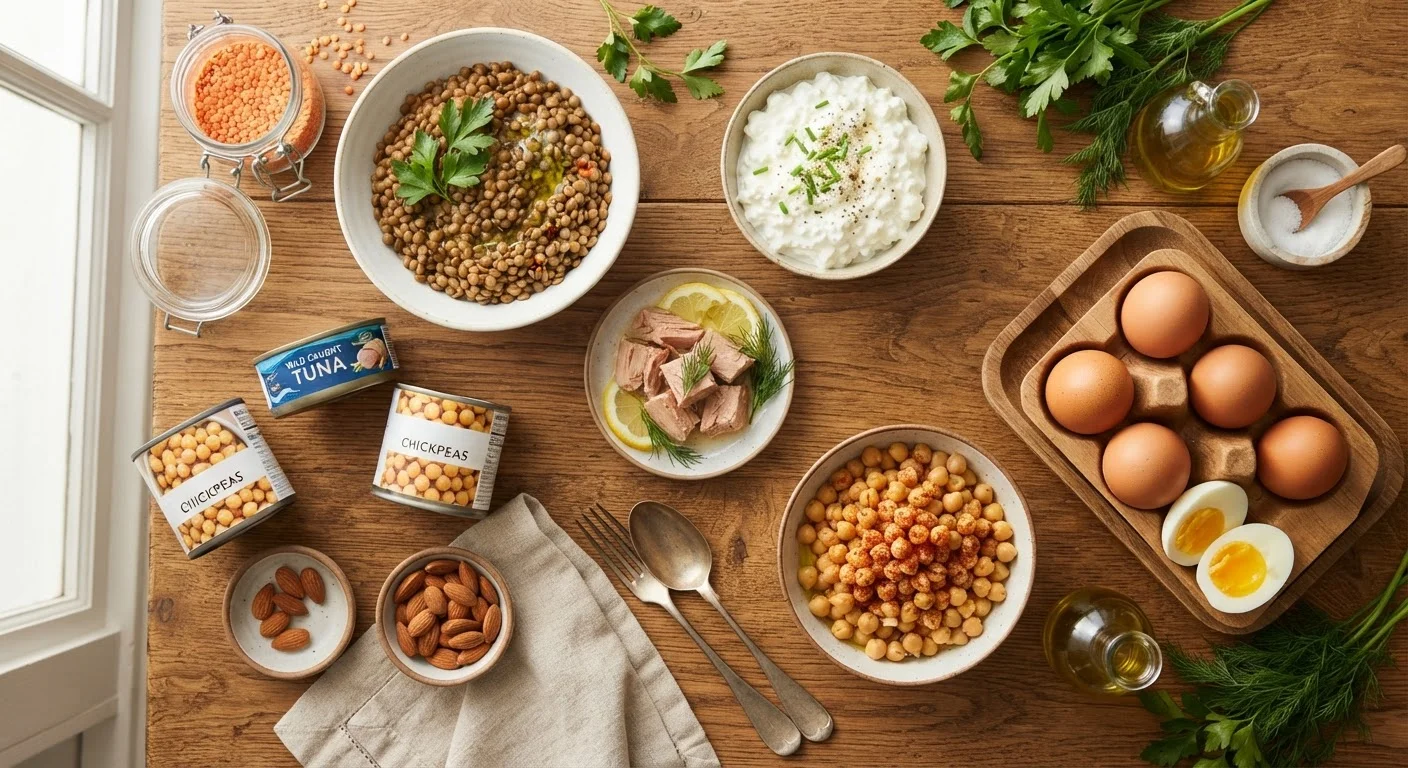
Below are some of the most nutritionally valuable proteins you can find on a tight budget — and the science behind why they earn a regular spot on your plate.
Eggs
Eggs are widely regarded by nutrition researchers as one of the most complete whole foods available. A single large egg contains roughly 6 grams of high-quality protein alongside choline (critical for brain function), vitamin D, B12, selenium, and healthy fats — all for a very low cost per serving.
What makes eggs particularly valuable is their bioavailability — the proportion of nutrients your body can actually absorb and use. Cooked egg protein is highly bioavailable, meaning your body puts most of what you eat to work. They're also fast to prepare, which matters when time is as tight as money.
Eggs deliver a near-complete nutrient profile at one of the lowest costs per gram of protein.
Canned Tuna and Sardines
Canned fish is genuinely underappreciated. A can of tuna or sardines typically provides 20–25 grams of protein, plus meaningful amounts of omega-3 fatty acids, vitamin D, and B12 — nutrients that many young adults fall short on. Sardines also supply calcium (from the soft, edible bones), which makes them especially useful for those who don't eat much dairy.
The canning process preserves most of the nutritional value, so you're not trading quality for convenience or cost. Just pay attention to sodium content if that's a concern for you personally, and consider options packed in water rather than oil if you're watching overall fat intake.
Canned sardines offer omega-3s, calcium, and vitamin D in one inexpensive, shelf-stable package.
Lentils
Lentils are one of the most nutrient-dense foods on the planet by almost any measure. Per cooked cup, they deliver roughly 18 grams of protein along with substantial amounts of folate, iron, potassium, and dietary fibre. That fibre matters — it slows digestion, helps stabilise blood sugar, and supports gut health.
As a plant-based protein, lentils are considered an incomplete protein (they lack sufficient methionine), but pairing them with a grain like rice or bread over the course of the day easily rounds out your amino acid intake. They're also dried and shelf-stable, making them one of the most economical grocery staples you can keep on hand. For more on common nutrient gaps, see our micronutrients overview.
Lentils pack protein, iron, folate, and fibre into one of the cheapest ingredients in any grocery store.
Canned or Dried Beans
Black beans, kidney beans, chickpeas, and navy beans all follow a similar nutritional story to lentils: high in plant protein, fibre, and key minerals like iron, zinc, and magnesium. Chickpeas in particular are a versatile option — they work in soups, roasted as a snack, or blended into hummus — making it easier to eat them regularly without palate fatigue.
Canned versions are nutritionally comparable to dried and take far less time to prepare, though they can be higher in sodium. Rinsing canned beans before use removes a significant portion of added salt without affecting protein or micronutrient content.
Rinsing canned beans reduces sodium without sacrificing their impressive protein and mineral content.
Cottage Cheese
Cottage cheese offers one of the highest protein-to-cost ratios among dairy products. A half-cup serving contains roughly 12–14 grams of protein, predominantly casein — a slow-digesting protein that keeps you feeling fuller for longer compared to faster-digesting proteins like whey.
It's also a solid source of calcium, phosphorus, and B vitamins. For those who find plain cottage cheese unappealing, mixing it into smoothies, using it as a base for dips, or combining it with fruit addresses the texture and flavour without adding significant cost. It's a flexible, underutilised option that deserves more attention than it typically gets.
Cottage cheese's slow-digesting casein protein supports satiety in a way few cheap foods can match.
Frozen Edamame
Edamame (young soybeans) is one of the few plant foods that qualifies as a complete protein — meaning it contains all nine essential amino acids in adequate amounts. A half-cup serving provides around 8–9 grams of protein alongside iron, folate, and vitamin K.
Frozen edamame is widely available at reasonable prices and requires almost no preparation — a few minutes in boiling water or a microwave is all it takes. For young adults exploring more plant-forward eating, edamame removes the need to strategically combine foods to hit a complete amino acid profile, which simplifies meal planning considerably.
Edamame is one of the only plant foods that provides a complete amino acid profile on its own.
Building a Smarter, Cheaper Protein Routine
The practical takeaway here isn't just that cheap proteins exist — it's that leaning into them consistently can make a measurable difference in both your nutrition and your grocery bill. Rotating between the options above ensures you cover a broad spectrum of amino acids, vitamins, and minerals without relying on any single source.
Mix Sources for Better Coverage
No single protein source covers every nutritional base perfectly. Rotating between animal and plant proteins throughout the week — eggs one day, lentils the next, canned fish on another — helps you naturally cover a broader range of amino acids, vitamins, and minerals. This variety also makes it easier to stay within a tight grocery budget while keeping meals interesting. For a structured approach, meal prepping as a nutritional strategy can help you build this variety into your week without extra effort.
If you're plant-based or experimenting with reducing meat, pairing legumes with whole grains (think lentils with rice, or beans with corn) creates a complete amino acid profile from plants alone. That said, plant-based eating does come with some nutritional considerations worth understanding first — our article on plant-based eating trade-offs breaks these down clearly.
For a structured way to put all of this into practice, the Eating on $50 a Week nutrition roadmap offers a realistic framework for building balanced, satisfying meals around exactly these kinds of ingredients. And if you want to stretch each shopping trip further, try this nutrition-focused grocery planning checklist before you head to the store.
This article is for general informational and educational purposes only and does not constitute medical or dietary advice. Individual nutritional needs vary. Please consult a registered dietitian or qualified healthcare professional for guidance specific to your health situation.
The content provided on our blog site traverses numerous categories, offering readers valuable and practical information. Readers can use the editorial team’s research and data to gain more insights into their topics of interest. However, they are requested not to treat the articles as conclusive. The website team cannot be held responsible for differences in data or inaccuracies found across other platforms. Please also note that the site might also miss out on various schemes and offers available that the readers may find more beneficial than the ones we cover.