

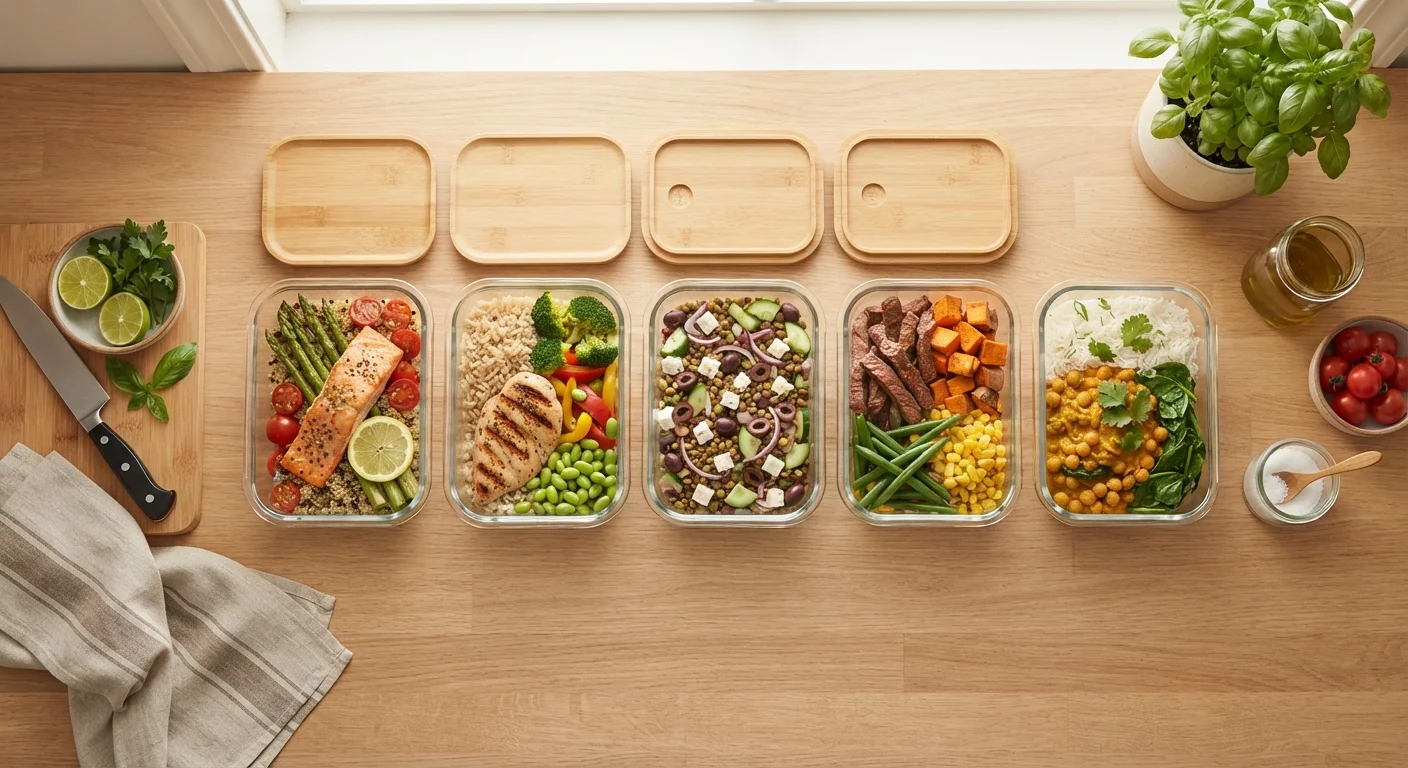
Why Meal Prep Is a Nutrition Tool First
Most people discover meal prepping when they're short on time — but the bigger payoff is nutritional. When you decide what you're eating before hunger hits, you're more likely to choose foods that actually fuel you. Research in behavioral nutrition consistently points to one pattern: the more decisions we make while hungry or stressed, the less aligned those choices are with our health goals.
Meal prepping interrupts that cycle. It shifts food decisions from an impulsive moment to a calmer, intentional one. This isn't about rigid dieting or calorie obsession — it's about reducing the friction between wanting to eat well and actually doing it. If you're also working to stretch your grocery dollars, check out our realistic nutrition roadmap for tight weekly budgets for complementary strategies.
“The goal of nutrition isn't perfection at any single meal — it's consistency across many meals. Anything that helps you eat reasonably well more often is doing important work.”
— Marion Nestle, Professor Emerita of Nutrition, Food Studies, and Public Health
Core Best Practices for Nutritional Meal Prepping
Effective meal prepping isn't about copying someone else's Instagram routine. It's about building a system that works for your schedule, food preferences, and budget. The practices below focus on nutritional outcomes — not just convenience.
Plan meals around nutritional balance, not just convenience
Convenience-focused prep often leans on repetitive, carb-heavy foods. Intentionally including a protein source, fiber-rich vegetables, and a healthy fat in each meal ensures your prep sessions actually support energy and satiety throughout the day.
Batch cook foundational ingredients rather than complete meals
Cooking complete meals in bulk can lead to flavor fatigue by mid-week, causing you to abandon your prep. Preparing flexible base ingredients gives you variety without extra effort, making the routine easier to maintain long-term.
Store prepped food correctly to preserve safety and nutrients
Improper storage degrades both food safety and nutritional quality. Some vitamins, particularly water-soluble ones like vitamin C, diminish when food is held at incorrect temperatures or exposed to air for extended periods.
Include color variety to cover a broader range of micronutrients
Different pigments in fruits and vegetables correspond to different vitamins, minerals, and phytochemicals. Eating a narrow color range — even in large quantities — leaves nutritional gaps that variety would fill.
Build in one flexible 'use what's left' meal per week
Rigid meal plans create food waste when life doesn't go according to schedule. A planned flexible meal reduces waste, lowers grocery costs, and removes the guilt of 'falling off' the plan.
Quick Wins to Start This Week
You don't need a perfect system to start benefiting from meal prep. Even small steps create momentum. The actions below are low-effort with meaningful nutritional impact — pick one or two and build from there.
If time is your biggest obstacle in general, the same planning mindset applies to physical activity. Our article on fitting movement into a packed schedule offers parallel strategies for busy days.
Keeping It Sustainable and Budget-Friendly
One of the most common meal prep mistakes is going too ambitious too fast — spending an entire Sunday cooking elaborate recipes, burning out, and abandoning the habit entirely. Sustainability comes from simplicity.
~$1,500
Annual savings from home cooking vs. eating out
The U.S. Bureau of Labor Statistics consistently finds that food prepared at home costs significantly less per meal than restaurant or takeout options.
5x
More vegetables consumed by frequent home cooks
A study published in the journal Public Health Nutrition found that people who cook at home frequently consume more fruits and vegetables than those who rely on food away from home.
Focus on versatile ingredients that work across multiple meals: cooked grains, roasted vegetables, and a protein source can be recombined in countless ways throughout the week. This approach also keeps grocery costs lower. For a deeper look at how plant-based ingredients can stretch your budget even further, see our piece on plant-based eating on a budget.
Label Everything Before It Goes in the Fridge
A simple strip of masking tape with the item name and prep date takes seconds and removes all guesswork. You'll waste less food and never have to wonder whether something is still safe to eat. This habit alone can make your prep routine significantly more reliable week after week.
This article is for general informational and educational purposes only and is not a substitute for personalized nutrition or medical advice. Consult a registered dietitian or qualified healthcare provider for guidance specific to your health needs.
The content provided on our blog site traverses numerous categories, offering readers valuable and practical information. Readers can use the editorial team’s research and data to gain more insights into their topics of interest. However, they are requested not to treat the articles as conclusive. The website team cannot be held responsible for differences in data or inaccuracies found across other platforms. Please also note that the site might also miss out on various schemes and offers available that the readers may find more beneficial than the ones we cover.