

Why $50 a Week Is a Real Number
For many young adults juggling rent, student loans, and unpredictable income, a $50 weekly grocery budget isn't an arbitrary challenge — it's a real constraint. According to the USDA's food plans, a thrifty food budget for a single adult typically falls between roughly $40 and $60 per week depending on location. So yes, $50 is tight, but it is workable.
The key shift is moving from reactive shopping — grabbing whatever looks good — to intentional, nutrition-first planning. If your budget has been quietly undermining your eating goals, you're not alone. Our guide on why grocery budgets derail eating goals explores this in depth. This roadmap gives you the practical framework to break that cycle.
$47–$58
USDA Thrifty Food Plan weekly cost (single adult)
The USDA's Thrifty Food Plan estimates a nutritionally adequate diet for a single adult costs roughly $47–$58 per week, depending on age and gender.
~$0.25
Cost per serving of cooked dried lentils
Dried lentils consistently rank among the lowest cost-per-serving protein and fiber sources available in most U.S. grocery stores.
90%+
Nutrients retained in frozen vegetables
Research indicates that flash-freezing preserves most vitamins and minerals in vegetables, often matching or exceeding the nutrient content of fresh produce stored for several days.
The Nutritional Non-Negotiables
Before you build a shopping list, it helps to know what your body actually needs. No single nutrient is more important than all others, but for most young adults eating on a tight budget, a few areas deserve specific attention:
- Protein: Supports muscle repair, immune function, and satiety. General dietary guidelines suggest most adults aim for roughly 0.8 grams per kilogram of body weight daily, though individual needs vary.
- Fiber: Found in vegetables, legumes, and whole grains, fiber supports digestive health and helps you feel full longer — both practically useful on a budget.
- Iron and B12: Often under-consumed, especially if meat is limited. Eggs, lentils, and fortified cereals help fill gaps.
- Vitamin D and Calcium: Many Americans fall short on these. Canned fish with bones, fortified plant milks, and leafy greens are cost-effective sources.
For a fuller picture of how to compose each meal around these needs, see our walkthrough on building a balanced plate with limited ingredients.
Prioritize foods with multiple nutritional roles — eggs, for instance, provide complete protein, choline, and fat-soluble vitamins all in one low-cost package. One ingredient covering several nutritional bases stretches your budget further than buying targeted 'superfoods.'
Nutritional density per dollar is the most reliable metric for budget-conscious eating. Foods that hit several targets simultaneously reduce the number of items you need to buy.
Add a small amount of vitamin C-rich food — like a squeeze of lemon or a handful of frozen peas — alongside plant-based iron sources such as lentils and spinach. This simple pairing can meaningfully improve how much iron your body absorbs from those foods.
Non-heme iron (found in plants) is less bioavailable than heme iron from meat. Consuming it alongside ascorbic acid (vitamin C) has been shown to enhance absorption, a practical nutrition win that costs almost nothing extra.
Your Budget-Friendly Grocery Blueprint
A well-structured $50 cart leans heavily on nutritional density per dollar. These food categories deliver the most value:
- Legumes
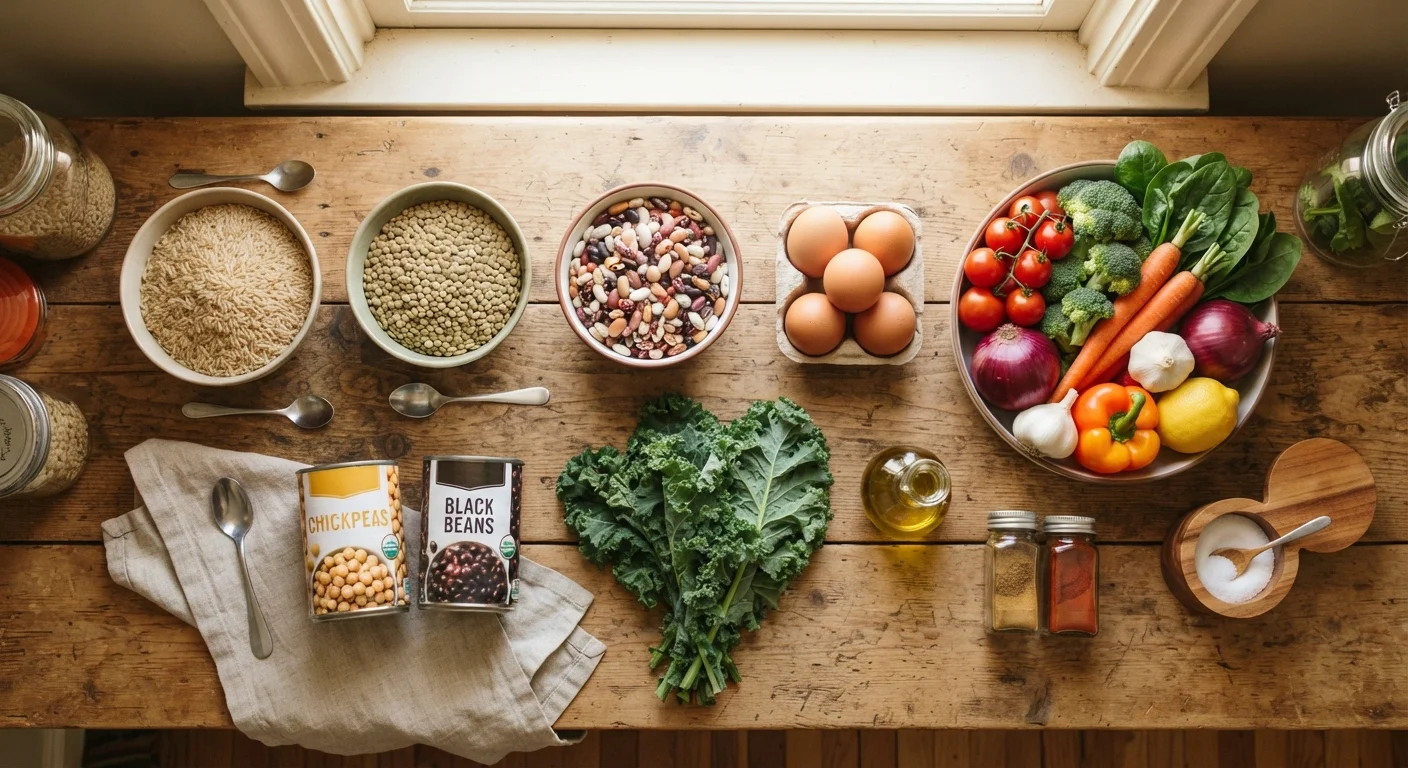
- Dried lentils, black beans, and chickpeas are among the cheapest protein and fiber sources available. A one-pound bag of dried lentils typically costs under $2 and yields eight or more servings. As explored in our article on why cheap proteins punch above their weight, these foods rival far more expensive alternatives nutritionally.
- Eggs
- A dozen eggs provides 12 servings of high-quality, complete protein at a cost that's hard to beat. They're also highly versatile across meals.
- Frozen vegetables
- Flash-frozen at peak ripeness, frozen spinach, broccoli, peas, and mixed vegetables retain most of their nutrients and cost significantly less than fresh equivalents.
- Whole grains
- Brown rice, rolled oats, and whole wheat pasta are inexpensive, filling, and rich in fiber and B vitamins. Buying in bulk lowers cost further.
- Canned fish
- Canned tuna and sardines deliver omega-3 fatty acids, protein, and — in the case of sardines with bones — calcium and vitamin D. Cost per serving is typically very low.
Use our nutrition-focused grocery checklist to make sure your cart covers all key bases before you check out.
Shop the Perimeter and the Dry Aisle
The store perimeter typically holds produce, dairy, and proteins. The dry goods aisle holds legumes, grains, and canned goods. Together, these two zones contain almost everything you need for a nutritious week. Avoiding the center snack aisles also reduces the temptation to fill your cart with low-nutrient, high-cost-per-calorie items.
Stretching Ingredients Across Multiple Meals
The real multiplier in a tight food budget is ingredient overlap — buying items that serve three or four different meals rather than one. A pot of cooked lentils, for instance, works as a soup base on Monday, a taco filling on Tuesday, and a salad topper on Thursday. This isn't deprivation; it's strategy.
Batch cooking takes this a step further. Cooking a large portion of grains, roasting a tray of vegetables, and hard-boiling a half-dozen eggs at the start of the week creates a flexible ingredient library you can reassemble into different meals daily. This approach is explored thoroughly in our guide on meal prepping as a nutritional strategy.
A rough weekly template might look like this:
- Grains base: One large pot of brown rice or oats (~$0.80)
- Protein anchor: Dried lentils + one dozen eggs (~$5.00)
- Vegetable variety: Two bags frozen mixed veg + one bunch fresh greens (~$6.00)
- Canned goods: Two cans tuna, one can chickpeas, one can diced tomatoes (~$5.00)
- Flavor and fats: Olive oil, garlic, onion, dried spices (~$4.00)
That's roughly $21 — leaving meaningful room in your $50 for fresh fruit, dairy or fortified alternatives, snacks, and anything week-specific.
Nutrition Pitfalls to Watch For
Even a well-planned budget diet can develop blind spots over time. The most common ones include:
- Insufficient variety: Eating the same five foods every week limits micronutrient diversity. Rotating your frozen vegetables, swapping between grain types, and varying your legumes costs little but adds nutritional breadth.
- Over-relying on processed cheap foods: Instant noodles and packaged snacks are cheap but low in nutrients. They can silently displace more nutritious options without saving much money per serving when compared to whole staples.
- Skipping produce entirely: Fresh produce can feel expensive, but frozen and canned options (look for no-salt-added or in-water varieties) maintain strong nutritional profiles at lower prices.
- Neglecting plant-based nutrition gaps: If you're moving toward plant-heavy eating to save money — a smart move — be aware of potential shortfalls in B12, zinc, and complete proteins. Our article on plant-based eating on a budget breaks this down clearly.
Cheap Doesn't Always Mean Nutritious
Some of the most affordable packaged foods — ramen noodles, chips, sweetened cereals — are low in protein, fiber, and micronutrients while being high in sodium or added sugar. These can feel like savings at checkout but may leave you hungrier and less nourished than whole-food alternatives at a similar price. Compare cost per serving and nutritional value, not just sticker price.
Putting It All Together
Eating nutritiously on $50 a week requires intention, but it doesn't require culinary skill or hours of your time. The fundamentals are simple: anchor each meal in a protein and a fiber source, rotate your vegetables, use spices and aromatics to prevent boredom, and batch-cook when you can.
Budget management and food planning also intersect with broader financial health. If you're working on building a bigger financial cushion, resources like budgeting basics can help you structure spending so your food budget stays protected even when other expenses spike.
Nutrition doesn't have to be a casualty of financial stress. With a reliable weekly framework, the right staples, and a bit of flexibility, $50 a week can genuinely sustain a varied, nourishing diet — and that matters for your energy, focus, and long-term health far more than any single superfood could.
This article is for general informational and educational purposes only and is not a substitute for personalized medical or dietary advice. Consult a registered dietitian or qualified healthcare professional for guidance specific to your health needs.
“Food security isn't just about having enough calories — it's about having consistent access to the variety of nutrients the body needs to function well. Budget and nutrition don't have to be in opposition.”
— Marion Nestle, Professor Emerita of Nutrition, Food Studies, and Public Health, New York University
The content provided on our blog site traverses numerous categories, offering readers valuable and practical information. Readers can use the editorial team’s research and data to gain more insights into their topics of interest. However, they are requested not to treat the articles as conclusive. The website team cannot be held responsible for differences in data or inaccuracies found across other platforms. Please also note that the site might also miss out on various schemes and offers available that the readers may find more beneficial than the ones we cover.