

Our Verdict
Both the Atlantic and Gulf coasts deliver genuinely memorable beach experiences without requiring international travel or a massive budget. The Gulf edges ahead for value-seekers who want calm water and quieter stretches, while the Atlantic suits those who crave surf energy, coastal culture, and urban proximity.
| Best for | Recommended |
|---|---|
| Families or first-timers seeking calm water and lower lodging costs | Gulf Coast |
| Surfers, watersport enthusiasts, and nightlife seekers | Atlantic Coast |
| Road-trippers exploring multiple stops along one corridor | Atlantic Coast |
| Budget travelers prioritizing value over peak-season glamour | Gulf Coast |
Why Domestic Beaches Deserve a Serious Look
For travelers watching their wallets, skipping the international flight doesn't mean settling. The US Atlantic and Gulf coasts stretch thousands of miles and pack in everything from powdery white-sand flats to windswept barrier islands — no currency exchange required. With domestic flights or even a solid road trip (see our breakdown on road trip vs. flying costs), either coast is genuinely within reach for most Americans.
The real question isn't whether to go — it's which coast fits your style, travel window, and budget. The differences between Atlantic and Gulf beaches run deeper than geography, and understanding them upfront saves you from landing somewhere that doesn't match your expectations.
Water, Sand, and Scenery: The Core Differences
The Gulf of Mexico's shallower basin means water temperatures regularly hit the low-to-mid 80s°F in summer — practically bath-warm. The sand along the Florida Panhandle and Alabama coast is famously fine and bright white, made largely of quartz eroded from the Appalachian Mountains. Waves are gentler, making it a natural choice for young kids or anyone who just wants to float.
Atlantic beaches run cooler — water temps in the Carolinas and Virginia hover in the mid-70s°F in peak summer, while New England beaches barely crack 70°F. The texture and color of Atlantic sand varies considerably by region: creamy in the Outer Banks, darker and coarser toward New Jersey and Cape Cod. Surf is noticeably stronger, which excites wave-chasers but can be less comfortable for casual swimmers.
| Atlantic Coast | Gulf Coast | |
|---|---|---|
| Water temperature (summer) | Mid-70s°F (varies by region) | Low-to-mid 80s°F |
| Wave intensity | Moderate to strong surf | Calm, gentle waves |
| Sand quality | Varies: fine to coarse | Typically fine, white quartz |
| Typical peak-season crowds | High, especially popular towns | High in hotspots, lower elsewhere |
| Budget-friendly options | Delaware, Georgia coast, outer NC | Gulf Shores, Port St. Joe, FL Panhandle |
| Best for | Surf, culture, multi-stop road trips | Families, relaxation, warm-water swimming |
| Shoulder season window | May–June, September | May, September–October |
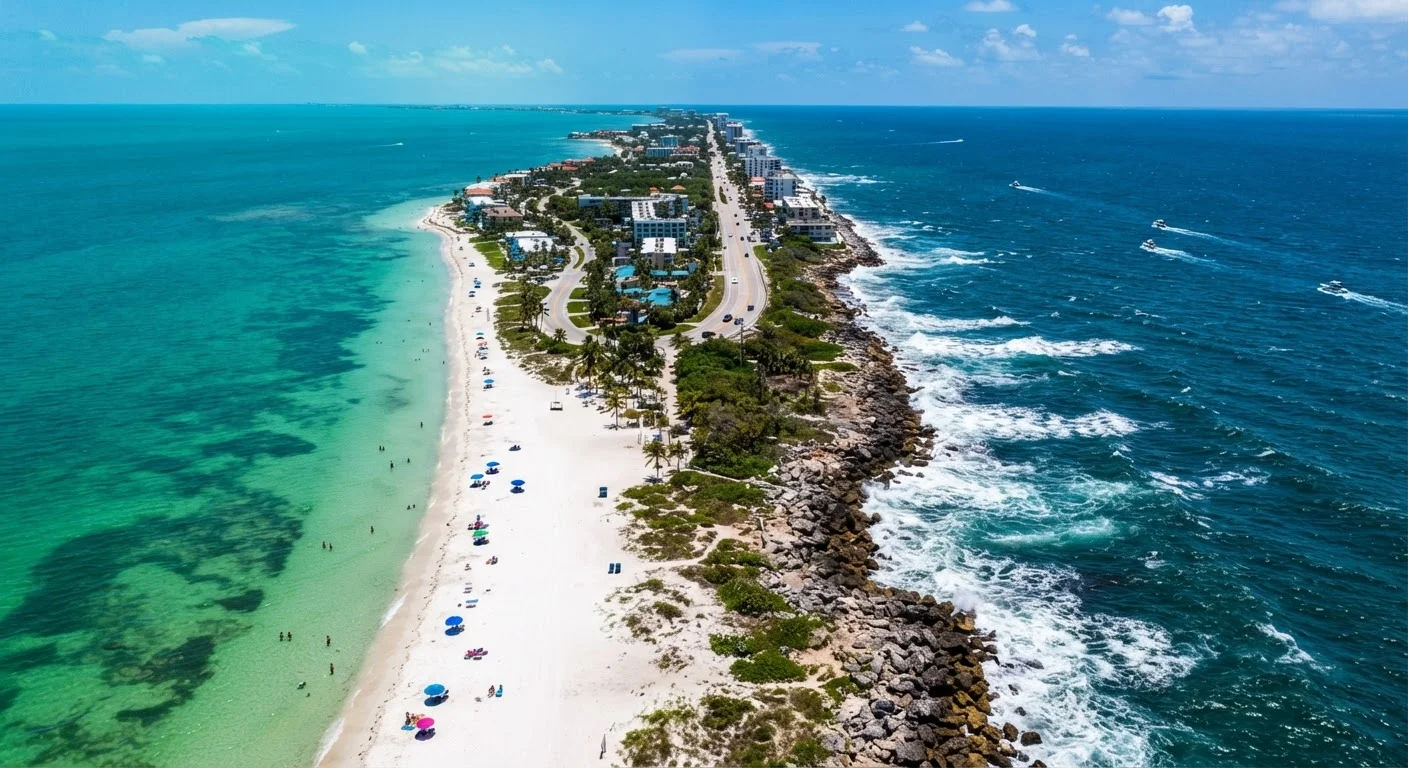
Scenically, both coasts deliver. The Gulf's flat horizon and emerald-to-turquoise gradient feels almost Caribbean. The Atlantic's drama — crashing surf, lighthouses, dense dune scrub — leans more rugged and photogenic in a different way.
Costs and Crowds: What the Budget Math Looks Like
Accommodation is often the single largest line item on any beach trip, and the gap between coasts can be significant. Heavily developed Gulf towns like Destin, FL can rival Myrtle Beach, SC for peak-season rates. But lesser-known Gulf spots — think Gulf Shores, AL or Port St. Joe, FL — can offer vacation rentals and motels at noticeably lower rates than comparable Atlantic-side resorts during the same weeks.
1,600+
Miles of Gulf Coast shoreline in the US
The US Gulf Coast spans approximately 1,631 miles across five states, per NOAA coastal geography data.
2,000+
Miles of US Atlantic coastline
The US Atlantic coast stretches over 2,000 miles from Maine to Florida, offering a wide range of climate and beach character.
~30%
Average lodging savings in shoulder season
Travel industry data broadly suggests off-peak beach lodging can run 25–35% less than peak-summer rates at comparable properties.
That said, the Atlantic coast's sheer length and density of options means competition drives prices down in spots that aren't marquee names. The northern Outer Banks, coastal Georgia, and the Delaware shore all offer accessible pricing, especially if you're flexible about exact location. For a deeper look at where beach budgets quietly collapse, our guide to underestimating trip costs is worth a read before you book.
Crowd dynamics follow a predictable pattern: Memorial Day through Labor Day is peak everywhere. Shoulder seasons — particularly May and September — give you warm-enough water, lower rates, and a fraction of the foot traffic. On the Gulf, water stays swimmable well into October.
Book Shoulder Season for the Real Value
May and September offer the strongest combination of affordability and experience on both coasts. Water is still warm enough to swim, crowds are noticeably thinner, and nightly lodging rates often drop substantially from their July peaks. If your schedule has any flexibility, shifting even one week away from peak summer can meaningfully change your total trip cost.
Vibe, Activities, and Who Each Coast Suits Best
Atlantic beach towns tend to cluster closer together and connect to larger urban centers. That means more variety in a single trip: surf lessons in the morning, a seafood shack at noon, and a lively boardwalk at night. The Atlantic corridor also lends itself well to multi-stop road trips — drive the entire Outer Banks or follow the coast from Savannah up through the Carolinas for a rich, varied experience.
Gulf beaches lean more toward relaxation-first itineraries. Wide, flat shorelines encourage long walks, shelling, and paddleboarding in gentle surf. State parks like Grayton Beach in Florida offer access to some of the most pristine Gulf scenery with minimal cost — the kind of free or low-cost outdoor experiences that punch well above their price tag.
If you're still deciding between a beach trip and a completely different style of domestic travel, our comparison of urban vs. rural US travel offers useful framing for matching trip style to your personality and wallet. And for a broader set of domestic options that stretch a dollar far, low-cost destinations with high-value experiences is worth exploring before you finalize plans.
This article provides general travel information for educational purposes. Prices, conditions, and availability change frequently — always verify current costs and entry requirements with official sources before booking.
The content provided on our blog site traverses numerous categories, offering readers valuable and practical information. Readers can use the editorial team’s research and data to gain more insights into their topics of interest. However, they are requested not to treat the articles as conclusive. The website team cannot be held responsible for differences in data or inaccuracies found across other platforms. Please also note that the site might also miss out on various schemes and offers available that the readers may find more beneficial than the ones we cover.