

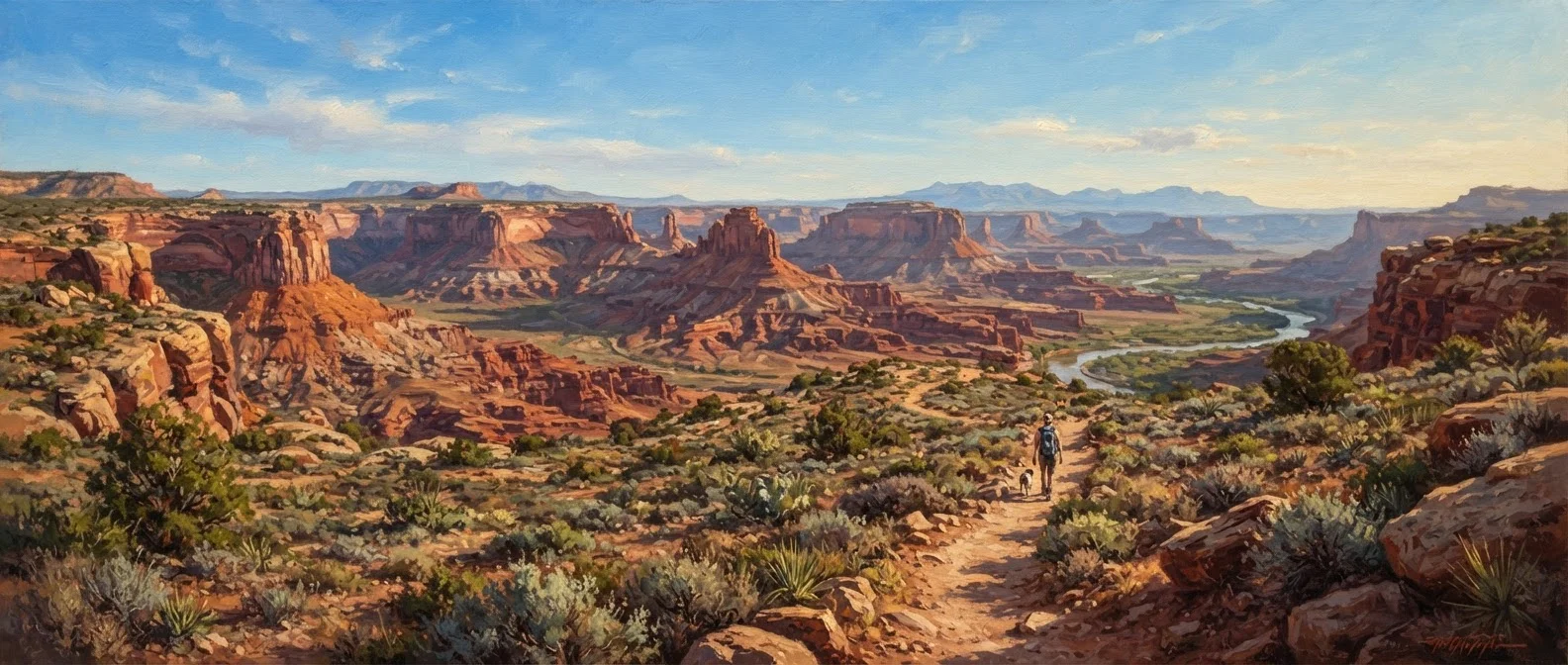
The Best American Adventures Don't Always Come with a Price Tag
Somewhere along the way, a myth took hold: that truly spectacular outdoor experiences in America require expensive park passes, long flights, or a passport. The reality is far more exciting. From the desert Southwest to the Atlantic shoreline, enormous swaths of American wilderness are genuinely free — not just cheap, but free — to explore.
If you've been told that worthwhile travel always costs a fortune, common travel misconceptions may be holding you back more than your bank account. The destinations below represent a cross-section of terrain, region, and experience — all accessible without an entry fee.
Always Verify Access Before You Go
Land access, seasonal road closures, fire restrictions, and dispersed camping rules can change with little notice. Check the relevant agency's official website — BLM, U.S. Forest Service, or your state's parks department — before finalizing any trip. Some areas require free permits even when no entry fee applies, particularly for overnight stays in high-use corridors.
Conditions, access rules, and seasonal road closures can change. Always verify current access information with the managing agency — typically the Bureau of Land Management (BLM), U.S. Forest Service, or relevant state agency — before you head out.
Bureau of Land Management (BLM) Land
The BLM administers approximately 245 million acres of public land — mostly in the West — and the vast majority of it is free to access. Think Utah's canyon country around Moab, Nevada's Valley of Fire region, and Oregon's high desert. Dispersed camping (camping outside designated sites) is often permitted for up to 14 days with no fee. The scale and solitude here rival anything behind a park gate.
BLM land also tends to attract far fewer visitors than national parks, meaning you're more likely to have a canyon, lake, or trail entirely to yourself. The American Southwest on a budget is arguably most accessible through BLM corridors.
BLM land covers 245 million acres — and most of it won't cost you a cent to explore.
National Forests and Grasslands
The U.S. Forest Service oversees 193 million acres of national forests and grasslands. Many trailheads, scenic overlooks, and swimming holes within these areas are free, though some developed recreation sites charge a small day-use fee. Destinations like Shoshone National Forest in Wyoming or Pisgah National Forest in North Carolina offer jaw-dropping scenery with minimal crowds and often no entry charge.
These forests are especially valuable for hikers, mountain bikers, and anglers who want access to serious terrain without the reservation scrambles common at more famous parks.
National forests cover 193 million acres — a vast, largely free alternative to busier park destinations.
Free and Low-Fee State Beaches
Dozens of states maintain public beach access with no admission charge, particularly along Gulf Coast stretches in Florida, Alabama, and Texas, as well as along parts of the Oregon and Washington Pacific coastlines. Oregon, notably, has a state constitutional provision guaranteeing public access to all ocean shores — every mile, no charge.
Weekday visits almost universally avoid the parking fees and congestion associated with peak weekend crowds. If coastal geography is your goal, comparing Atlantic and Gulf beach options can help you identify the best fit by season and vibe.
Oregon's coastline is legally open to the public for its entire length — free to walk, explore, and camp.
America's Scenic Byways
The Federal Highway Administration designates a network of scenic byways and All-American Roads across the country — and driving them costs nothing beyond fuel. Routes like the Blue Ridge Parkway (stretching 469 miles through Virginia and North Carolina), the Natchez Trace Parkway, and the Going-to-the-Sun Road corridor near Glacier National Park deliver extraordinary landscapes from your car window or at roadside pullouts.
These byways are especially practical for travelers who want to cover significant distance and terrain without committing to one fixed destination. Pack a cooler, download offline maps, and let the road do the work.
The Blue Ridge Parkway spans 469 miles of mountain scenery — all of it free to drive.
Lesser-Known National Park Units with No Entry Fee
Not every unit in the National Park System charges admission. More than 100 sites — including national seashores, recreation areas, monuments, and historic sites — have no entry fee at all. Examples include Delaware Water Gap National Recreation Area, Assateague Island National Seashore, and Chickasaw National Recreation Area in Oklahoma.
These overlooked gems tend to have functional visitor infrastructure — trails, restrooms, ranger programs — without the reservation bottlenecks of Yellowstone or Yosemite. For a deeper list, surprisingly uncrowded national parks is worth a read before you plan your route.
More than 100 National Park System sites charge zero entry fee — and many are genuinely spectacular.
Wildlife Management Areas and State Game Lands
Wildlife management areas (WMAs) administered by state fish and wildlife agencies often receive almost no tourist attention, yet they encompass wetlands, forests, prairies, and mountains of remarkable ecological richness. Outside of active hunting seasons, these lands are generally open to hikers, birdwatchers, and photographers free of charge. A quick search on your state's fish and wildlife agency website will reveal options likely within a day's drive.
Early mornings in a WMA during migration season — songbirds flooding through, waterfowl lifting off a marsh at dawn — rival anything you'd pay to see in a more famous setting.
Wildlife management areas offer rich birding, hiking, and photography opportunities that most travelers overlook entirely.
Plan Smart and Go Far
Free entry doesn't mean zero expense — gas, food, gear, and camping fees (where applicable) still add up. But the savings compared to traditional vacation destinations are substantial. Pairing free outdoor attractions with affordable mountain towns or budget-friendly coastal stretches stretches your travel dollar even further.
Stack Free Attractions with Smart Lodging
Dispersed camping on BLM land eliminates campsite fees entirely for up to 14 days in most locations. Pair that with free scenic byway driving and no-fee park units, and a full week outdoors can cost far less than a single night at a resort. Bring your own food and water filtration, and your daily expenses shrink dramatically.
If you plan to mix free BLM land with fee-based national parks on the same road trip, check whether the America the Beautiful Pass makes financial sense for your itinerary — it can pay for itself quickly on longer trips.
America's free outdoor spaces reward curiosity, flexibility, and a willingness to explore beyond the famous names. The country's open lands are vast, genuinely stunning, and waiting — no big budget required.
The content provided on our blog site traverses numerous categories, offering readers valuable and practical information. Readers can use the editorial team’s research and data to gain more insights into their topics of interest. However, they are requested not to treat the articles as conclusive. The website team cannot be held responsible for differences in data or inaccuracies found across other platforms. Please also note that the site might also miss out on various schemes and offers available that the readers may find more beneficial than the ones we cover.