

Our Verdict
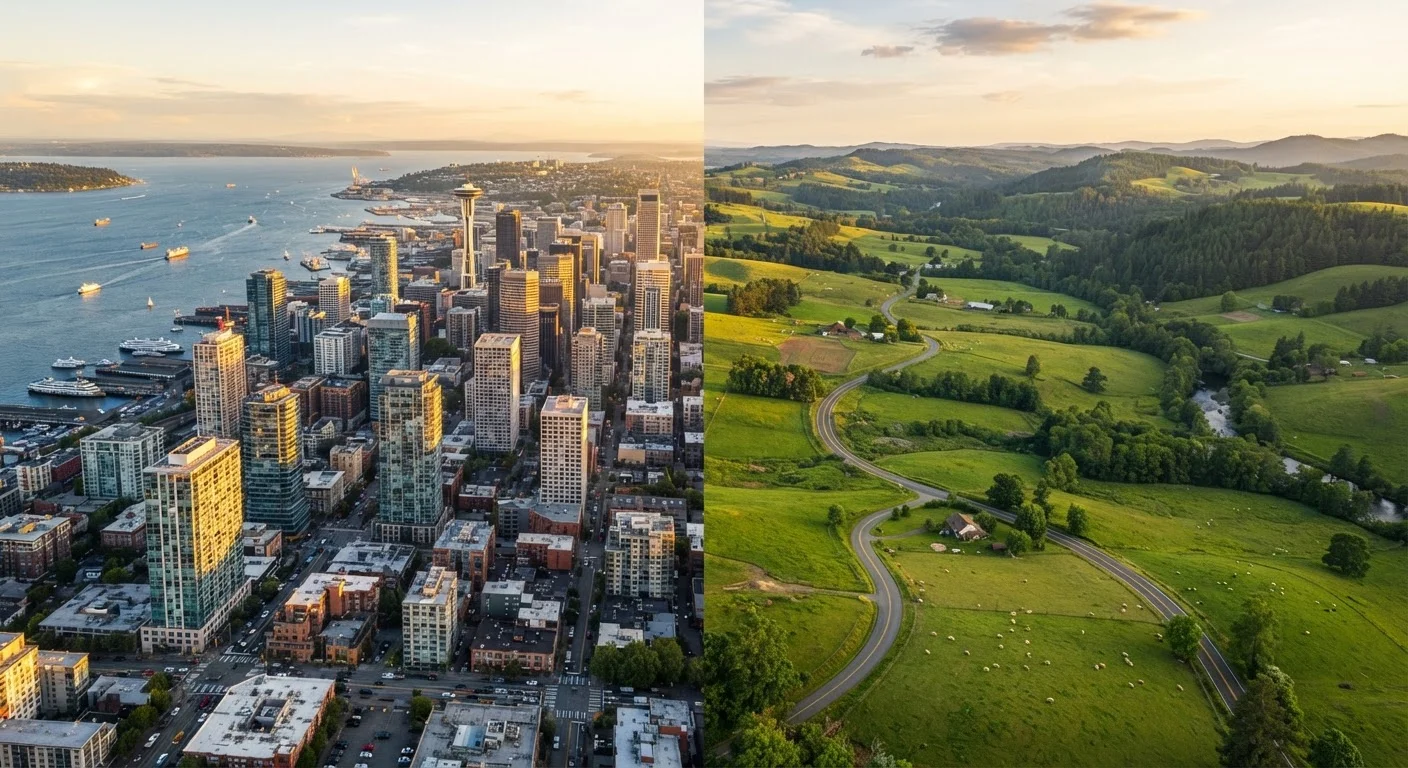
Urban travel wins on cultural density and convenience, especially for social travelers who want to pack a lot into a short window. Rural travel wins on cost-per-experience and immersive calm, particularly for those willing to drive and self-cater. Neither is universally superior — the right choice depends on your pace preference, party size, and how far your budget needs to stretch.
| Best for | Recommended |
|---|---|
| Social travelers who want nightlife, museums, and dining variety | Urban Travel |
| Budget-conscious travelers who prioritize nature and solitude | Rural Travel |
| First-time domestic travelers wanting structured, walkable experiences | Urban Travel |
| Road-trippers with flexible schedules and a car already available | Rural Travel |
What You're Actually Choosing Between
When Americans debate city breaks versus rural escapes, the conversation usually gets stuck on scenery. But the real differences run deeper — into daily costs, how much planning is required, what kind of tired you feel at the end, and whether the experience matches who you actually are as a traveler.
Urban travel in the US means destinations like Chicago, New Orleans, Portland, or Nashville: compact, walkable (or transit-friendly), loaded with museums, restaurants, live music, and street life. Rural travel covers everything from Appalachian ridge towns and Great Plains drives to high-desert camping in Utah or kayaking the Ozark rivers. These aren't just different vibes — they're structurally different trips. For a broader view of how destination type interacts with your budget, see the planning around a budget guide.
| Urban Travel | Rural Travel | |
|---|---|---|
| Typical lodging cost | Higher — hotels, hostels, short-term rentals | Lower — campgrounds, cabins, small B&Bs |
| Transportation needed | Often walkable or transit-accessible | Personal or rental car usually required |
| Food flexibility | Wide range from street food to fine dining | Self-catering or limited local restaurants |
| Activity cost | Mix of free (parks, murals) and paid (museums) | Often free (hiking, swimming) with some fees |
| Planning complexity | Lower — options are dense and improvisation works | Higher — requires more advance logistics |
| Best trip length | 2–4 days fits most city itineraries well | 3–7 days to justify travel and truly decompress |
| Crowd level | Higher — especially on weekends and holidays | Lower — seasonally quiet except peak periods |
The Cost Breakdown: Where Each Style Spends and Saves
Urban lodging is the biggest variable. Hotel rates in major American cities can range widely — a modest room in a mid-tier city like Memphis or Albuquerque may cost noticeably less than an equivalent stay in San Francisco or New York, where even budget options push high nightly rates. Food costs follow a similar pattern: cities offer cheap street food and market lunch deals alongside pricey sit-down spots, so disciplined urban travelers can eat affordably — but temptation is everywhere.
Rural trips shift the cost structure dramatically. Campsite fees at state parks are generally a fraction of urban hotel rates, and self-catering from a grocery run replaces restaurant dependency. The catch: you almost always need a car, and fuel, tolls, and potential rental costs must be factored in honestly. The road trip vs. flying cost comparison breaks down those numbers in detail. Also watch for hidden rural costs — entrance fees, gear rentals, and food markups near tourist areas. The guide to where domestic budgets break down covers exactly these traps.
$150–$250+
Average nightly hotel rate in major US cities
According to general lodging data, major urban markets like NYC, SF, and Chicago consistently command premium rates compared to rural alternatives.
$20–$45
Typical nightly campsite fee at US state parks
State park campsite fees vary by state and amenity level, but generally represent significant savings over urban lodging for budget travelers.
2–3x
Cost multiplier for group cabin vs. solo hotel rooms
Splitting a rural cabin or vacation rental among a group of four can reduce per-person lodging costs dramatically compared to individual urban hotel bookings.
Personality Fit: Which Traveler Are You?
Urban travel rewards spontaneity. You can decide at 10 p.m. to catch live jazz, find a ramen spot that's still open, or wander a neighborhood you didn't plan to visit. Cities are forgiving of loose itineraries because options are dense. If you get energy from people-watching, trying new food, and feeling the pulse of a place, city travel tends to deliver a high satisfaction-per-hour ratio — especially on a long weekend in an unfamiliar US city.
Rural travel rewards deliberate planners and self-sufficient types. Trailheads don't have backup options if you forgot water. Charming small towns often roll up the sidewalks early. But for travelers who find city noise exhausting, the payoff — genuine quiet, dark skies, wildlife, and landscapes that feel earned — is hard to replicate. Group size matters here too: a cabin split among four people often costs less per person than four separate urban hotel rooms.
Try a Mid-Size City for the Best of Both
Mid-size American cities — think Asheville, NC; Bozeman, MT; or Flagstaff, AZ — often sit at the intersection of urban convenience and rural access. You get walkable dining and cultural venues, with national forests or parks within a short drive. These destinations frequently cost less than major metros while delivering outsized experiences, making them ideal for travelers who can't fully commit to either extreme.
Mixing Both: The Hybrid Approach Worth Considering
Many of the most satisfying domestic trips blend both modes. Fly or take a train into a mid-sized city for two days of culture, then rent a car and drive into surrounding rural terrain for the back half of the trip. The Upper South, Pacific Northwest, and New England all lend themselves naturally to this structure — city anchor, rural reward.
Timing also shapes the math significantly. Urban trips near major festivals can spike hotel prices considerably, while rural destinations may have narrow seasons where accessibility and weather align. The guide to festivals and city visit timing is useful for avoiding costly urban weekends. For broader strategy, the budget travel tips hub offers planning frameworks that work for both styles. And if you're still weighing how much ground to cover versus how deeply to settle in, slow travel vs. fast travel addresses exactly that tension.
This article provides general travel information for educational purposes. Costs, availability, and conditions vary and may change. Always verify current prices, entry requirements, and safety conditions with official sources before traveling.
The content provided on our blog site traverses numerous categories, offering readers valuable and practical information. Readers can use the editorial team’s research and data to gain more insights into their topics of interest. However, they are requested not to treat the articles as conclusive. The website team cannot be held responsible for differences in data or inaccuracies found across other platforms. Please also note that the site might also miss out on various schemes and offers available that the readers may find more beneficial than the ones we cover.