

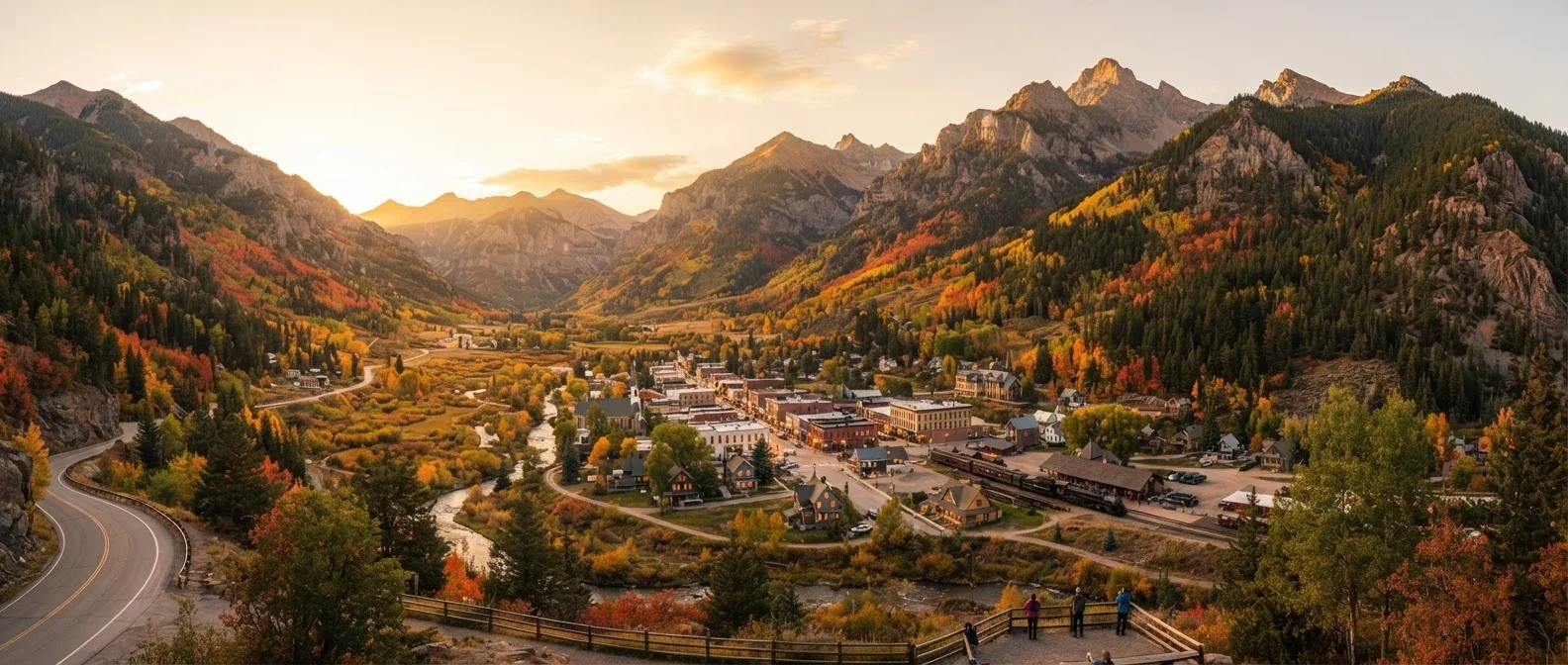
Why Mountain Towns Beat Resort Towns on Value
Ski resorts are engineered to extract maximum spend from visitors — lift tickets, gear rentals, slope-side lodging, and après-ski cocktails all carry a significant premium. But the mountain scenery those resorts capitalize on? It doesn't stop at the resort boundary. Dozens of small American mountain communities sit near world-class wilderness, historic heritage, and genuinely distinct local culture — without the branded price spike.
Whether you're chasing wildflower meadows in summer, golden aspen canopies in fall, or crisp snow hikes in winter, these towns reward the curious traveler in every season. And because they aren't anchored to a single resort calendar, their lodging, dining, and activity costs stay far more stable throughout the year. Pair that with smart shoulder season timing and your dollar stretches even further.
Below are seven mountain towns across the U.S. that consistently over-deliver on experience without demanding resort-level budgets. Prices and conditions vary, so always verify current information before you travel.
Salida, Colorado
Tucked into the Upper Arkansas River Valley and ringed by fourteen 14,000-foot peaks, Salida punches well above its weight. The historic downtown — a National Historic District — is walkable, filled with locally owned galleries, cafes, and live music venues. Summer brings world-class whitewater kayaking on the Arkansas River and access to the Monarch Crest Trail. Winter offers snowshoeing and cross-country skiing without the Breckenridge lift ticket price. Lodging options range from budget motels to quirky Victorian B&Bs, and the cost of a meal here reflects a working mountain community, not a resort zip code.
Salida sits among Colorado's highest peaks with a genuine arts scene and no resort markup.
Leavenworth, Washington
This Cascade foothills town styled after a Bavarian village draws visitors year-round for reasons that go well beyond the novelty architecture. The surrounding Wenatchee National Forest offers exceptional trail access in every season — wildflower hikes in spring, backpacking routes in summer, snowshoe paths in winter. The town hosts a well-regarded Christmas lighting festival and an Oktoberfest celebration that attract crowds, so visiting just before or after those events saves meaningfully on accommodation. Day trips to the nearby Enchantments region (permit required) represent some of the most stunning alpine scenery in the Pacific Northwest at no trail fee.
Leavenworth gives you Cascade Mountain access and four distinct seasonal draws in one compact town.
Brevard, North Carolina
In the Blue Ridge foothills near Asheville, Brevard serves as a gateway to Pisgah National Forest — one of the Southeast's most accessible wilderness areas. The town has earned a reputation for mountain biking, with trail systems that attract riders nationally. Come summer, the Transylvania County waterfalls circuit (there are over 250 in the county) keeps hikers busy for days. Local accommodations are considerably less expensive than Asheville, which sits just 35 miles east, making Brevard an ideal base for exploring the broader region at lower cost.
Brevard gives you Blue Ridge wilderness access at noticeably lower prices than its famous neighbor, Asheville.
Driggs, Idaho
On the western slope of the Tetons, Driggs sits in Teton Valley just across the Idaho border from Wyoming's heavily trafficked Grand Teton National Park corridor. The views of the Teton Range from Driggs are genuinely spectacular — and lodging here runs a fraction of what Jackson Hole commands. Targhee National Forest surrounds the town with trail access, while Grand Targhee Resort nearby offers skiing at rates notably below Jackson Hole Mountain Resort. Year-round residents keep the community grounded and genuine, and the local food scene leans toward unpretentious quality.
Driggs delivers Teton views and wilderness access with lodging costs that can be dramatically lower than Jackson Hole.
Taos, New Mexico
Taos operates on its own cultural logic — a high-desert mountain town at 6,967 feet elevation shaped by Pueblo, Spanish colonial, and American artistic traditions. The Taos Pueblo, a UNESCO World Heritage Site and continuously inhabited community for over 1,000 years, is a short drive from downtown. The nearby Sangre de Cristo Mountains offer hiking and skiing through Taos Ski Valley, but the town itself rewards slow exploration: galleries, adobe architecture, and a thriving local food culture that draws on New Mexican cuisine. It pairs naturally with high-value, low-cost destination strategies for road trippers.
Taos blends UNESCO heritage, high-altitude trails, and a distinctive arts culture into one remarkably affordable package.
Ouray, Colorado
Called the "Switzerland of America" for its dramatic box canyon setting, Ouray is a compact mining-era town that has reinvented itself as an outdoor adventure hub without becoming a full resort. The Ouray Ice Park — the world's first public ice climbing park — draws climbers every winter at no entry fee. Summer brings jeep tours through the San Juan Mountains and access to hundreds of miles of backcountry trails. The town's natural hot springs pool offers affordable soaking year-round. Because Ouray lacks a major ski mountain, its off-season pricing remains accessible even during Colorado's peak winter travel window.
Ouray's ice climbing park is free to use — a rare find in an era of rapidly increasing outdoor recreation costs.
Truckee, California
Truckee sits in the Sierra Nevada just north of Lake Tahoe and, critically, just outside the resort price bubble that inflates accommodation across the South Shore and Squaw Valley areas. The historic downtown has genuine character — a working railroad town with independent restaurants and a local economy not entirely dependent on ski tourism. Donner Memorial State Park and the surrounding Tahoe National Forest offer year-round trail access. In summer, the proximity to Lake Tahoe's public beaches (several of which are free or low-cost) makes Truckee a cost-effective base for one of California's most stunning natural regions.
Staying in Truckee rather than on Lake Tahoe's resort shore can save meaningfully without sacrificing scenery or access.
Planning Your Mountain Town Trip Affordably
The biggest savings lever in mountain travel is flexibility. Most of these towns see their accommodation costs dip noticeably outside of peak summer weekends and holiday ski weeks. Booking a Tuesday-to-Friday stay instead of a weekend visit can meaningfully reduce what you pay for the same room.
Time Your Visit Around Local Events
Every town on this list hosts at least one annual event — a music festival, a harvest celebration, a race — that causes accommodation prices to spike for that specific weekend. A quick check of local event calendars before booking can help you avoid inadvertently landing on the most expensive weekend of the year. Traveling midweek in the shoulder weeks surrounding those events often gets you the best of both worlds: good weather and low prices.
Public lands surrounding these communities — national forests, BLM tracts, state parks — are often free or low-cost to enter. That means trails, rivers, and scenic viewpoints are accessible without spending a dime on admission. For more ideas, see America's free outdoor attractions and lesser-known national parks nearby.
If you're building a broader road trip, these mountain stopovers pair beautifully with desert routes — check out the American Southwest on a tight budget for complementary itinerary ideas. And for a wider toolkit, the Budget Travel Tips hub covers everything from finding affordable accommodation to keeping food costs down on the road.
This article is for general informational and inspirational purposes only. Prices, conditions, and availability change frequently — always verify current details with local tourism offices, accommodation providers, and relevant government sources before making travel plans.
The content provided on our blog site traverses numerous categories, offering readers valuable and practical information. Readers can use the editorial team’s research and data to gain more insights into their topics of interest. However, they are requested not to treat the articles as conclusive. The website team cannot be held responsible for differences in data or inaccuracies found across other platforms. Please also note that the site might also miss out on various schemes and offers available that the readers may find more beneficial than the ones we cover.