

Why These Myths Persist — and Why They're Worth Challenging
Ask a group of young Americans why they haven't explored more of their own country, and a pattern emerges quickly: it's too expensive, there's nothing new to see, or real adventure requires a plane ticket abroad. These beliefs feel intuitive, especially when social media fills feeds with exotic international destinations. But they hold up poorly against the facts.
The US spans nearly 3.8 million square miles, contains 63 national parks, hundreds of state parks, vast stretches of Bureau of Land Management (BLM) land, and dozens of genuinely distinct regional cultures. The barriers to exploring them are frequently psychological — built on myths rather than reality. Understanding where those myths come from is the first step to leaving them behind. For broader planning tools, the Trip Planning Basics hub covers everything from packing strategy to booking timelines.
Myth
You need a big budget to have a worthwhile travel experience in the US.
Fact
Many of America's most spectacular destinations are free or very low cost to access, particularly national forests, BLM land, and state parks.
The assumption that meaningful travel requires serious money is one of the most discouraging — and least accurate — myths out there. Federal lands managed by agencies like the Bureau of Land Management allow free dispersed camping across millions of acres. The America the Beautiful pass grants access to all 63 national parks for a single annual fee that typically pays for itself within one or two visits. Hostels, camping, and budget lodging make overnight stays affordable in most regions. Thoughtful planning, not a large income, is the real differentiator. For a deep dive into strategies, The Complete Guide to Funding Long-Term Budget Travel walks through saving approaches and cost-cutting frameworks that apply to domestic trips too.
Myth
Everything worth seeing in the US requires flying — it's just too spread out to travel cheaply.
Fact
Road trips and intercity bus and train routes make vast swaths of the country reachable without airfare, often revealing more interesting stops along the way.
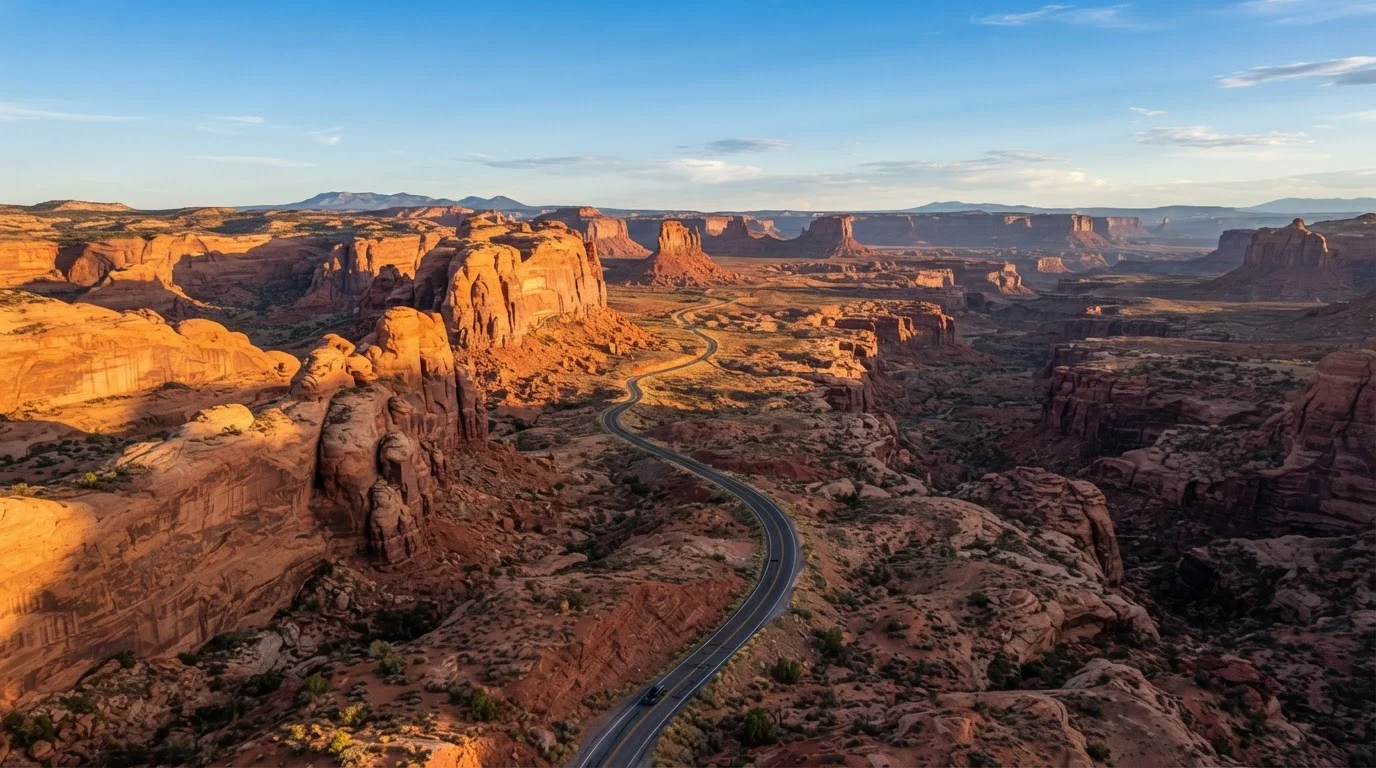
The US interstate and highway system is genuinely one of the most road-trip-friendly networks in the world. Routes like the Pacific Coast Highway, the Blue Ridge Parkway, and Highway 89 through the Colorado Plateau are considered destinations in their own right — not just connective tissue between cities. Amtrak's long-distance routes cover over 500 destinations, and intercity bus services have expanded significantly in recent years. Flying creates a point-to-point experience; driving or riding the rails creates a journey. Neither is universally better, but dismissing surface travel as impractical ignores enormous swaths of accessible, affordable America.
Myth
Domestic travel is boring compared to going abroad — there's nothing culturally new to discover.
Fact
The US contains dozens of genuinely distinct regional cultures, languages, cuisines, and histories that most Americans have never experienced firsthand.
New Orleans' French Creole architecture and music scene is unlike anywhere else in the country — or the world. The Navajo Nation covers over 17 million acres across three states and carries living traditions, languages, and landscapes most Americans have never encountered. Appalachian food culture, Louisiana Cajun communities, the Texas Hill Country, the Mississippi Delta music corridor — these are not generic American backdrops. They're places with stories, tensions, and flavors that reward curious, respectful visitors. Treating domestic travel as culturally thin usually reflects unfamiliarity rather than reality. Low-cost destinations that offer high-value experiences explores this further.
Myth
Budget travel in the US means sacrificing safety or comfort.
Fact
Traveling affordably doesn't inherently mean traveling unsafely — good planning and common sense matter far more than spending level.
The link between low cost and low safety is a myth worth questioning directly. Staying at a well-reviewed budget hostel, camping at an established campground, or taking an intercity bus are not inherently risky choices. Like any travel, domestic or international, outcomes depend heavily on preparation: researching your destination, understanding local conditions, and applying basic situational awareness. Spending more on accommodation doesn't automatically make a trip safer — and spending less doesn't automatically make it dangerous. Why 'Budget Travel Is Unsafe' and Other Myths Worth Questioning unpacks this assumption with more depth.
Myth
You need months of planning and lots of vacation days to travel meaningfully.
Fact
A two- to three-day long weekend trip to a nearby US city or natural area can deliver genuine, memorable experiences with modest advance planning.
The idea that a trip only counts if it's long and elaborately planned keeps many people from traveling at all. In reality, a well-planned 72-hour trip to an unfamiliar city — or a weekend at a nearby state park — can shift perspective, build confidence, and deliver the refreshment that travel is supposed to provide. Many planning myths compound this: believing you need to book months ahead, or that last-minute always means a deal. Travel planning myths that lead new travelers astray addresses these directly so you can build a realistic, low-stress approach from the start.
What the Numbers Actually Say About Domestic Travel Costs
One of the most persistent myths is that a meaningful trip demands a significant budget. The data tells a different story. Camping fees at many national forest sites run $10–$25 per night, and some dispersed camping on BLM land is free entirely. A weeklong road trip through the Southwest can cost a fraction of a comparable international trip once you factor in flights, currency conversion, and international roaming charges.
63
National parks across the US
The National Park Service manages 63 designated national parks, along with over 400 additional sites including monuments, seashores, and recreation areas.
$80
Annual America the Beautiful pass cost
The Interagency Annual Pass (America the Beautiful) provides access to all national parks and federal recreation lands for a single annual fee, as listed by the National Park Service.
245M+
Acres of public BLM land in the US
According to the Bureau of Land Management, the agency manages approximately 245 million surface acres of public land, much of it open to free or low-cost recreation.
That said, budgets do break down in predictable places — resort fees, food markups near tourist zones, and fuel price swings can quietly erode savings. Being aware of those pressure points in advance is what separates a smooth trip from a stressful one. See where domestic travel budgets usually break down for a detailed look at the specific costs that catch travelers off guard.
The Budget Travel Tips hub is also a strong starting point for anyone building a realistic domestic travel fund from scratch.
Watch for Hidden Costs Before You Go
Even budget-friendly domestic trips can surprise you with resort fees, parking charges, and food markups near popular tourist areas. Building a small contingency buffer into your trip budget — typically 10–15% of expected costs — helps absorb these without stress. Always check current park fee schedules and campsite availability directly with the managing agency before finalizing plans.
Turning Myth into Motivation: Planning Your First Domestic Adventure
Once the myths are out of the way, the more exciting question becomes: where do you actually start? The US offers genuinely distinct travel experiences depending on your style and timeline. A long weekend in a city you've never visited can deliver as much novelty as an international trip — getting the most out of a long weekend in an unfamiliar US city is easier than most people assume with intentional planning.
If you're weighing city breaks against outdoor adventures, urban vs. rural US travel breaks down how each stacks up for budget, pace, and memorable experiences. And for those curious about what free actually means in practice, America's free outdoor attractions covers public lands, scenic byways, and coastal access points that cost nothing to enjoy.
Domestic travel isn't a consolation prize. For young adults building a habit of exploration on a real-world budget, it's often the smartest place to start.
This article is for general informational purposes only. Travel costs, park fees, and access rules change frequently — always verify current conditions with official sources such as the National Park Service or relevant state agencies before your trip.
The content provided on our blog site traverses numerous categories, offering readers valuable and practical information. Readers can use the editorial team’s research and data to gain more insights into their topics of interest. However, they are requested not to treat the articles as conclusive. The website team cannot be held responsible for differences in data or inaccuracies found across other platforms. Please also note that the site might also miss out on various schemes and offers available that the readers may find more beneficial than the ones we cover.