

What the Pass Actually Gets You In To
The America the Beautiful Pass covers entrance fees at federal recreation sites managed by six agencies: the National Park Service, U.S. Forest Service, Bureau of Land Management, Bureau of Reclamation, U.S. Fish & Wildlife Service, and Army Corps of Engineers. That umbrella is broader than most people realize — it includes national parks, yes, but also national forests, wildlife refuges, grasslands, and Bureau of Reclamation day-use areas.
At vehicle-based entry points, the pass covers everyone riding in your non-commercial car or truck. At walk-in or per-person sites, the pass covers the named cardholder plus up to three adults; kids under 16 always enter free. The pass is non-transferable — the cardholder must be present.
Site-Specific Rules Can Vary
Individual federal sites have discretion over which fees the pass waives. Some heavily congested parks now require timed-entry reservations with separate fees even for pass holders. Always verify directly with the specific site — Recreation.gov and each park's official NPS page are reliable starting points.
Not every federal site charges an entrance fee, which means the pass isn't required everywhere. Check the individual site's page on Recreation.gov before assuming a fee applies. For a look at entirely free federal and public lands worth visiting, see America's free outdoor attractions.
What the Pass Does NOT Cover
This is where many first-time pass holders get caught off guard. The pass only waives entrance fees. You will still pay separately for:
- Camping and overnight stays — reservation and nightly fees apply regardless of pass status
- Boat launch fees at Army Corps of Engineers and Bureau of Reclamation sites
- Parking fees at congestion-managed sites like Arches National Park's timed entry permits
- Expanded amenity fees such as transportation shuttle systems (e.g., Zion's required shuttle)
- Guided tours and special permits including those for backcountry zones
- State-managed lands — the pass has zero effect at state parks or state forests
2,000+
Federal recreation sites covered
According to the U.S. Geological Survey, the Interagency Annual Pass is accepted at more than 2,000 federally managed recreation sites nationwide.
$80
Standard annual pass cost
The standard America the Beautiful Pass has been priced at $80 per year, while the senior annual pass for ages 62+ costs $20.
$35
Typical per-vehicle entrance fee
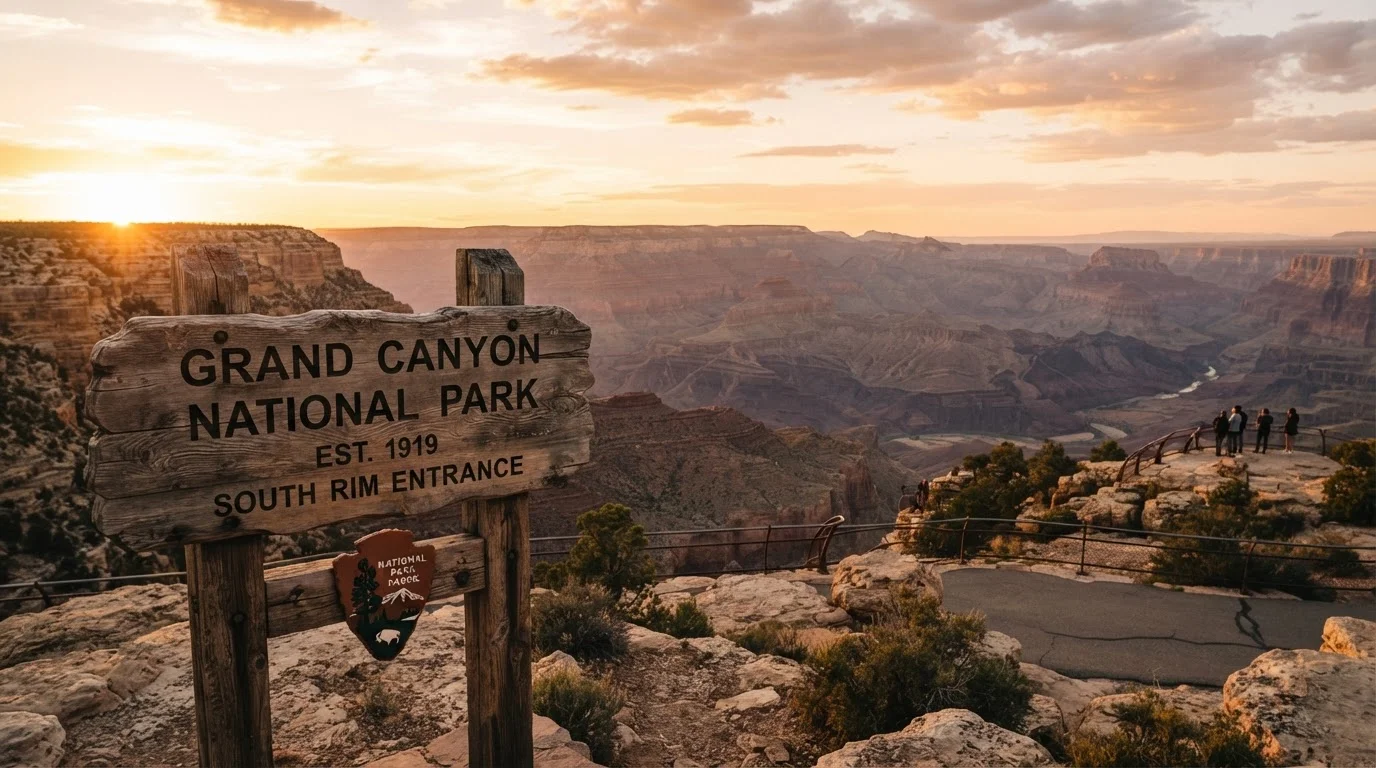
Many of the most-visited national parks, including Grand Canyon and Yellowstone, charge $35 per vehicle — meaning two visits break even with the annual pass price.
Timed-entry permit systems, now common at heavily visited parks, are also separate from the pass. Always verify requirements on official park websites well before your trip.
The Simple Math: Does It Pay Off?
The standard pass costs $80 per year. Here's how quickly it recups that cost:
| Site | Typical Vehicle Fee |
|---|---|
| Grand Canyon National Park | $35 |
| Yellowstone National Park | $35 |
| Zion National Park | $35 |
| Olympic National Park | $30 |
Two visits to parks with $35 entrance fees saves you $70 — nearly the full price of the pass. Add a third stop and you're well ahead. If your travel style includes multiple national parks, a road trip through federal forest land, or regular weekend visits to a national recreation area, the pass pays for itself without much effort.
Check Fee Status Before You Drive
Not all federal sites charge entrance fees, and some that do offer free admission on certain federal holidays. Before a trip, always check the official website for your destination to confirm current fees, timed entry requirements, and whether your pass applies to the specific areas you plan to visit.
For a useful comparison of how annual passes work in everyday transit contexts, see how monthly transit passes are structured — the break-even logic is similar.
Free and Discounted Passes Worth Knowing
The $80 sticker price isn't what everyone pays. Several populations qualify for deeply reduced or free access:
- Military Pass
- Free annual pass for current U.S. military members and their dependents. Available at any federal recreation site with valid ID.
- Senior Pass (Age 62+)
- U.S. citizens and permanent residents aged 62 and older can choose a $20 annual pass or an $80 lifetime pass — one of the best long-term values in outdoor recreation.
- Access Pass
- Free lifetime pass for U.S. citizens or permanent residents with a permanent disability. Also provides discounts on some amenity fees.
- Volunteer Pass
- Free annual pass after completing 250 hours of service on federally managed lands.
Each pass type requires specific documentation at the time of purchase. Verify current eligibility requirements on the official Recreation.gov or USGS store pages before heading out.
Frequently Asked Questions
The pass can be purchased online through the USGS store, by phone, or in person at any federal recreation site that charges an entrance fee. Many visitors pick it up at the first park they visit on a road trip.
No. The America the Beautiful Pass covers entrance fees only. Campsite reservations, amenity fees, and permit fees must be paid separately and are not waived by the pass.
Yes, but with conditions. At vehicle-entry sites, the pass covers everyone in a single non-commercial vehicle. At per-person entry sites, it covers the pass holder plus up to three accompanying adults; children under 16 are always free.
No. The pass only applies to federally managed lands. State parks and state forests have their own separate fee systems and do not accept the interagency pass.
U.S. military members and their dependents receive a free annual pass. U.S. citizens or permanent residents with permanent disabilities can obtain a lifetime pass for a one-time $80 fee or a free annual pass. U.S. residents aged 62 and older can purchase a lifetime senior pass for $80 or an annual senior pass for $20. Volunteers with 250 qualifying service hours on federal lands also receive a free pass.
Entrance to many major national parks — such as Grand Canyon, Yellowstone, and Zion — runs $35 per vehicle. Visiting just three of these parks makes the $80 pass break even. Anyone planning two or more visits to fee-charging federal sites in a year will likely come out ahead.
The content provided on our blog site traverses numerous categories, offering readers valuable and practical information. Readers can use the editorial team’s research and data to gain more insights into their topics of interest. However, they are requested not to treat the articles as conclusive. The website team cannot be held responsible for differences in data or inaccuracies found across other platforms. Please also note that the site might also miss out on various schemes and offers available that the readers may find more beneficial than the ones we cover.