

Our Verdict
Calorie density and nutrient density are complementary lenses, not competing rules. Calorie density helps you understand how filling a food is relative to its energy load, while nutrient density tells you how much nutritional value you're getting per calorie. For young adults eating on a budget, the most practical approach is to anchor meals around foods that score well on both measures — think legumes, whole grains, eggs, and frozen produce — without needing to obsess over numbers.
| Best for | Recommended |
|---|---|
| Those managing weight or hunger on a tight budget | Prioritizing low calorie density foods |
| Those focused on filling nutritional gaps without expensive supplements | Prioritizing high nutrient density foods |
| Most everyday meal planning situations | Balancing both calorie and nutrient density together |
What These Two Terms Actually Mean
If you've spent any time reading about nutrition, you've probably seen both phrases tossed around — often without a clear explanation of what sets them apart. Here's the simple version.
Calorie density refers to how many calories a food contains relative to its weight or volume. Foods like chips, cooking oils, and pastries pack a large number of calories into a small amount. Foods like leafy greens, broth-based soups, and watermelon contain relatively few calories for their size — mostly because they're high in water and fiber.
Nutrient density, on the other hand, is about how much nutritional value — vitamins, minerals, fiber, protein, and other beneficial compounds — a food delivers per calorie consumed. A food can be low in calories and still offer very little nutrition (think plain rice cakes). A food can also be calorie-dense and highly nutritious at the same time, like almonds or salmon.
Understanding both concepts — rather than just one — gives you a more complete picture of what you're actually eating. See our plain-language breakdown of macronutrients for more on the building blocks of any eating pattern.
How They Compare Side by Side
Looking at these two frameworks directly helps clarify when each one is most useful — and where they overlap.
| Calorie Density | Nutrient Density | |
|---|---|---|
| What it measures | Calories per gram or serving | Nutrients per calorie |
| Primary use | Managing energy intake and hunger | Maximizing nutritional value |
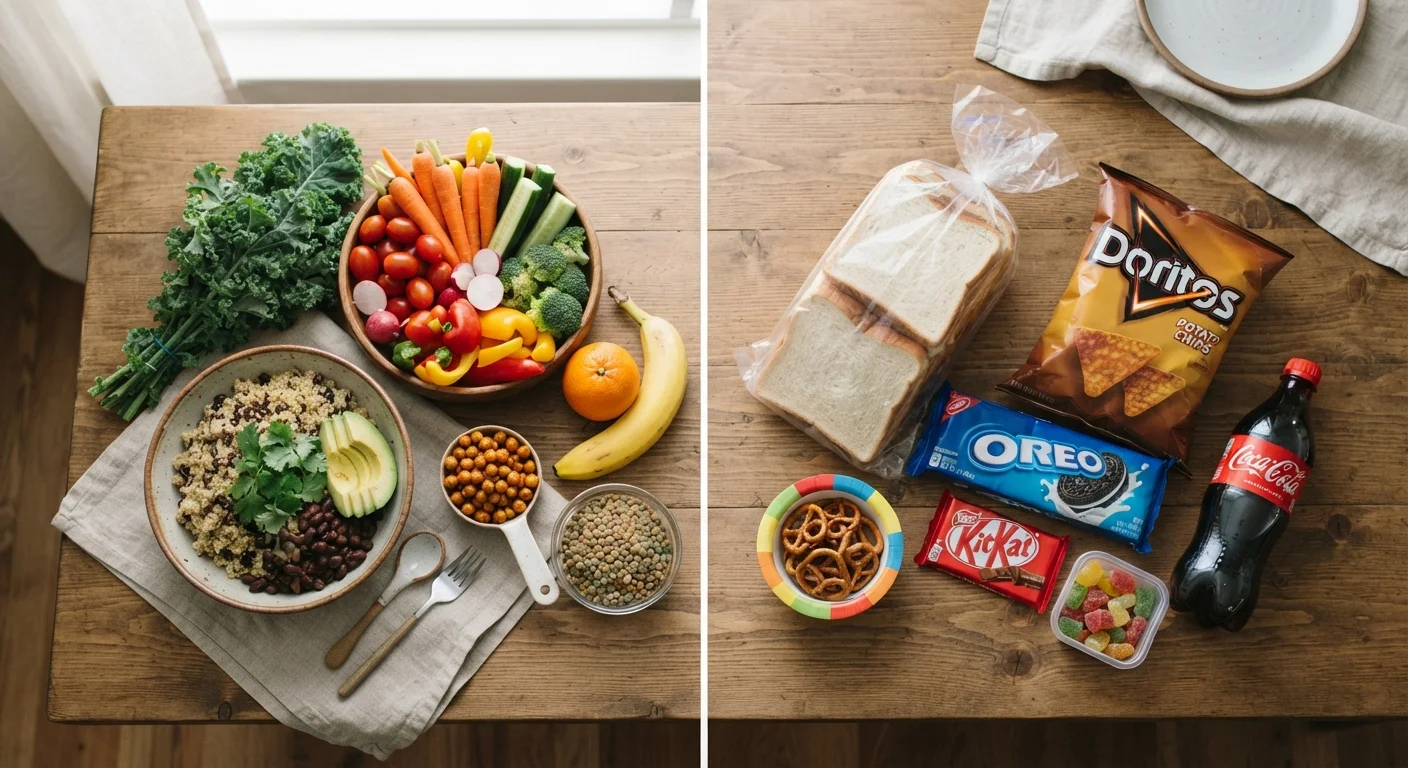
| High examples | Oils, nuts, pastries, chips | Leafy greens, legumes, eggs, liver |
| Low examples | Cucumbers, lettuce, broth | Soda, white bread, candy |
| Budget friendliness | Varies widely | Many high-nutrient foods are low cost |
| Best paired with | Satiety and portion awareness | Micronutrient and fiber tracking |
The overlap zone — foods that are low in calorie density and high in nutrient density — is where many nutrition experts suggest anchoring the bulk of your diet. Legumes, non-starchy vegetables, and whole grains tend to live here. Budget-friendly proteins like eggs and lentils are a perfect example: they're filling, affordable, and nutritionally rich.
Why Both Matter When You're Eating on a Budget
When money is tight, the pressure to buy whatever is cheapest can push eating habits in two problematic directions: toward highly processed, calorie-dense foods that are cheap per package, or toward under-eating out of fear of spending too much. Neither is ideal.
The good news is that some of the most nutrient-dense foods are also among the most affordable — and many of them have low calorie density too. Canned beans, frozen spinach, oats, eggs, and carrots are all examples. They fill you up without delivering empty calories, and they're typically inexpensive per serving.
Focus on Cost Per Nutrient, Not Cost Per Calorie
When comparing foods at the store, try thinking about what each dollar buys you nutritionally — not just in raw calories. A bag of dried lentils, for example, typically costs under two dollars and provides substantial protein, iron, and fiber across many servings. That's a high return on both nutrition and spending. Frozen vegetables often follow the same logic: inexpensive, long-lasting, and genuinely nutritious.
Conversely, many highly calorie-dense, low-nutrient foods — like sweetened beverages, packaged snack cakes, and fast food — can actually cost more per unit of nutrition than their wholesome counterparts. Price per calorie is not the same as price per nutrient.
If you want to sharpen your skills at evaluating foods in the grocery store, reading nutrition labels without getting misled is a practical next step.
Putting It Into Practice
You don't need to calculate scores or track numbers to use these ideas. A few practical habits go a long way:
- Fill half your plate with high-volume, low-calorie foods — vegetables, salads, or broth-based soups — before adding more calorie-dense items. This naturally manages energy intake without strict restriction.
- Evaluate packaged foods by what they offer, not just what they contain. A food low in calories but also low in protein, fiber, and micronutrients may not serve you well. National dietary guidelines generally steer people toward foods that provide genuine nutritional value per calorie.
- Think in food groups, not individual foods. No single food defines your diet. Beans are nutrient-dense and filling; pairing them with whole grains creates a more complete nutritional profile at a low cost. Plant-based eating on a budget explores this further.
The goal isn't perfection — it's building a general sense of which foods are working hardest for your body and your wallet, so your choices become more intuitive over time.
This article is for general informational and educational purposes only and does not constitute medical or dietary advice. For personalized nutrition guidance, please consult a registered dietitian or qualified healthcare professional.
The content provided on our blog site traverses numerous categories, offering readers valuable and practical information. Readers can use the editorial team’s research and data to gain more insights into their topics of interest. However, they are requested not to treat the articles as conclusive. The website team cannot be held responsible for differences in data or inaccuracies found across other platforms. Please also note that the site might also miss out on various schemes and offers available that the readers may find more beneficial than the ones we cover.