

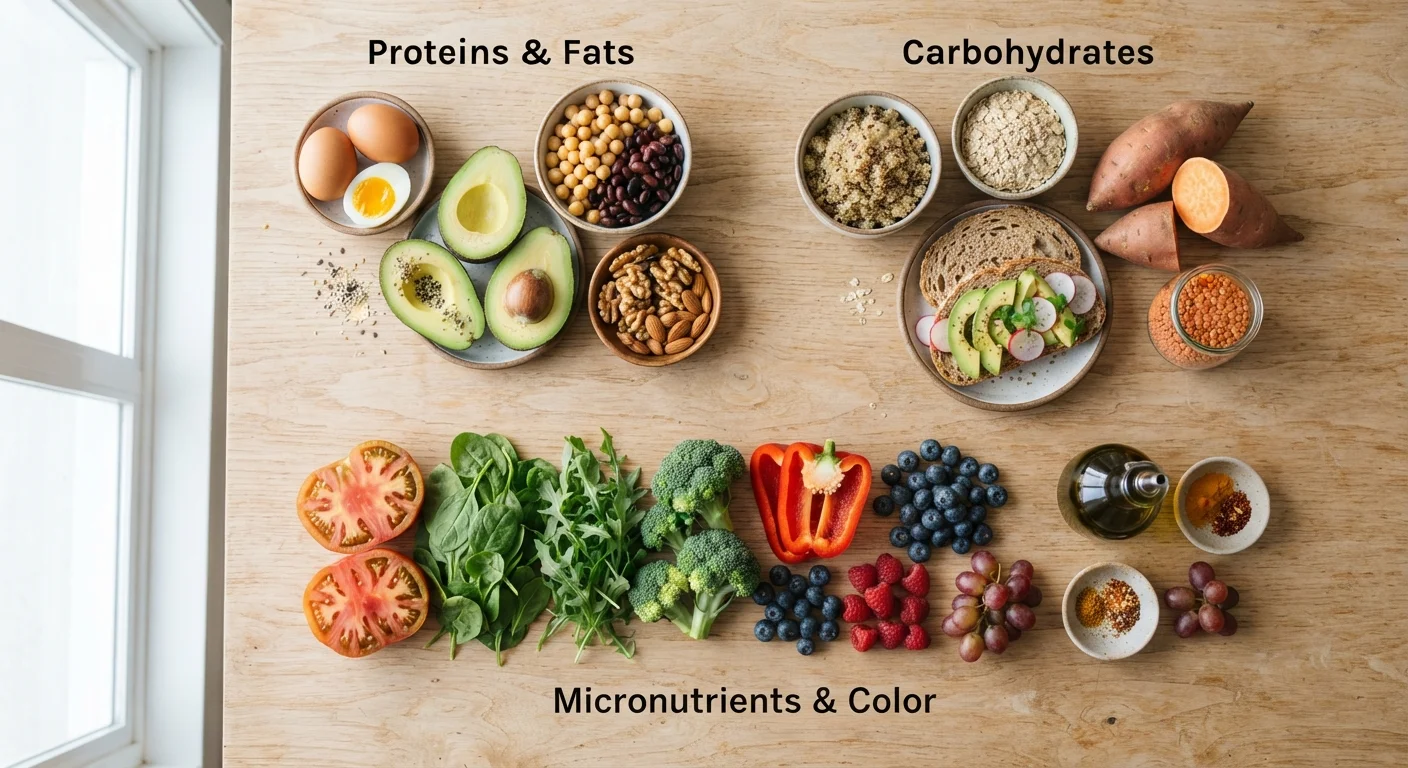
What Carbohydrates Actually Do
Carbohydrates are your body's preferred source of quick energy. When you eat carbs — from bread, rice, fruit, or beans — your digestive system breaks them down into glucose, which your cells use as fuel. Your brain is especially reliant on a steady supply of glucose to function well.
Not all carbohydrates behave the same way. Simple carbs (like table sugar or white bread) digest quickly, causing a faster rise in blood sugar. Complex carbs (like oats, legumes, and vegetables) digest more slowly and tend to come packaged with fiber, which supports digestion and helps you feel full longer.
Fiber deserves a special mention here. It's technically a carbohydrate, but your body can't digest it for energy. Instead, it feeds beneficial gut bacteria, helps regulate blood sugar, and supports heart health. Most Americans fall short of recommended fiber intake, so prioritizing whole-food carb sources is one of the simplest moves you can make. If you're curious how to spot fiber on a food label, our guide on reading a nutrition label breaks it down clearly.
Choose Whole-Food Carb Sources When You Can
Rather than counting carb grams, focus on the quality of the source. Beans, lentils, oats, sweet potatoes, and whole-grain bread all deliver carbohydrates alongside fiber, vitamins, and minerals. These tend to be among the most affordable items in a grocery store as well, making them a practical choice for budget-conscious shoppers.
What Protein Does Beyond Building Muscle
Protein has a well-earned reputation in the fitness world, but its role goes far beyond muscle building. Proteins are made of amino acids — the raw materials your body uses to make enzymes, hormones, immune cells, and structural tissues like skin and hair. Even your DNA repair processes depend on adequate protein intake.
When you eat protein from sources like eggs, chicken, lentils, or tofu, your body breaks it down into amino acids and reassembles them for whatever your cells need at that moment. Some amino acids are considered essential, meaning your body can't make them on its own — you need to get them from food.
Animal-based proteins (meat, fish, dairy, eggs) typically contain all essential amino acids. Plant-based proteins can too, particularly when you eat a variety of sources across the day — legumes, whole grains, nuts, and seeds together cover the full range. This makes a balanced, plant-forward diet very workable even on a tighter budget.
~10–35%
Recommended daily calorie share from protein
According to the U.S. Dietary Reference Intakes, the Acceptable Macronutrient Distribution Range (AMDR) for protein is 10–35% of total daily calories for adults.
45–65%
Recommended daily calorie share from carbohydrates
The U.S. AMDR for carbohydrates is 45–65% of total daily calories, reflecting their central role as the body's primary energy source.
~95%
Americans falling short of daily fiber goals
Research published in nutrition journals consistently finds that the vast majority of Americans consume less fiber than the recommended daily intake — a gap largely explained by low intake of whole grains, legumes, and vegetables.
Why Fat Is Not the Enemy
Dietary fat spent decades under unfair suspicion, largely due to outdated research that lumped all fats together. In reality, fat is essential. It helps your body absorb fat-soluble vitamins (A, D, E, and K), supports brain function, cushions organs, and plays a role in hormone production.
The type of fat matters. Unsaturated fats — found in olive oil, avocados, nuts, and fatty fish — are associated with cardiovascular and anti-inflammatory benefits in research. Saturated fats, common in red meat and some dairy, appear in moderation in many healthy dietary patterns, though excessive intake is flagged as a concern in current guidelines. Trans fats, largely produced industrially, are the most consistently linked to harm and have been largely phased out of the U.S. food supply, though they still appear in trace amounts in some products.
Fat is also the most calorie-dense macronutrient, which is why small amounts add up quickly. That said, fat contributes meaningfully to satiety and flavor — two things that help you stick to eating patterns that actually work for you. For a deeper look at how different foods stack up nutritionally, calorie density vs. nutrient density is worth exploring.
Balance Over Elimination
Popular diets often ask you to slash one macronutrient dramatically — go very low-carb, avoid all fat, or eat mostly protein. While these approaches may work short-term for some people, the research on long-term outcomes is mixed, and extreme restriction often creates nutritional gaps or an unsustainable relationship with food.
The broader nutrition science consensus points toward a different framework: the quality of your overall diet — prioritizing minimally processed foods, plenty of plants, adequate protein, and a variety of healthy fats — matters more than any single macro ratio.
Individual Needs Vary Significantly
The right macronutrient balance for you depends on factors including your age, activity level, body composition goals, and any existing health conditions. General guidelines are a useful starting point, but they are not one-size-fits-all. If you have specific health concerns or goals, a registered dietitian can help you find an approach suited to your situation.
It's also worth knowing that macronutrients tell only part of the nutrition story. The vitamins and minerals packed inside your food — what are known as micronutrients — are equally critical. Our companion piece on micronutrients most young adults are missing covers what often gets overlooked. And if you've encountered strong claims about cutting carbs or other macros online, popular diet myths that won't go away addresses the evidence directly.
This article provides general nutrition information and is not a substitute for personalized advice from a registered dietitian or qualified healthcare professional.
Frequently Asked Questions
Carbohydrates alone do not cause weight gain. Weight changes are influenced by overall calorie balance, food quality, activity level, and many other factors. Whole-food carb sources like oats, beans, and fruit also provide fiber and nutrients that support health.
General guidance from nutrition organizations suggests roughly 0.8 grams of protein per kilogram of body weight per day for most sedentary adults, with higher needs for active individuals. Because needs vary widely, a registered dietitian can offer more personalized direction.
Not all fat is the same. Unsaturated fats found in foods like olive oil, nuts, and fatty fish are associated with heart health in research. Saturated and trans fats, found in some processed and fried foods, are more frequently linked to cardiovascular risk in studies. The type of fat matters as much as the amount.
Consistently under-eating any macronutrient can affect how you feel and function. Very low fat intake can impair absorption of fat-soluble vitamins; too little protein can affect muscle maintenance; insufficient carbohydrates can cause fatigue. Extreme restriction of any macro warrants a conversation with a healthcare provider.
Yes. U.S. nutrition labels list total carbohydrates (including fiber and sugars), protein, and total fat (including saturated and trans fat) per serving. Learning to read these numbers in context is useful — see our guide on <a href="/health-wellness/nutrition-diet/reading-a-nutrition-label-without-getting-misled">reading nutrition labels</a> for a full breakdown.
Tracking macros can be a useful tool for some people, but it is not required for good nutrition. Many people eat well by focusing on food variety, minimally processed ingredients, and hunger cues. Detailed tracking may not be practical or appropriate for everyone.
The content provided on our blog site traverses numerous categories, offering readers valuable and practical information. Readers can use the editorial team’s research and data to gain more insights into their topics of interest. However, they are requested not to treat the articles as conclusive. The website team cannot be held responsible for differences in data or inaccuracies found across other platforms. Please also note that the site might also miss out on various schemes and offers available that the readers may find more beneficial than the ones we cover.