

Our Verdict
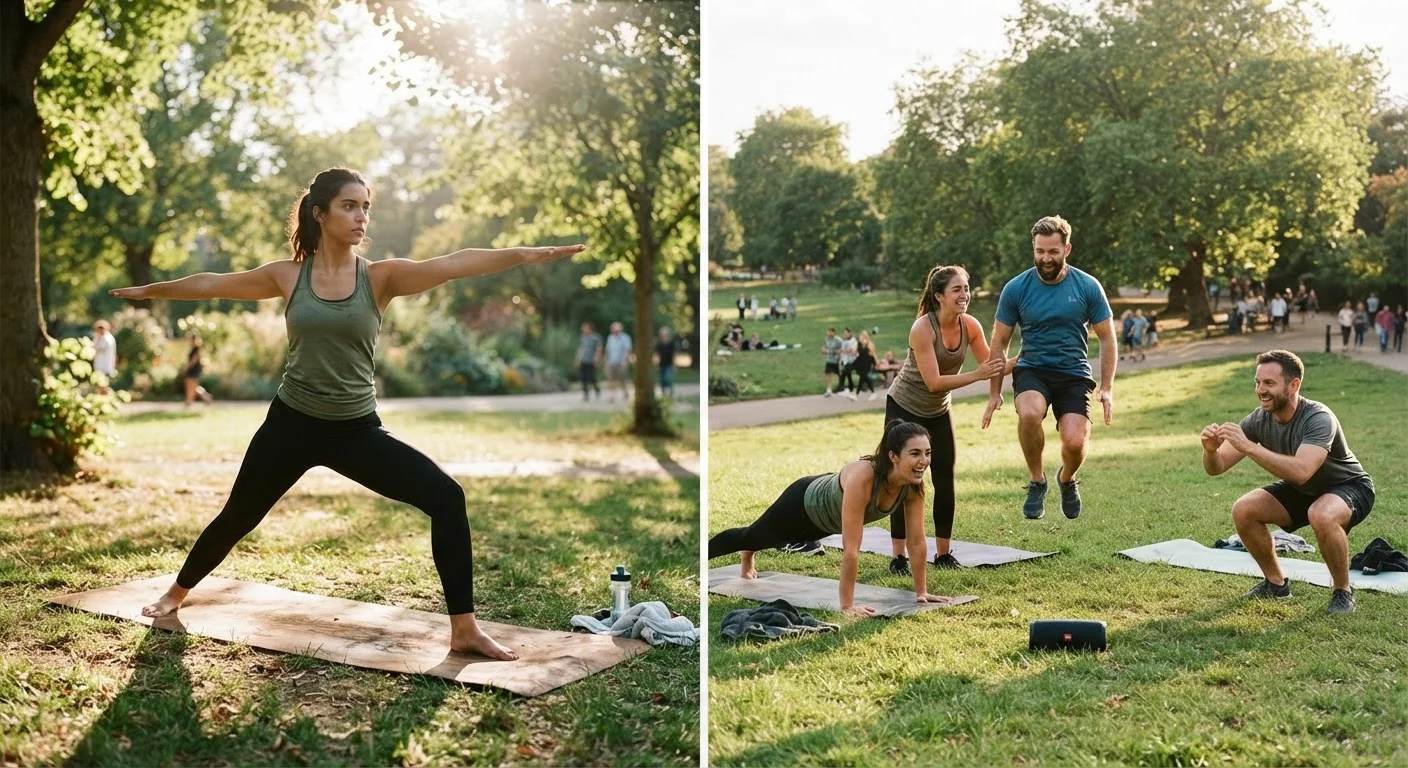
Solo workouts and group exercise each bring real advantages that serve different needs. Solo training wins on flexibility and autonomy; group formats win on accountability and social energy. Most people benefit from some combination of both, adjusted as their schedule and motivation shift over time.
This comparison is most useful for young adults building a fitness habit from scratch and trying to figure out which social structure — or mix of structures — makes it easier to stay consistent.
Why the Question Even Matters
Building a consistent fitness habit is genuinely hard. Between irregular schedules, tight budgets, and the ongoing pressure to find motivation, the structure around your workout can make or break whether it actually happens. One underrated factor is whether you train alone or alongside others — and that choice affects far more than just company.
This isn't about which approach is objectively better. It's about understanding what each format gives you and what it quietly takes away, so you can make an intentional choice rather than defaulting to whatever is easiest in the moment. If you're also thinking through where you exercise, the trade-offs between outdoor and indoor workouts are worth considering alongside this question.
The Case for Working Out Alone
Solo exercise is the default for a lot of people — and for good reasons that go beyond introversion.
Complete flexibility over timing and schedule
You can work out whenever fits your day without coordinating with anyone else. This removes one of the most common logistical barriers to consistency.
Lower social pressure to perform
Without an audience, many people feel more willing to try unfamiliar movements, go at their own pace, or modify exercises without embarrassment.
Full control over workout structure and intensity
You decide exactly what to do, for how long, and at what pace. This is especially valuable as you develop a better understanding of how your body responds to exercise.
No cost or coordination required
Solo workouts at home or outdoors typically cost nothing and depend on no one else's availability, making them accessible regardless of budget.
Training alone means your schedule is entirely your own. You can squeeze in a session at 6 a.m. or 10 p.m. without coordinating with anyone. For people juggling jobs, classes, or caregiving, that flexibility is often what makes consistency possible at all. Our guide to building a routine around your real life explores this further.
There's also a psychological dimension. Without an audience, many people feel more comfortable experimenting — trying a new movement pattern, going slower than expected, or cutting a session short when something feels off. That psychological safety can lower the barrier to showing up in the first place.
The Downsides of Going It Alone
Solo training isn't without friction. The very autonomy that makes it appealing can also make it easy to skip.
No external accountability when motivation dips
When skipping a session has no social consequences, it's easier to rationalize missing workouts. This can gradually erode consistency over time.
Easier to plateau without outside feedback
Without a training partner or instructor to observe your form or push your effort, it's common to settle into comfortable habits rather than progressing.
Reduced social benefit and sense of community
Exercise with others can provide meaningful social connection. Solo training misses this dimension entirely, which matters for people who also use fitness as a mental health outlet.
Higher reliance on self-motivation
Sustaining a solo routine over weeks and months requires consistent internal drive, which fluctuates for most people and isn't always reliable.
When no one is expecting you, cancelling feels low-stakes. This is where many solo exercisers quietly fall off their routines — not dramatically, but gradually, as one missed session becomes several. Without external accountability, internal motivation has to carry the entire load, and that's a heavy lift on difficult days.
Safety is another real consideration. Certain movements — especially heavier bodyweight progressions or anything involving unstable surfaces — carry more risk when performed without a spotter or a knowledgeable training partner. If you're exploring bodyweight versus free-weight training, understanding when to seek guidance matters.
What Group Exercise Actually Provides
Working out with others — whether that's a friend, a running club, or a community fitness class — changes the experience in measurable ways.
~65%
People more likely to stick to a routine with social support
Research published in the Journal of Sport & Exercise Psychology suggests social support is among the strongest predictors of exercise adherence over time.
15–20%
Increase in effort when exercising alongside others
Studies on the Köhler effect — the tendency to work harder in group settings — have observed meaningful effort increases compared to solo performance.
Accountability is the most commonly cited benefit, and it's well-supported by behavioral research. Knowing someone expects you to show up shifts exercise from an optional self-care task to a social commitment. That reframing alone helps many people maintain consistency through low-motivation stretches.
Group formats also introduce variety and pacing cues that solo workouts often lack. Exercising alongside others can push effort levels upward in a way that's hard to replicate independently. And for people who experience loneliness or social isolation, shared physical activity can offer genuine connection — a benefit that extends well beyond fitness.
Social Exercise and Mental Health
Physical activity has well-documented links to improved mood and reduced symptoms of anxiety and depression. Group exercise may amplify some of these effects through social bonding and shared experience. However, the right environment matters — a setting that feels judgmental or intimidating can undercut these benefits. If you're exploring the broader connection between self-care practices and mental wellbeing, understanding when self-help is enough and when professional support helps is worth reading alongside this.
The Real Costs of Group Workouts
Group exercise isn't automatically the right answer, and its drawbacks deserve honest acknowledgment.
Scheduling is the most practical barrier. Finding times that work for multiple people is genuinely difficult, and when a workout partner cancels, the whole session can collapse. Group fitness classes add cost, fixed time slots, and sometimes travel — all friction points for people with tight budgets or unpredictable schedules.
There's also a social pressure dynamic that cuts both ways. For some, the group environment fuels performance anxiety or self-consciousness, making workouts feel uncomfortable rather than energizing. Beginners in particular may find that group settings expose insecurities in ways that discourage rather than encourage continued participation.
If you're weighing how to structure your space as well as your social context, making any room work as a training area can help you set up a solo-friendly environment that still supports a full routine.
Finding Your Own Balance
Most people don't need to choose exclusively between solo and group exercise. A hybrid approach — say, two solo sessions built around your schedule and one group activity for social accountability — often provides the benefits of both without locking you into either format's downsides.
Pay attention to what actually drives your behavior. If you consistently bail on solo workouts but show up for commitments with others, lean into that. If group settings leave you dreading exercise, solo training with a structured plan may serve you better. Honest self-observation over a few weeks tells you more than any general recommendation can. For a broader look at how different types of movement complement each other, understanding what each movement category builds is a useful next step.
This article is for general informational purposes only and is not a substitute for professional medical or fitness advice. If you have any health conditions or concerns, consult a qualified healthcare provider before beginning or changing an exercise routine.
The content provided on our blog site traverses numerous categories, offering readers valuable and practical information. Readers can use the editorial team’s research and data to gain more insights into their topics of interest. However, they are requested not to treat the articles as conclusive. The website team cannot be held responsible for differences in data or inaccuracies found across other platforms. Please also note that the site might also miss out on various schemes and offers available that the readers may find more beneficial than the ones we cover.