

Start here
Why the Gym Isn't the Only Path to Fitness
Next
Assessing Your Real Starting Point
Build it
Building Blocks of a Home-Friendly Routine
Make it last
Making Consistency Stick
Measure it
Tracking Progress Without Fancy Tools
Why the Gym Isn't the Only Path to Fitness
Gym memberships carry real costs — monthly fees, commute time, crowded peak hours, and a social environment that can feel intimidating when you're just starting out. For many young adults balancing work, school, and tight budgets, those barriers are enough to put exercise on indefinite hold.
Here's the reality: research on physical activity consistently shows that what matters most is moving your body regularly, not where you do it. Cardiovascular health, muscular strength, flexibility, and mental well-being can all be meaningfully supported through home-based or outdoor exercise. The gym is one option — a convenient one for some people — but it was never the only one.
If you've been waiting until you can afford a membership, or until you feel fit enough to walk through those doors, this guide is for you. You can start right now, with what you have. Common fitness beliefs that hold people back often include the idea that a gym is non-negotiable — it isn't.
Bodyweight training
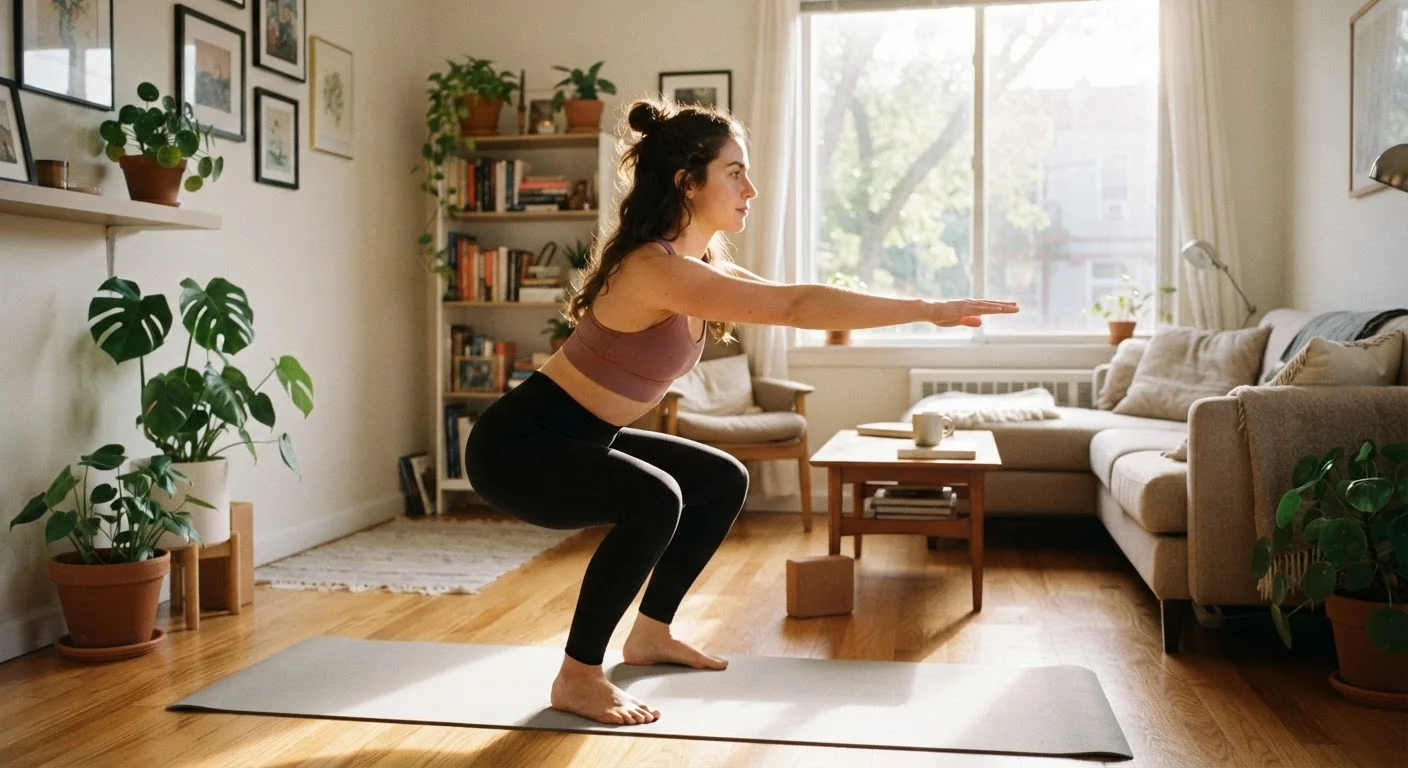
Exercise that uses your own body weight as resistance rather than machines or free weights — think push-ups, squats, and lunges.
Progressive overload
Gradually increasing the challenge of your workouts over time — by adding reps, slowing the movement, or trying harder variations — so your body continues to adapt and improve.
Cardiovascular exercise
Any activity that raises your heart rate and keeps it elevated for a period of time, supporting heart and lung health — walking, jogging, and jumping jacks all qualify.
Recovery
The rest your body needs between workouts to repair muscle tissue, restore energy, and reduce injury risk. Rest days are a planned part of training, not a break from it.
Habit anchoring
Attaching a new behavior — like exercising — to an existing routine so it becomes automatic rather than something you have to decide to do each time.
Assessing Your Real Starting Point
Before jumping into any routine, take a clear-eyed look at three things: your available time, your available space, and your current fitness level. Honesty here isn't discouraging — it's what makes a plan actually work.
- Time: How many days per week can you realistically commit to movement? Even two or three days is a legitimate starting point. Fitting movement into a packed schedule offers practical strategies if your days feel genuinely full.
- Space: You don't need a dedicated room or special flooring. A cleared living room floor, a backyard, or even a hallway is enough for most beginner movements. Making any room your training area can help you get creative.
- Current fitness level: If you've been largely sedentary, or if you're managing any health condition, consider reviewing a personal readiness checklist before you begin — and speak with a healthcare professional if you have any concerns.
Check In With a Professional First If Needed
If you have a known health condition, a recent injury, or haven't been active in a long time, it's worth speaking with a healthcare professional before starting a new exercise routine. This is especially important for people who are pregnant, have cardiovascular conditions, or are managing chronic illness. The guidance in this article is general information — not personalized medical advice.
Building Blocks of a Home-Friendly Routine
A well-rounded beginner routine touches three areas: cardiovascular movement, strength training, and flexibility or mobility work. You don't need to address all three in every session — rotating focus across the week works well.
Cardiovascular Movement
Anything that elevates your heart rate counts: brisk walking, jogging in place, jumping jacks, stair climbing, or dancing in your kitchen. The goal is sustained effort, not a specific activity. Everyday movement like walking and stair climbing contributes more to your health than most people realize.
Strength Training
Bodyweight exercises — push-ups, squats, lunges, glute bridges, planks — form the foundation. Start with variations you can perform with reasonable form, then gradually increase reps or difficulty over time. Bodyweight training compared to free weights explains what each approach actually builds.
Flexibility and Recovery
Stretching after movement and taking intentional rest days aren't optional extras — they're part of what makes a routine sustainable. Rest days support progress just as much as active sessions.
Start Smaller Than You Think You Should
If you're unsure where to begin, err on the side of less. A 10-minute routine done consistently three times a week builds real fitness over months — and builds the habit that makes everything else possible. You can always add more once the behavior feels natural.
Making Consistency Stick
The single biggest predictor of fitness results isn't the difficulty of your workouts — it's whether you show up regularly. Consistency beats intensity over the long run, and a modest routine you maintain is always more effective than an ambitious one you abandon.
A few approaches that support consistency without requiring willpower:
- Anchor your workout to an existing habit. Exercising right after waking up, before lunch, or immediately after work reduces the number of decisions you need to make.
- Prepare your space in advance. Clearing your floor or laying out clothes the night before removes friction when the moment arrives.
- Lower the bar when needed. On low-energy days, a 10-minute session counts. Finishing something small keeps the habit alive. What to do when workout motivation disappears offers more on this.
- Consider your social preferences. Some people stay more consistent with a friend or online community involved. Working out alone versus with others covers the real trade-offs.
Tracking Progress Without Fancy Tools
Progress is motivating, but you don't need an expensive wearable to see it. Simple tracking methods work just as well for beginners and cost nothing.
- Reps and sets: Writing down how many push-ups or squats you completed each session lets you see improvement week over week.
- Duration: Noting how long you sustained a cardio activity reveals endurance gains over time.
- Subjective feel: Logging how you felt during and after a session — energy level, difficulty, mood — captures meaningful data that numbers alone miss.
Free and low-cost ways to track fitness progress explores accessible methods in more depth, from simple notebooks to free apps.
Progress Isn't Always Linear
Some weeks you'll feel stronger; others you'll feel like you've gone backward. Fluctuations in energy, sleep, and stress all affect performance. What matters is the trend over weeks and months — not any single session. Be patient with yourself and keep the record going.
This article is for general informational and educational purposes only and does not constitute medical advice. If you have a health condition, injury, or other concern, consult a qualified healthcare professional before beginning any new exercise program.
Frequently Asked Questions
Yes — movements like push-ups, squats, and planks challenge your muscles in ways that produce measurable strength gains over time. Progressive overload (gradually increasing difficulty) applies to bodyweight training just as it does to weighted exercises. The key is consistently challenging yourself rather than staying at the same level indefinitely.
Most general fitness guidelines suggest aiming for movement on most days, but even two to three intentional sessions per week produce benefits for beginners. Starting with a manageable frequency and building from there is more effective than an ambitious schedule you can't maintain. Recovery matters too — rest days are part of the routine, not a failure to show up.
Short sessions are genuinely valuable, especially for beginners. A focused 10–15 minute bodyweight circuit can elevate your heart rate, engage multiple muscle groups, and build the habit of moving regularly. Over time, even brief daily sessions accumulate into meaningful fitness gains.
No equipment is strictly necessary for a beginner routine. Your own body weight provides plenty of resistance to start. As you progress, inexpensive items like resistance bands or a jump rope can add variety, but they're optional — not a prerequisite.
Motivation naturally fluctuates, so building habits around cues and routines is more reliable than relying on enthusiasm. Setting a consistent time, preparing your space in advance, and linking your workout to something you enjoy (music, a podcast) all help. If motivation disappears entirely, that's normal — see our guidance on what to do when that happens.
Many people with health conditions can exercise safely at home, but individual circumstances vary. If you have a chronic condition, recent injury, or are returning to exercise after a long break, it's important to consult a qualified healthcare professional before starting a new routine. This article provides general information only and is not a substitute for medical advice.
The content provided on our blog site traverses numerous categories, offering readers valuable and practical information. Readers can use the editorial team’s research and data to gain more insights into their topics of interest. However, they are requested not to treat the articles as conclusive. The website team cannot be held responsible for differences in data or inaccuracies found across other platforms. Please also note that the site might also miss out on various schemes and offers available that the readers may find more beneficial than the ones we cover.