

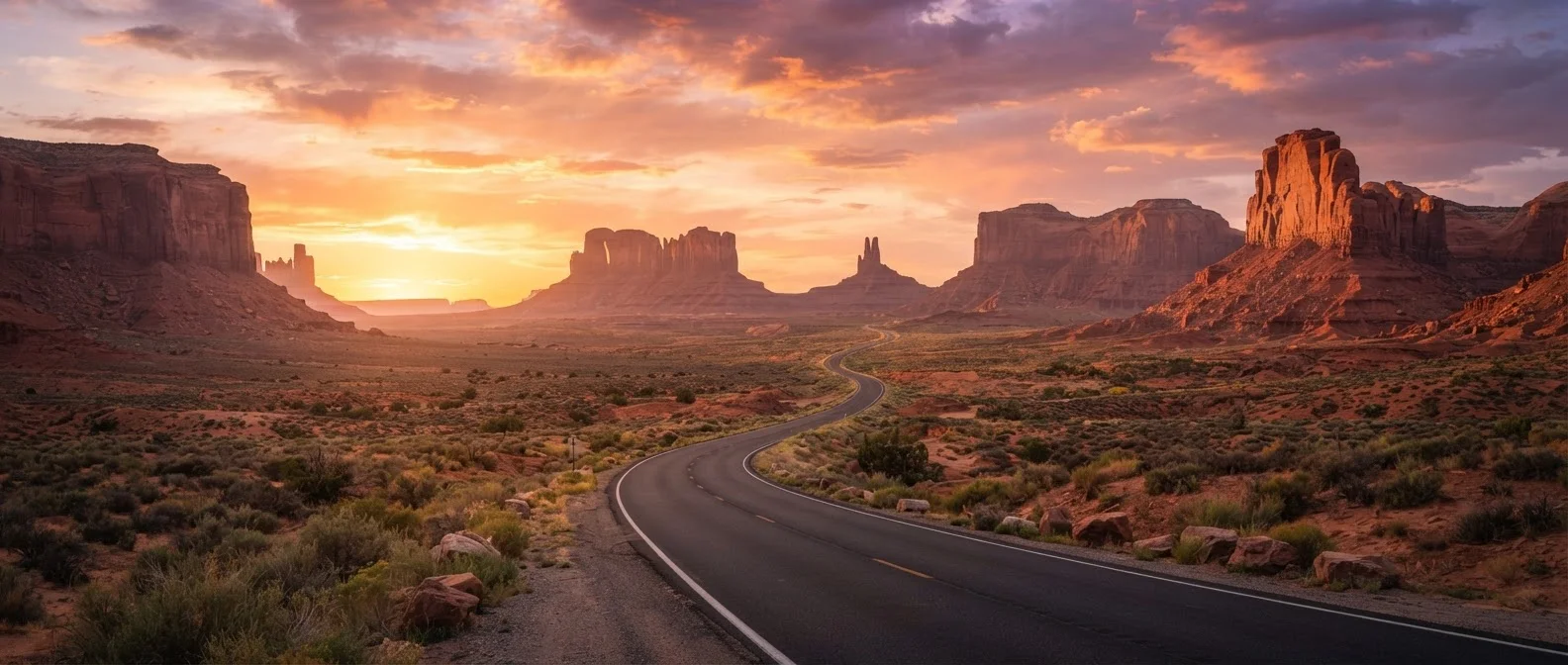
Why the Southwest Is a Budget Traveler's Dream
The American Southwest — spanning Utah, Arizona, Nevada, New Mexico, and corners of Colorado — delivers some of the most jaw-dropping landscapes on Earth, and a remarkable amount of it is either free or steeply discounted compared to international alternatives. No visa fees, no transatlantic airfare, no currency conversions. Just open highways, canyon light shows at sunrise, and the kind of scale that makes you feel genuinely small in the best possible way.
For cost-conscious young travelers, this region punches well above its weight. Slot canyons, ancient ruins, dark-sky preserves, and lively small-town main streets sit within driving distance of each other, making a single road trip feel like five destinations in one. As the high-value travel guide notes, some regions deliver outsized experiences relative to what you spend — the Southwest is the domestic poster child for that idea.
$80
America the Beautiful Annual Pass cost
One pass covers entrance fees at hundreds of federal lands including national parks, forests, and wildlife refuges for 12 months.
Free
Cost to camp on most BLM land
The Bureau of Land Management oversees over 245 million acres — much of it open to dispersed camping at no charge.
30–50%
Typical shoulder-season accommodation savings
Travelers in April–May or September–October frequently report significantly lower nightly rates at gateway town hotels compared to summer peaks.
Getting There and Getting Around
Flying into Las Vegas (LAS), Phoenix (PHX), or Salt Lake City (SLC) typically offers the widest range of affordable flights into the region. From any of these hubs, a rental car or a personal vehicle becomes your best tool — public transit simply doesn't reach most parks or canyon towns.
Gas costs are the wildcard. Prices rise noticeably near park entrances and remote towns, so fill your tank in larger cities and carry a road atlas or downloaded offline maps (cell service disappears for long stretches). Road-trippers doing a Utah–Arizona loop should budget roughly 1,000–1,500 miles round-trip from a major hub, depending on the route.
Consider a Fuel App Before You Leave
Gas prices vary significantly from city to rural desert corridor. Checking fuel prices in advance and filling up at the last large town before entering a remote stretch can save $10–$20 per fill-up — a meaningful difference over a week-long road trip. Many travelers underestimate how few stations exist between major Southwest waypoints.
For route planning and cost breakdowns before you leave home, the destination timing and trade-offs guide is a useful starting point.
Where to Sleep Without Breaking the Bank
Accommodation is where Southwest budgets can either hold firm or quietly collapse. The good news: options genuinely exist at every price point.
- BLM dispersed camping: Bureau of Land Management (BLM) land blankets much of the region. Dispersed camping — setting up camp outside designated sites on eligible BLM land — is generally free for up to 14 days in one location. Areas around Moab, Kanab, and the Arizona Strip are popular examples. Always verify current rules on the official BLM website before arrival.
- National forest campgrounds: Often $10–$25 per night, far cheaper than park lodges or gateway town hotels.
- Hostel and budget motel clusters: Flagstaff, AZ and St. George, UT both have affordable hostel and budget motel options within easy driving range of major parks.
- Camping inside national parks: Sites run roughly $20–$35/night at most Southwest parks and require reservations well in advance — especially in peak season.
The free outdoor attractions guide covers BLM land and scenic byways in more detail if you want to maximize zero-cost nights.
Arrive at BLM camping areas by early afternoon on Fridays in shoulder season — spots near popular parks fill fast on weekends, even on ostensibly unlimited public land.
Popular BLM corridors near Moab and Escalante attract heavy weekend use from regional visitors, and prime flat sites with shade or windbreak can be claimed by noon.
Pack a gallon jug of water per person per day and refill at every visitor center — don't rely on finding water sources along desert trails.
Dehydration is a genuine safety risk in desert environments, and many Southwest trails have no potable water. Visitor centers reliably offer free water refills, cutting both safety risk and the cost of buying bottled water repeatedly.
Must-Visit Parks, Canyons, and Monuments
The Southwest's anchor attractions are the national parks — and the single smartest purchase a multi-park visitor can make is the America the Beautiful Annual Pass ($80 as of recent pricing), which grants unlimited access to federally managed lands for 12 months. Two park entries alone typically recover the cost.
Standout destinations for budget road trippers:
- Arches National Park, UT: Iconic red arches, doable day hikes, and sunrise light that photographers travel thousands of miles for.
- Capitol Reef National Park, UT: Dramatically undervisited compared to Zion or Bryce Canyon. Free orchards on historic Fruita farmland produce free fruit in season — a small but genuine perk.
- Grand Staircase–Escalante National Monument, UT: Vast BLM-managed landscape with free backcountry access and almost no crowds.
- White Sands National Park, NM: Surreal gypsum dunes that feel like another planet at a fraction of the cost of an international trip.
- Petrified Forest National Park, AZ: Frequently overlooked, easy to drive through in a few hours, and genuinely alien in appearance.
If your schedule allows flexibility, the surprisingly uncrowded national parks guide can help you identify lesser-known alternatives to the busiest trailheads.
Check Timed-Entry and Reservation Requirements Before You Go
Several high-traffic Southwest parks — including Zion and Arches — have implemented timed-entry reservation systems that require booking a specific entry window in advance during peak periods. Arriving without a reservation during these windows can mean turning around at the gate. Always verify current entry requirements directly on the park's official National Park Service page well before your arrival date.
Canyon Towns Worth a Slow Wander
The Southwest's small towns are as memorable as its landscapes — and often just as affordable, especially if you eat and shop where locals do.
- Moab, UT: The adventure capital of Utah. Mountain biking, canyoneering, and stargazing culture; busy but with genuine character. Stay outside town to cut costs.
- Kanab, UT: Called "Little Hollywood" for its Western film history, Kanab is quieter, cheaper than Moab, and perfectly positioned for day trips to multiple parks.
- Flagstaff, AZ: A real university town with independent coffee shops, a historic downtown, and access to the Grand Canyon, Sedona, and ancient Pueblo sites — all within 90 minutes.
- Bisbee, AZ: A former copper mining town near the Mexican border that reinvented itself as an arts community. Genuinely quirky, inexpensive, and under the radar.
- Silver City, NM: A sleepy gem with excellent green-chile food, nearby Gila Wilderness, and almost no tourist markup.
Eating and Drinking on a Desert Budget
Food costs near park entrances and on canyon-country main streets can quietly derail a tight budget. Convenience stores and tourist-adjacent restaurants near Zion, Bryce, or the Grand Canyon South Rim charge premium prices — this is one of the most common places Southwest travel budgets break down, as explored in the domestic travel budget breakdown guide.
Practical tactics that actually work:
- Stock a cooler in a large city before entering park corridors. Deli items, fruit, tortillas, and canned goods from a grocery store cost a fraction of what you'll pay at a park concession.
- Eat green chile in New Mexico. Local diners in towns like Grants, Gallup, and Truth or Consequences serve enormous, inexpensive plates. It's one of the best food values in American travel.
- Look for food trucks near trailheads in towns like Moab — quality is often high and prices reasonable compared to sit-down restaurants aimed at tourists.
Avoid Paying Resort Fees You Didn't Plan For
Some gateway-town hotels near Zion, Sedona, and the Grand Canyon South Rim charge mandatory resort or amenity fees on top of the advertised room rate. Read the full rate breakdown before booking, not just the headline price. These fees can add $25–$50 per night, quietly inflating what looked like an affordable stay.
Practical Tips to Keep Costs Under Control
A few high-leverage habits separate road trippers who finish the Southwest trip within budget from those who don't:
- Travel in shoulder season. April–May and September–October bring mild temperatures, thinner crowds, and noticeably lower accommodation rates. Summer in the desert is brutally hot and peak-priced; winter access to higher elevations can be limited by snow.
- Book campsites early. Popular campgrounds at Zion, Arches, and the Grand Canyon fill months ahead. Use Recreation.gov as early as your planning window allows.
- Download offline maps before you go. Cell service is unreliable across large parts of Utah and New Mexico. Navigation apps with offline mode can prevent costly wrong turns or missed exits on unmarked desert roads.
- Build an emergency buffer. Unexpected costs — a tire issue in a remote area, an unplanned extra night due to weather — happen on desert road trips. If your budget is already stretched thin, the tight-budget saving strategies guide outlines realistic ways to set aside a small cushion before departure.
- Use free visitor centers. Every national park and most BLM field offices offer free maps, ranger advice, and condition updates. Rangers know which trails are muddy, which roads are washed out, and which campsites just opened up.
For broader strategies on making a limited travel budget work across destination types, the Budget Travel Tips hub is a useful ongoing resource.
This article is for general informational and travel planning purposes only. Prices, park fees, and access conditions change; always verify current information with official park and land management agency websites before your trip. This is not financial advice — consult a qualified professional for guidance tailored to your personal financial situation.
The content provided on our blog site traverses numerous categories, offering readers valuable and practical information. Readers can use the editorial team’s research and data to gain more insights into their topics of interest. However, they are requested not to treat the articles as conclusive. The website team cannot be held responsible for differences in data or inaccuracies found across other platforms. Please also note that the site might also miss out on various schemes and offers available that the readers may find more beneficial than the ones we cover.