

Our Verdict
A pressure washer is a legitimate upkeep tool for homeowners with driveways, decks, patios, fences, or vinyl siding to maintain — but it's easy to overestimate how often you'll reach for it. Used correctly on appropriate surfaces, it saves real time and can prevent the kind of grime buildup that shortens the life of outdoor materials. Used carelessly, it causes damage that costs far more to fix than a cleaning service would have.
Best for homeowners with multiple hard outdoor surfaces to maintain regularly; likely overkill for renters or those with compact outdoor spaces.
What a Pressure Washer Actually Does
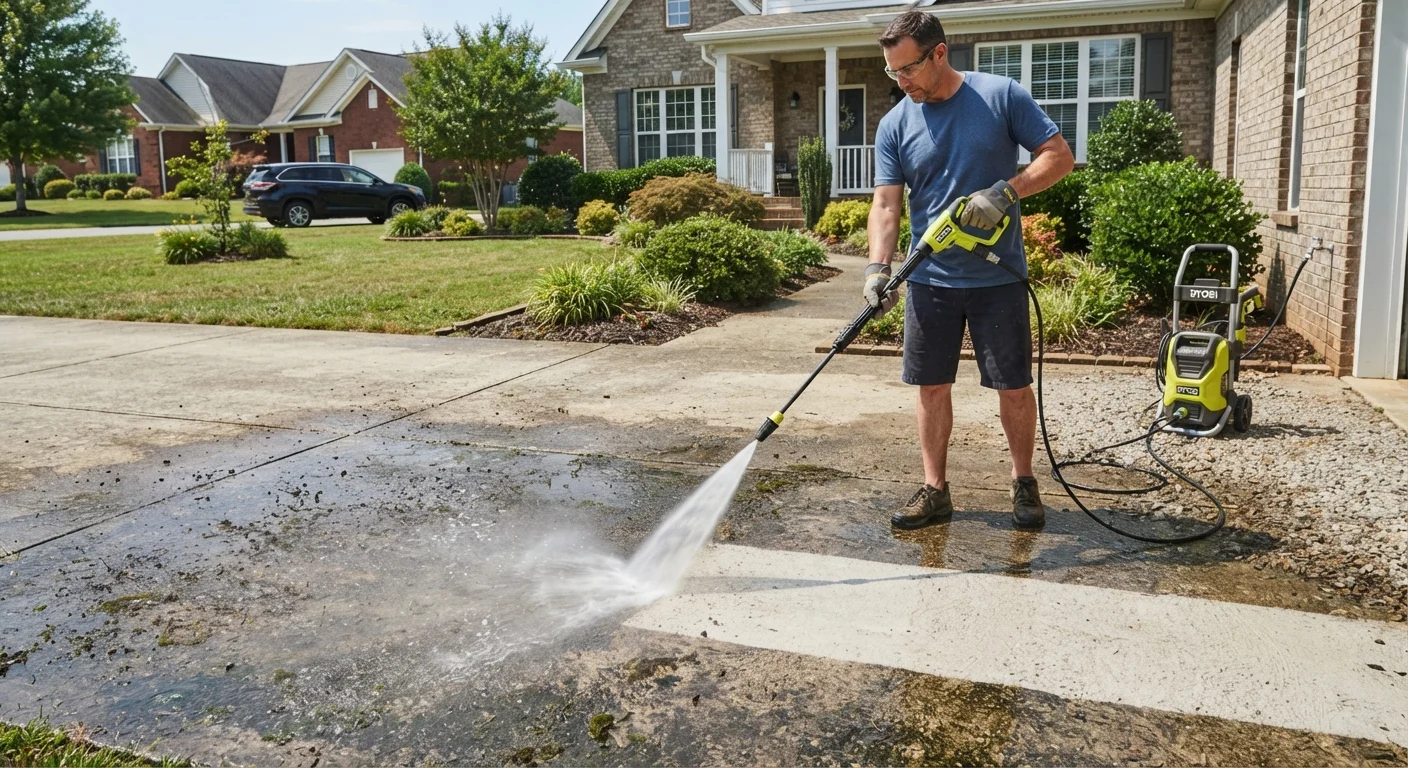
A pressure washer forces water through a narrow nozzle at high velocity, measured in pounds per square inch (PSI) and gallons per minute (GPM). That combination strips away mold, mildew, algae, oil stains, and years of accumulated grime from hard surfaces far more efficiently than scrubbing by hand.
Consumer-grade electric models typically run between 1,300 and 2,000 PSI — enough for most residential jobs like cleaning patios, decks, vinyl siding, and garden furniture. Gas-powered units push beyond 2,500 PSI and suit heavier work like stripping paint or blasting oil from concrete, but they're louder, heavier, and need fuel and oil maintenance of their own — much like the habits covered in our tight-budget car maintenance guide.
The nozzle tip you attach controls the spray angle. A narrow 0-degree tip concentrates enormous force on a tiny point — useful for stubborn stains on concrete but genuinely dangerous on softer materials. A 40-degree or soap tip disperses pressure broadly and is far safer for general cleaning.
The Real Advantages
Cuts cleaning time dramatically on hard surfaces
A driveway that takes two hours of scrubbing can often be cleaned in 20–30 minutes with a pressure washer, making regular upkeep far more achievable.
Removes mold and algae that cause surface damage
Organic growth traps moisture against wood and masonry; removing it regularly slows deterioration and can meaningfully extend the life of decks and patios.
Handles prep work before painting or sealing
A clean, dry surface is essential for paint and sealers to bond correctly; pressure washing provides faster, more thorough prep than hand scrubbing.
Effective on a range of exterior surfaces
Concrete, brick pavers, vinyl siding, metal furniture, and vehicles all respond well to appropriate pressure and nozzle selection.
Electric models are low-maintenance and easy to store
Unlike gas-powered tools, electric pressure washers require no fuel, oil changes, or seasonal carburetor care, making them practical for occasional use.
Beyond raw speed, consistent pressure washing can extend the life of outdoor surfaces. Mold and algae trap moisture against wood and masonry, accelerating rot and cracking. Removing that buildup regularly is the kind of preventive step that keeps small problems from becoming expensive ones — a principle worth building into your routine if you're working through our first-year homeowner maintenance guide.
The Genuine Drawbacks
Wrong technique causes permanent surface damage
Too much PSI or a nozzle held too close can gouge wood, strip paint, erode grout, and split soft masonry — damage that often costs more to repair than the cleaning was worth.
Significant water consumption per session
A typical consumer pressure washer uses 1.5–2 gallons per minute; a 30-minute cleaning session can consume 45–60 gallons, which adds up in drought-prone areas or on metered water supplies.
Infrequent use makes ownership hard to justify
Many homeowners use a pressure washer only two or three times a year, making the purchase cost, storage space, and maintenance overhead hard to recoup compared to periodic rental.
Poses real physical risk if mishandled
High-pressure water can cause serious lacerations; the equipment manual's safety guidelines — including never pointing the wand at people, animals, or electrical panels — must be followed without exception.
Winterization is required in freezing climates
Water left in the pump can freeze and crack internal components; properly draining and storing the unit each autumn is a mandatory step that many first-time owners overlook.
Surface damage is the most common and costly mistake. Wood decking, cedar siding, window glazing, and older mortar joints between bricks can all be permanently damaged by pressure that's too high or a nozzle held too close. This is the kind of outcome home maintenance myths often gloss over — the assumption that more force equals a better clean.
There's also an honest question of frequency. Many homeowners use a pressure washer two or three times a year at most. If that's your realistic usage pattern, the cost of ownership — machine, storage space, winterization, occasional repairs — may not justify buying outright.
Surfaces to Approach With Caution
Not every outdoor surface is a good candidate. As a general rule, avoid directing high-pressure water at:
- Painted or stained wood — stripping is easy to do accidentally
- Older brick or mortar — aged mortar erodes quickly under pressure
- Cedar or soft wood shingles — fibers shred and splinter
- Window frames and seals — water intrusion behind glazing causes hidden rot
- Asphalt shingles — granules strip away, shortening roof life significantly
For these materials, a garden hose with appropriate cleaners, or a hired soft-wash service, is usually the safer choice. Knowing when to hand a job off is a theme worth taking seriously — see our guide to DIY versus hiring a professional for a broader framework.
A Note on Pressure and Distance
PSI ratings alone don't tell the full story — how far you hold the nozzle from the surface changes effective pressure dramatically. Starting at 18–24 inches away and moving closer only if needed is a practical rule for avoiding accidental damage. When in doubt, test on a small, inconspicuous area first and let that guide your approach for the rest of the surface.
Rent First, Buy With Intention
Most tool rental outlets offer pressure washers by the half-day or full day, typically for $50–$90 depending on machine size and location. Renting gives you a realistic read on how often you'd actually use one, which surfaces on your property genuinely benefit, and whether the physical handling — hoses, connections, water management — fits your comfort level.
If after two or three rentals the tool has clearly earned its place in your routine, purchasing makes sense. If you found yourself unsure what to do with the extra time you'd booked, that's useful information too. Deferred decisions on tools are far less costly than deferred decisions on maintenance — the kind of pattern explored in tasks new homeowners consistently put off.
1.5–2 gal/min
Typical water use per minute
Consumer electric pressure washers commonly flow at this rate, meaning a 30-minute job uses roughly 45–60 gallons of water.
$50–$90
Average daily rental cost
Tool rental outlets commonly charge in this range for consumer-grade pressure washers, making rental a cost-effective option for infrequent users.
The content provided on our blog site traverses numerous categories, offering readers valuable and practical information. Readers can use the editorial team’s research and data to gain more insights into their topics of interest. However, they are requested not to treat the articles as conclusive. The website team cannot be held responsible for differences in data or inaccuracies found across other platforms. Please also note that the site might also miss out on various schemes and offers available that the readers may find more beneficial than the ones we cover.