

Why Proactive Maintenance Beats Reactive Repair
For first-time car owners stretched thin financially, skipping a service interval can feel like a reasonable way to save money this month. In practice, it almost always costs more later. A missed oil change can accelerate engine wear; an ignored brake squeal can turn a pad replacement into a rotor replacement. The math rarely works in favor of delay.
The good news is that keeping a car reliable doesn't require deep mechanical knowledge or a big budget - it requires consistency. Understanding which tasks matter most, and doing them on schedule, is how budget-conscious owners stay out of the shop. See why skipping oil changes costs more than the oil change itself for a detailed look at what deferred maintenance actually costs.
Simple Checks You Can Do Yourself
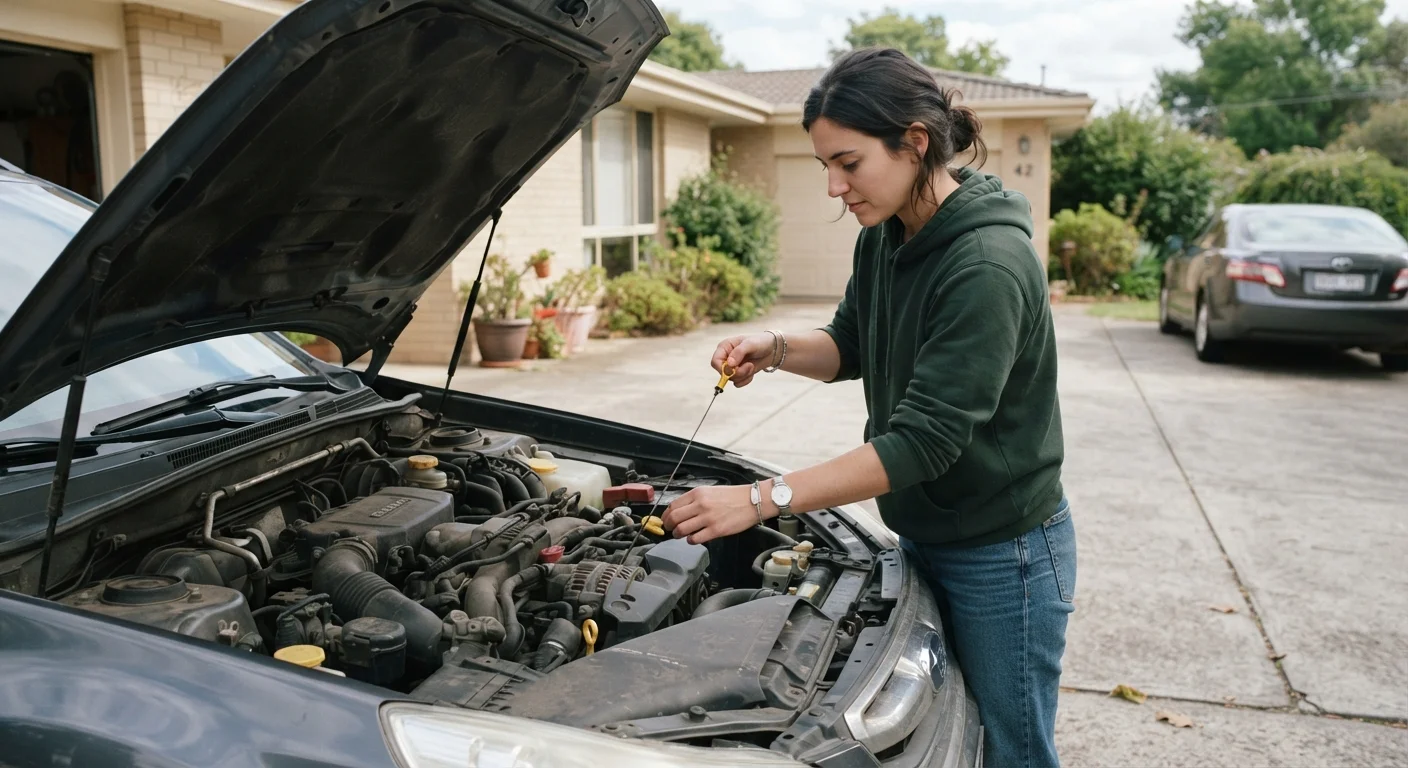
You don't need a lift or a toolbox to stay on top of most routine monitoring. A five-minute walkthrough once a month can surface issues before they escalate.
- Tire pressure: Underinflated tires wear unevenly and reduce fuel efficiency. Check cold pressure against the number listed on the driver's door jamb sticker - not the tire sidewall.
- Fluid levels: Engine oil, coolant, and windshield washer fluid are visible through transparent reservoirs or via dipstick. Most can be topped off inexpensively.
- Lights: Walk around your car once a month to confirm all lights - headlights, brake lights, turn signals - are working. A burned-out brake light is a safety risk and a ticketable offense.
- Wiper blades: Streaking or skipping in rain is a visibility hazard. Blades are inexpensive and take minutes to swap.
For a broader overview of what standard service intervals cover, routine car maintenance every owner should understand is a useful reference to bookmark.
Building a Maintenance Budget Without Breaking Yours
Treating car maintenance as a fixed monthly expense - rather than a surprise - is one of the most practical shifts a young owner can make. Even setting aside a small, consistent amount each month means that when an oil change or tire rotation comes due, the money is already there.
Your Owner's Manual Is Free and Underused
Every vehicle comes with an owner's manual that specifies exact service intervals, fluid types, and tire pressures for that model. If yours is missing, most manufacturers offer free PDF versions on their official websites. Spending 20 minutes with this document is one of the most useful things a new owner can do.
First-time owners also frequently underestimate the non-repair costs of ownership: registration renewals, emissions testing, parking fees, and roadside emergencies. Things first-time car owners often overlook in year one walks through the expenses that tend to catch new owners off guard.
If building any savings margin feels impossible right now, saving on a tight budget strategies that work when money is already stretched offers realistic approaches for people with little financial room. The principles apply directly to car maintenance funds.
$1,200+
Average annual vehicle maintenance and repair cost per US driver
According to AAA's annual Your Driving Costs study, US drivers spend over $1,200 per year on average for maintenance and repairs - a figure that rises sharply when routine service is deferred.
4-8x
Cost multiplier when minor issues become major repairs
Industry estimates from automotive consumer groups suggest that small, catch-early failures such as worn brake pads or low coolant can cost four to eight times more to repair once they escalate.
This article provides general vehicle maintenance information for educational purposes only. Costs and service intervals vary by vehicle make, model, and condition. Consult a qualified mechanic for advice specific to your car.
The content provided on our blog site traverses numerous categories, offering readers valuable and practical information. Readers can use the editorial team’s research and data to gain more insights into their topics of interest. However, they are requested not to treat the articles as conclusive. The website team cannot be held responsible for differences in data or inaccuracies found across other platforms. Please also note that the site might also miss out on various schemes and offers available that the readers may find more beneficial than the ones we cover.