

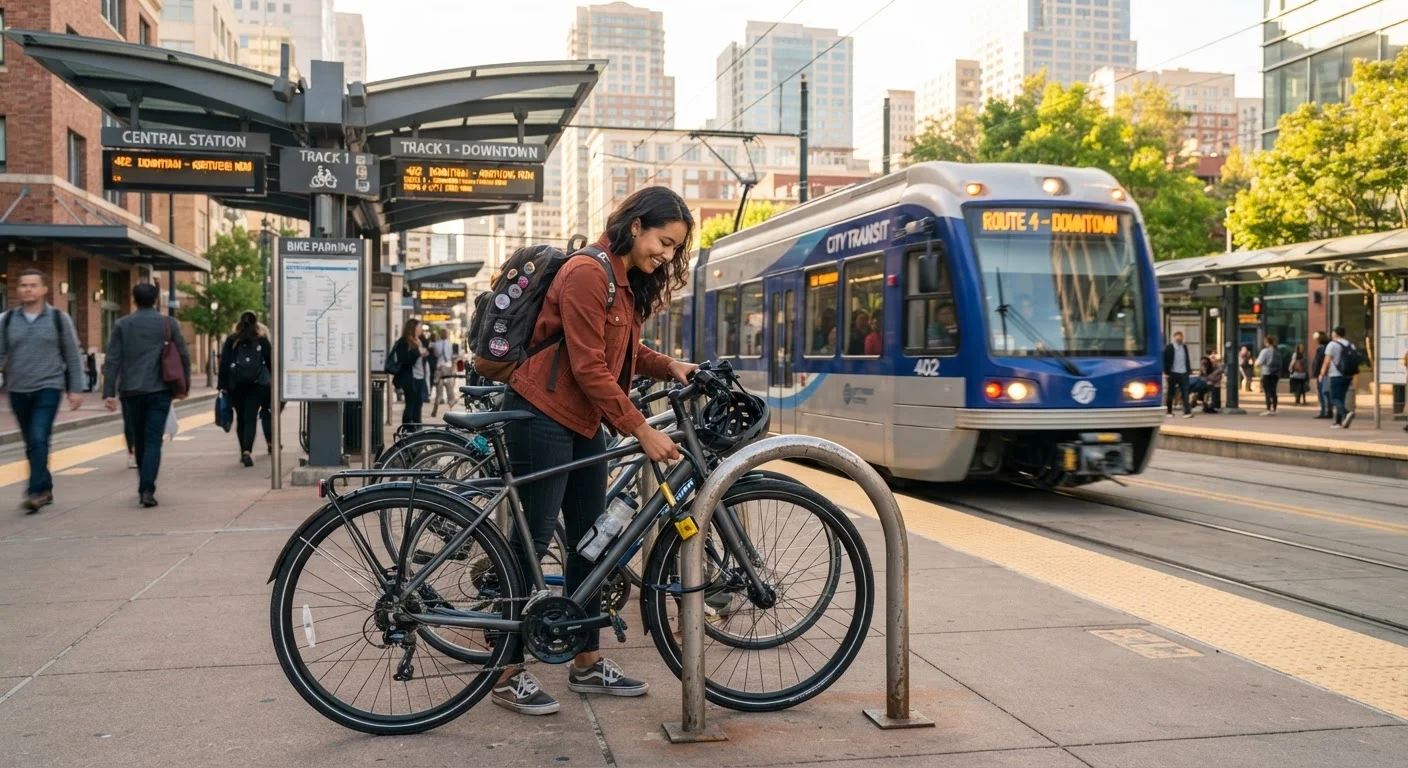
Why Multi-Modal Commuting Makes Sense
Most commuters default to a single mode of transportation - a car, a bus, or a bike - without considering that combining them often produces better outcomes on cost, time, and stress. A multi-modal commute strings together two or more travel modes (such as cycling to a subway station, riding to downtown, then walking the last half mile) to cover a route more efficiently than any one mode could alone.
The financial case is straightforward. Driving a car to work carries costs beyond the obvious fuel: depreciation, insurance, parking, and maintenance add up quickly. Transit alone may not reach your exact origin or destination. But pairing a short bike leg with a longer transit ride can eliminate parking fees entirely and cut monthly transportation spending substantially. For more context on how different transit types compare, see our overview of urban transit systems.
Beyond cost, multi-modal commuting builds in physical activity, reduces dependence on a single system, and often makes a route faster by cutting around the slowest bottlenecks.
Best Practices for Building a Reliable Multi-Modal Routine
Success with a multi-modal commute depends on deliberate planning, not improvisation. The following practices address the most common friction points commuters encounter when combining modes.
Map your full route before your first day, including transfer points and walking distances.
Unfamiliar transfer points are the most common source of delays in a multi-modal commute. Knowing exactly where to lock your bike, which platform to use, and how long each walking segment takes eliminates guesswork under time pressure.
Build a weather contingency plan before you need one.
Rain, snow, or extreme heat can make a bike leg unpleasant or unsafe, and commuters without a backup often revert to expensive last-minute alternatives like ride-hailing. Having a pre-planned alternative route keeps costs predictable.
Time your connections with real schedule data, not assumptions.
Transit vehicles run on fixed schedules with limited tolerance for delays elsewhere in your chain. A missed connection can cascade into a significantly longer commute, especially on lower-frequency lines.
Invest in gear that removes daily friction, not just convenience extras.
Small logistical barriers - like hunting for a lock, carrying a heavy bag while biking, or fumbling for a transit card - accumulate into reasons to abandon a new routine. Targeted gear investments pay for themselves quickly in consistency.
Track your actual commute time and cost for the first month.
Perceived commute time often differs from reality, and the same is true of costs. Tracking both helps you refine the route, catch hidden expenses, and build a realistic comparison against your former commute.
Choose bike parking locations that are secure and covered wherever possible.
Bike theft or weather damage can abruptly end a multi-modal routine. Secure, sheltered parking at transit stations reduces risk and protects the investment you've made in your setup.
Quick Wins to Start This Week
You don't need to overhaul your entire commute at once. These actions can measurably improve your setup within days.
Managing Costs and Making the Numbers Work
~$10,000+
Average annual cost of car ownership in the US
AAA's annual 'Your Driving Costs' study consistently estimates total ownership costs well above this threshold when depreciation, insurance, fuel, and maintenance are combined.
45%
Commuters who would consider switching modes to save money
According to survey data published by the American Public Transportation Association, nearly half of surveyed commuters cite cost as a primary factor in mode choice decisions.
The financial benefit of multi-modal commuting compounds over time, but it requires an honest upfront assessment. Tally what you currently spend on transportation each month - fuel, parking, insurance, ride-hailing - and compare it against the projected cost of transit passes, bike maintenance, and any new gear.
If your employer offers pre-tax commuter benefits, those can reduce your out-of-pocket transit costs meaningfully. Our guide to commuter benefits programs explains how to enroll and what qualifies. Similarly, a monthly transit pass may be more economical than paying per trip - but only if you ride frequently enough. See when a monthly pass actually pays off for a breakdown.
For commuters who want even more options beyond bus and rail, alternative commuting strategies like vanpools and park-and-ride lots are worth exploring. If you're adding a bike leg for the first time, what to expect in your first month of bike commuting offers a realistic preview of the logistics involved.
Track Your Spending Before You Optimize
Before deciding which modes to combine, spend two weeks logging every transportation dollar - fuel, parking, fares, and ride-hailing. Most commuters underestimate their true monthly transportation spend by 20-30%. A clear baseline makes it much easier to evaluate whether a multi-modal approach actually saves money in your specific situation. Our budgeting basics hub has simple frameworks for tracking variable expenses like commuting.
This article is for general informational purposes only. Transportation costs, transit availability, and benefit eligibility vary by location and employer. Consult your transit agency and HR department for details specific to your situation.
The content provided on our blog site traverses numerous categories, offering readers valuable and practical information. Readers can use the editorial team’s research and data to gain more insights into their topics of interest. However, they are requested not to treat the articles as conclusive. The website team cannot be held responsible for differences in data or inaccuracies found across other platforms. Please also note that the site might also miss out on various schemes and offers available that the readers may find more beneficial than the ones we cover.