

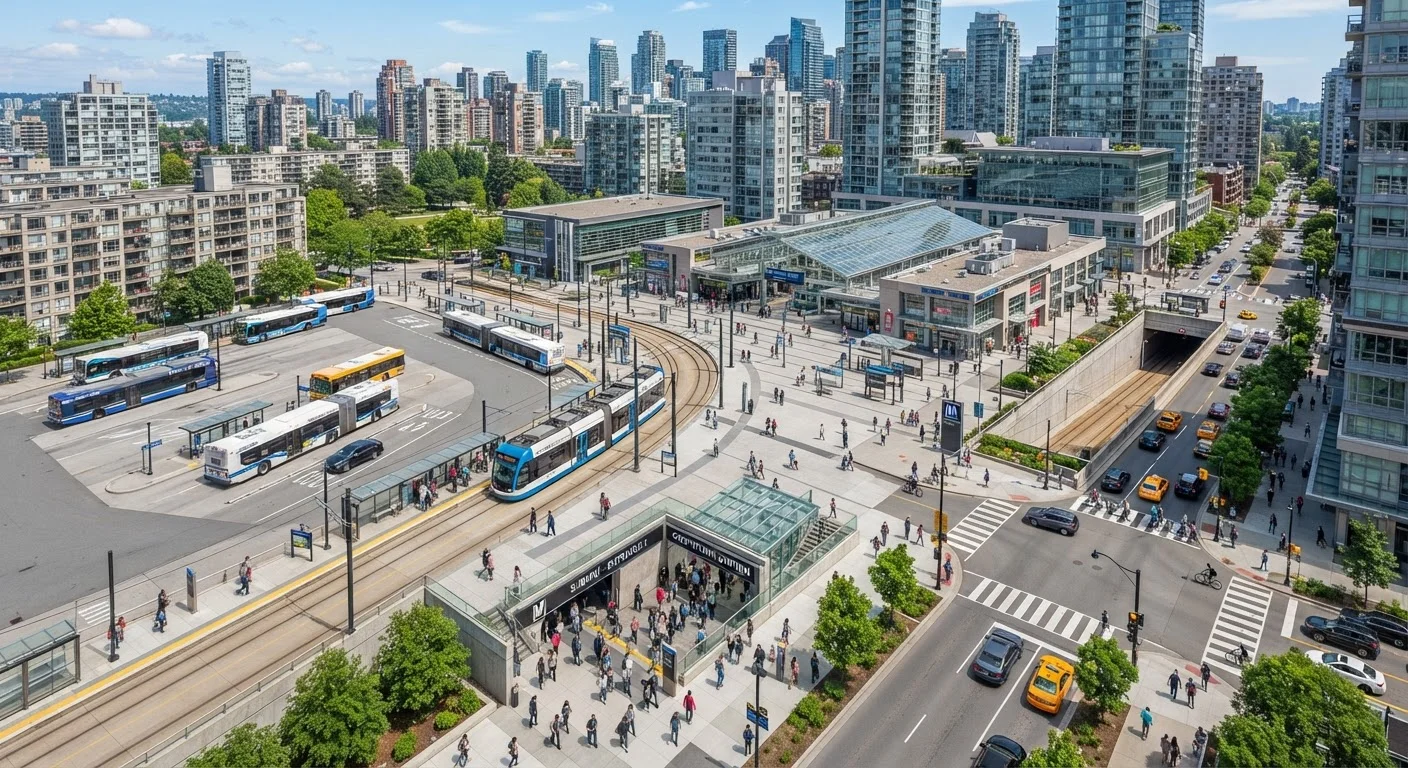
Four Modes, Four Different Jobs
Urban transit isn't one-size-fits-all. Bus, subway (heavy rail), light rail, and commuter rail each solve a different commuting problem - and understanding those differences helps you pick the right option for your route, schedule, and budget.
| Typical Bus Frequency | Every 10-30 minutes (varies by route) (American Public Transportation Association (APTA)) |
| Average Subway Speed | 20-35 mph (including stops) (Urban transit industry averages) |
| Commuter Rail Trip Distance | 10-80+ miles per one-way trip (Federal Transit Administration (FTA)) |
| Light Rail Passenger Capacity | 150-300 passengers per car (Transportation Research Board) |
| US Transit Ridership Modes | Bus, heavy rail, commuter rail, light rail, other (APTA Public Transportation Fact Book) |
| Monthly Transit Pass Range | Roughly $50-$130 in most US cities (General market range; varies by city) |
Before digging into each mode, it helps to know the key variables that separate them: speed, frequency, coverage area, and cost. A subway excels at moving large volumes of people quickly through a dense city core. A bus covers far more ground at lower infrastructure cost. Light rail lands in between. Commuter rail extends reach into the suburbs. If you're evaluating transit options before choosing where to live, the commuter's pre-move checklist covers exactly what to look for.
Bus: The Widest Reach, the Most Flexibility
Bus service is the backbone of US public transit. It requires no dedicated rail infrastructure, which means routes can expand or shift as neighborhoods grow. That flexibility comes at a trade-off: buses share lanes with car traffic, making them vulnerable to congestion delays.
Best for: Short-to-medium trips within a city; neighborhoods not served by rail; first-mile/last-mile connections to a train station.
Limitations: Schedules can be unreliable during peak traffic hours. Frequency varies dramatically - a busy downtown corridor might run every 8 minutes, while a suburban route might run every 30.
Bus Rapid Transit (BRT) is a hybrid approach: dedicated lanes and pre-board fare payment bring bus performance closer to light rail at a fraction of the construction cost. Not every city has it, but it's worth checking whether your metro area operates BRT corridors.
45%
Share of US transit trips taken by bus
According to APTA's Public Transportation Fact Book, bus service remains the most widely used transit mode in the United States.
28%
Share of trips on heavy rail (subway)
Heavy rail systems, concentrated in a handful of large metros, account for a significant share of all US public transit boardings.
$10,000+
Estimated annual savings vs. car ownership
The American Public Transportation Association estimates regular transit users can save this amount compared to driving, though actual savings vary widely by city and lifestyle.
Subway (Heavy Rail): Speed and Frequency in Dense Cores
Subways - formally called heavy rail - operate on exclusive right-of-way, almost always underground or elevated. That separation from street traffic is what makes them fast and reliable. Cities like New York, Chicago, Washington D.C., Boston, San Francisco, and Los Angeles operate heavy rail networks.
Best for: High-frequency travel within a large metro core; daily commuters who value predictability over flexibility.
Limitations: Coverage is limited to cities that have built the infrastructure. Stations can be far apart in outer neighborhoods, so the last mile often requires a bus or bike connection.
Headway
The time interval between consecutive vehicles on the same route. Shorter headways mean more frequent service and less waiting time.
Right-of-way
The dedicated path or corridor a transit vehicle uses. Exclusive right-of-way (like a subway tunnel) separates transit from car traffic and improves reliability.
Light Rail Transit (LRT)
An electrically powered rail system that typically runs on city streets or dedicated lanes. It carries more passengers than a bus but usually fewer than a full subway.
Commuter Rail
Regional train service connecting suburbs or outer neighborhoods to a central city. Trains run less frequently than subways and cover longer distances at higher speeds.
Fare Integration
A system that allows a single fare payment or transit card to work across multiple modes - such as bus, light rail, and subway - within one regional network.
Park-and-Ride
A facility where commuters drive to a transit station, park their vehicle, and continue the rest of their journey by train or bus.
If you're combining subway with another mode - say, biking to the station - the guide to multi-modal commuting walks through how to plan that kind of trip reliably.
Light Rail and Commuter Rail: Distance and Context
Light rail typically runs at street level or on elevated tracks through urban and inner-suburban corridors. It's quieter than a bus, higher-capacity, and usually more frequent than commuter rail. Cities like Denver, Portland, Dallas, and Minneapolis operate extensive light rail networks.
Commuter rail operates on longer regional corridors - think Metra in Chicago, MARC in the Baltimore-Washington area, or Caltrain in the Bay Area. Trains run less frequently (often peak hours only), but cover far greater distances at higher speeds, making them suited for suburb-to-downtown commutes of 20 miles or more.
Key difference: Light rail fits urban or inner-ring suburban travel; commuter rail fits regional travel where distance matters more than frequency.
Fares and Schedules Change Frequently
Fare structures, pass options, and service hours vary by city and are updated regularly. Always check your local transit agency's official website before making commuting decisions. If your employer offers pre-tax commuter benefits, those can offset costs significantly - see how commuter benefits programs work for details.
For commuters who drive part of the way and train the rest, many commuter rail stations offer park-and-ride facilities. That said, parking availability fills quickly at popular stations - worth verifying before you rely on it. You can also explore alternatives beyond bus and train, including vanpools and employer shuttles, that pair well with rail commutes.
For a full cost comparison across all commuting strategies, see the commuter cost breakdown.
This article is for general informational purposes only. Fares, schedules, and service details vary by transit agency and are subject to change. Consult your local transit authority for current information specific to your area.
The content provided on our blog site traverses numerous categories, offering readers valuable and practical information. Readers can use the editorial team’s research and data to gain more insights into their topics of interest. However, they are requested not to treat the articles as conclusive. The website team cannot be held responsible for differences in data or inaccuracies found across other platforms. Please also note that the site might also miss out on various schemes and offers available that the readers may find more beneficial than the ones we cover.