

Start here
Is Bike Commuting Realistic for You?
Next
The Upfront Costs You Should Plan For
Then
What the Daily Routine Actually Looks Like
Troubleshoot
Common First-Month Challenges
Plan ahead
When Biking Alone Isn't Enough
Is Bike Commuting Realistic for You?
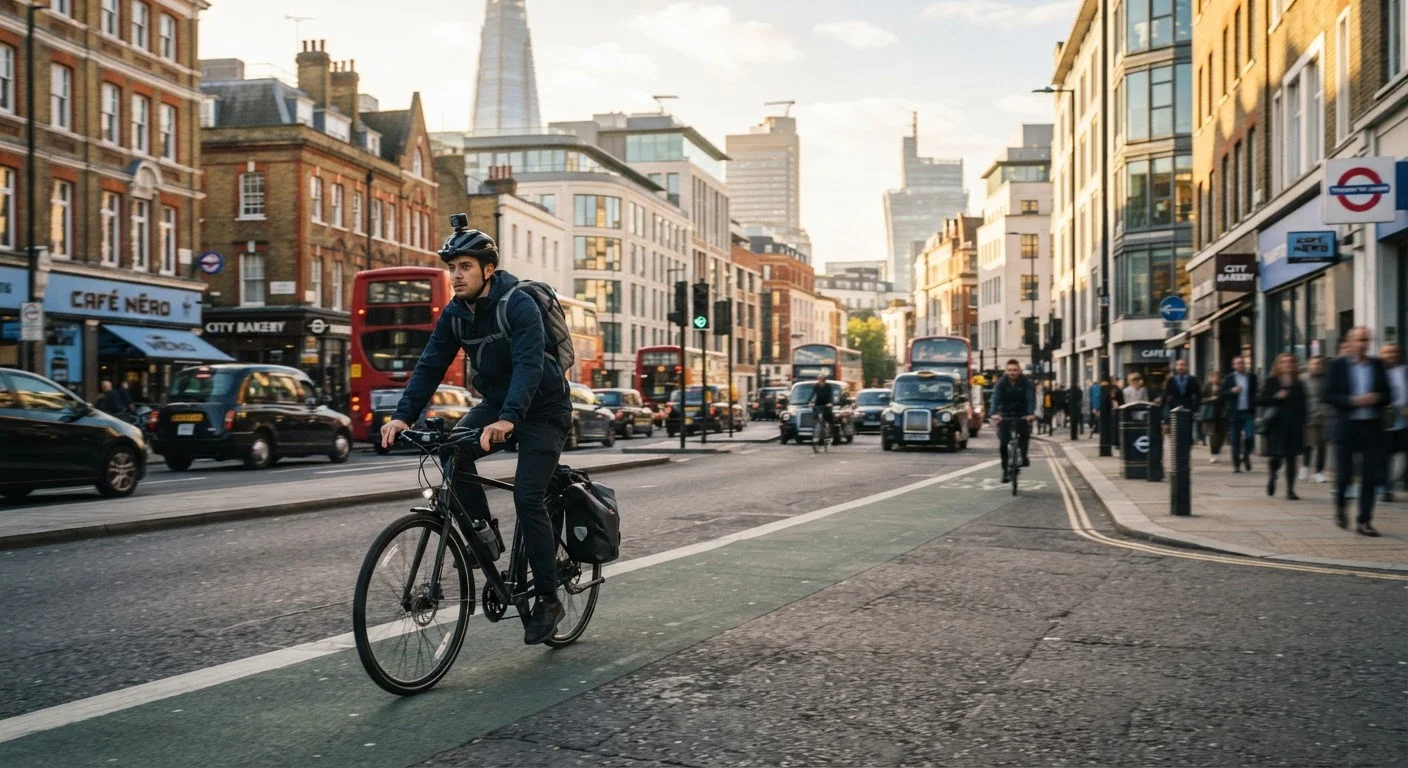
Before buying gear, run an honest feasibility check. Distance, route safety, and your workplace setup matter more than motivation. Most people find a one-way distance of under 10 miles manageable on a standard bike; anything longer deserves extra scrutiny around time commitment and physical demand.
Map your actual route - not the shortest path, but one with protected bike lanes or low-traffic roads. A 6-mile ride through a corridor with frequent intersections and no bike infrastructure can be more exhausting and risky than a 9-mile route on a dedicated path. Use a tool like Google Maps in bicycle mode as a starting point, then test the route on a weekend before relying on it for work.
Check your destination too. Does your employer have secure bike parking, a changing room, or lockers? Arriving without a plan for your bike or your appearance is a first-month stumbling block that surprises a lot of new commuters.
Hybrid bike
A bicycle design that combines features of road and mountain bikes, making it well-suited for paved city streets and light paths. It's the most common choice for new commuters.
Panniers
Bags designed to attach to a rack mounted on the bike frame, typically over the rear wheel. They carry weight more comfortably than a backpack on longer trips.
U-lock
A rigid, U-shaped bike lock that is significantly harder to cut than cable locks. Considered the baseline security standard for bike commuters locking up in public.
Multi-modal commuting
A commuting approach that combines two or more transportation modes - for example, cycling to a transit stop, then taking a train. It increases flexibility and covers gaps in any single method.
Protected bike lane
A lane physically separated from vehicle traffic by a barrier, curb, or parked cars. Safer than painted lanes for everyday commuting, especially for new riders.
The Upfront Costs You Should Plan For
Bike commuting is cost-effective long-term, but it's not free to start. A reliable used bike in commuter-ready condition typically costs $150-$350. Add a quality helmet ($40-$80), front and rear lights ($30-$60), a U-lock ($40-$70), and a basic repair kit including a spare tube and pump ($20-$30), and a realistic starting budget is $280-$590 depending on what you already own.
Ongoing costs are lower than most transit or driving alternatives. Expect to spend roughly $100-$200 per year on tires, tubes, brake pads, and occasional cable replacement - less if you learn to handle minor maintenance yourself.
To see how these numbers compare against transit passes and car ownership, the cost breakdown for daily commuters is worth reviewing. You can also use the real commuting cost worksheet to calculate your specific numbers before committing.
Start with a Used Bike
A used bike in good mechanical condition is a smarter first purchase than a new entry-level model. Have a bike shop do a basic tune-up ($50-$80) when you buy used - worn brake pads or a stretched chain can make an otherwise solid bike unreliable. Once you've confirmed bike commuting works for your situation, you'll have a much clearer picture of what features are actually worth paying for.
What the Daily Routine Actually Looks Like
The biggest adjustment isn't physical - it's logistical. Your mornings will require an earlier start than you expect in month one. Add 15-20 minutes of buffer beyond your mapped ride time until you've established a consistent pace and learned where traffic bottlenecks occur.
Plan your work clothes the night before. Many bike commuters pack a change of shirt at minimum, even on mild days. Panniers (bags that mount directly to a rear rack) distribute weight far better than a backpack on a longer ride and reduce back sweat significantly.
Locking your bike securely at both ends of the trip becomes a non-negotiable habit. Use a U-lock through the frame and rear wheel, and add a cable for the front wheel if you're parking in an exposed location. Never rely on a cable lock alone.
Common First-Month Challenges
New bike commuters consistently run into the same handful of problems. Knowing them in advance helps you plan rather than react.
- Weather disruptions: A dry week can lull you into skipping wet-weather prep. Keep fenders on your bike year-round and have a lightweight rain jacket in your bag.
- Flat tires: Your first flat will likely happen when you're already running late. Practice changing a tube at home before you need to do it roadside. It takes about 10 minutes once you've done it twice.
- Fatigue accumulation: Back-to-back riding days compound tiredness in ways a single test ride won't reveal. Consider riding 3-4 days per week initially rather than every day, and build up from there.
- Route surprises: Construction, temporary road closures, and poorly maintained bike lanes often don't appear on maps. Scout a backup route before you need it.
Don't Skip the Helmet - Any Day
Helmet use should be consistent, not situational. The risk of a crash isn't meaningfully lower on a familiar route or a short trip. A properly fitted helmet rated to current US safety standards (look for CPSC certification) is non-negotiable safety equipment. Replace any helmet that has absorbed an impact, even if it looks undamaged.
When Biking Alone Isn't Enough
A bike-only commute strategy breaks down on heavy rain days, during illness, after late work events, or when you need to carry something large. This isn't a failure of the approach - it's a reason to plan a hybrid strategy from the start.
Many effective bike commuters combine cycling with transit on difficult days, a setup known as multi-modal commuting. If your city's transit network allows you to bring a bike on trains or buses, this dramatically increases the range of conditions you can handle. The guide to multi-modal commuting covers how to plan this reliably.
If biking doesn't cover all your needs, it's worth knowing what other options exist alongside it. Alternative commuting strategies like vanpools and employer shuttles can fill gaps on days when cycling isn't practical. The goal in month one is to build a sustainable system - not to prove a point about never using a car.
Your Commute Length Affects More Than Time
Research consistently links longer commutes to higher financial and personal costs that rarely show up in simple budget calculations. If your bike commute is on the longer side, it's worth reading about how commute length affects your finances before locking in your approach. Understanding the full picture helps you make a genuinely informed trade-off.
Frequently Asked Questions
Most bike commuters find distances under 10 miles each way manageable on a standard bicycle. Beyond that, physical fatigue and time start to erode the benefits. An e-bike can extend that comfortable range to 15-20 miles, though it adds to your upfront cost.
Fenders, a waterproof jacket, and waterproof panniers or a bag cover handle light rain reasonably well. For heavy or sustained storms, most experienced bike commuters take transit or carpool rather than push through conditions that create genuine safety risks.
Check whether your workplace has a shower or changing room - many larger offices do. If not, a slightly slower pace, moisture-wicking clothes, and a change of shirt in your bag gets most people through without issue.
Over time, yes - once you've recouped the upfront equipment cost. A used bike and basic gear can pay for itself in a few months compared to monthly transit passes, though maintenance costs are ongoing. See a detailed breakdown in our <a href="/cars-commuting/commuting-and-transit/public-transit-carpooling-biking-or-walking-a-cost-breakdown-for-daily-commuters">cost comparison guide</a>.
No. A basic hybrid or city bike in good mechanical condition is sufficient for most commutes. Focus on reliable brakes, functioning gears, and proper tire pressure rather than a premium model.
A U-lock paired with a cable lock offers a meaningful deterrent. Lock the frame and rear wheel to a fixed structure. Research your workplace's bike parking options before day one - indoor storage is worth requesting from your employer if available.
The content provided on our blog site traverses numerous categories, offering readers valuable and practical information. Readers can use the editorial team’s research and data to gain more insights into their topics of interest. However, they are requested not to treat the articles as conclusive. The website team cannot be held responsible for differences in data or inaccuracies found across other platforms. Please also note that the site might also miss out on various schemes and offers available that the readers may find more beneficial than the ones we cover.