

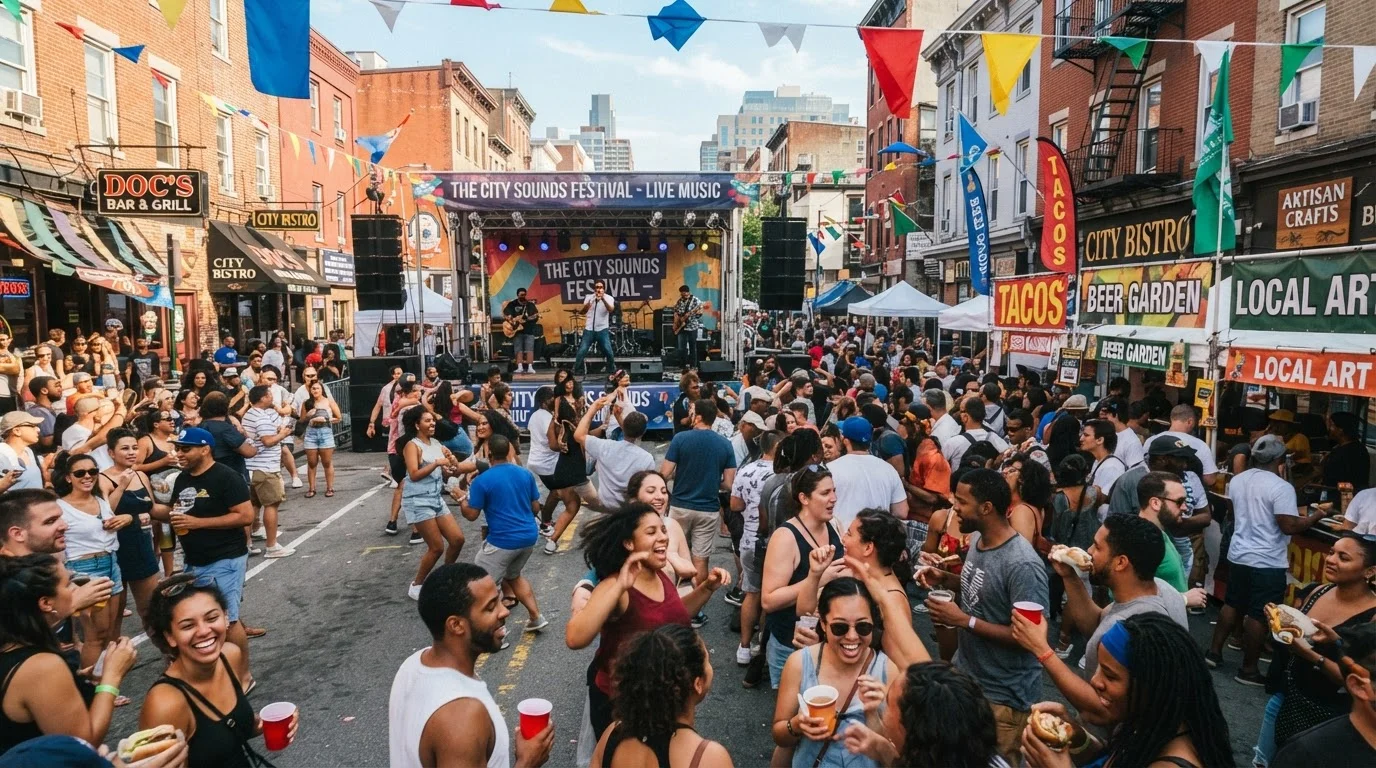
Why Local Events Are a Trip-Planning Superpower
Most travelers pick a destination, then wonder what's happening when they arrive. Flip that approach and something clicks: lead with the event, then build your trip around it. A city's cultural calendar — its food festivals, jazz weekends, film fests, marathon Sundays, and college football Saturdays — tells you more about the right time to visit than any season guide can.
The upside is real. Attending a signature event gives your trip an instant focal point, introduces you to locals who genuinely care about the experience, and often unlocks free or low-cost programming you'd never stumble onto otherwise. New Orleans during French Quarter Fest, Austin during its music and cultural events, Chicago's lakefront concert series — these are moments that define a city, and you can plan to be there for them.
The tradeoff is equally real. Events drive demand. Hotel rates near a major marathon or convention can double or triple. Restaurants fill weeks in advance. Rideshares surge. Understanding this dynamic is what separates a stressful, overpriced visit from a well-timed, high-value one. For a broader framework on putting a trip together, the Trip Planning Basics hub walks through the full process step by step.
How to Research and Plan Around a Regional Event
Follow these steps to match your travel timing to a city's event calendar — and make sure the event works for your budget rather than against it.
What you will need
Start with the city's official events calendar
Most US cities publish annual event calendars through their tourism bureau or convention and visitors authority. Search for "[city name] events calendar" to find official listings. Look at least two to three months out to give yourself booking lead time. Note any multi-day festivals, major sporting events, large conventions, or public celebrations that align roughly with when you'd like to travel.
Check hotel pricing across event and non-event dates
Once you've identified potential event windows, search accommodation prices for those specific dates and compare them to the week before and after. A dramatic price spike on certain dates is a reliable signal that demand is high. Decide whether attending the event justifies the premium — or whether the surrounding week gives you nearly the same experience at lower cost.
Identify which event activities are free vs. ticketed
Many signature city festivals have a significant free component — street stages, parades, public markets, waterfront fireworks — alongside paid ticketed portions. Research the event's official site to understand the split. If the most meaningful parts of the festival are free or low-cost, your accommodation may be the primary expense to manage, which opens up options like staying slightly outside the immediate event zone and commuting in.
Factor in transportation and mobility during the event
Large events often mean road closures, reduced parking, and heavily used public transit. Check whether the city's transit authority is running event-specific service — many do, and it's usually the easiest way to get around. If you're driving in from outside the city, research park-and-ride options. Rideshare surge pricing during major events can add meaningful cost to a budget, so build that into your planning.
Build your itinerary around the event's schedule
Once logistics are settled, map your day-by-day itinerary so the event anchors your trip without consuming it. A festival might run Friday through Sunday — that still leaves morning hours for neighborhoods, museums, or food finds that aren't part of the official programming. Blending the event with independent exploration gives your trip depth and makes it feel like a genuine city visit rather than just a one-note attendance. For trip structure ideas, the urban vs. rural travel guide offers useful perspective on pacing different city experiences.
Free Events Are Everywhere — Seek Them Out
Many of the most culturally rich events in US cities carry no admission price. Municipal arts festivals, neighborhood block parties, open-air film screenings, farmers markets, and public holiday celebrations are often completely free and deeply local. Searching specifically for free events in your destination city is one of the most effective budget travel strategies you can apply to domestic trips.
When to Dodge the Event Crowd Instead
Not every traveler wants the energy of peak festival season — and that's a legitimate strategy too. Visiting a city the week after a major event often means hotels are releasing unsold inventory at reduced rates, restaurants are less booked, and the city itself is easier to move around. You still benefit from lingering buzz without paying peak prices.
This is essentially the event-calendar version of shoulder season travel. For a deeper look at how timing just outside peak periods consistently lowers costs, see our piece on why timing your trip can change everything. The same logic applies here: a city during its biggest festival week and the week after can feel like two completely different — and equally valid — experiences.
Verify Event Details Before You Book Flights
Event dates, formats, and even annual schedules can change. A festival that ran every October for a decade may shift to a new month, go on hiatus, or change its ticketing structure. Always confirm current dates and status directly with the official event organizer or city tourism authority before committing to non-refundable travel bookings. Never rely solely on a third-party listing or a previous year's coverage.
For more on squeezing full value out of a short city stay regardless of timing, our long-weekend city guide has you covered.
The content provided on our blog site traverses numerous categories, offering readers valuable and practical information. Readers can use the editorial team’s research and data to gain more insights into their topics of interest. However, they are requested not to treat the articles as conclusive. The website team cannot be held responsible for differences in data or inaccuracies found across other platforms. Please also note that the site might also miss out on various schemes and offers available that the readers may find more beneficial than the ones we cover.