

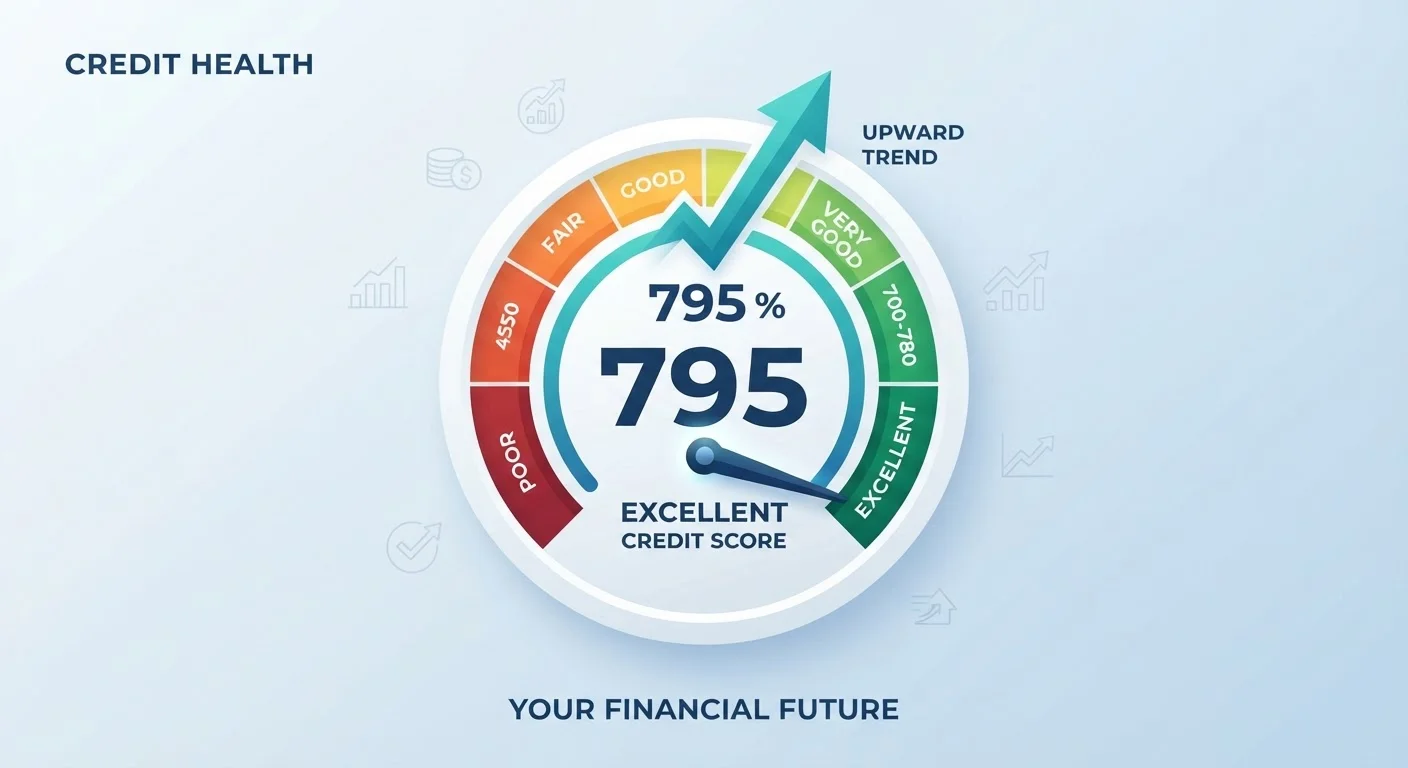
What Credit Utilization Actually Measures
Credit utilization applies only to revolving credit — primarily credit cards and lines of credit. It does not factor in installment loans like student loans, auto loans, or mortgages, which have fixed payoff schedules. The ratio is calculated at both the individual card level and across all your revolving accounts combined.
The formula is straightforward: divide your current balance by your credit limit, then multiply by 100. A $500 balance on a card with a $2,000 limit gives you a 25% utilization rate on that card. Scoring models look at this per-card figure and your aggregate ratio, so one maxed-out card can pull your score down even if other cards sit unused.
To understand how utilization fits into the full picture of what lenders evaluate, see our breakdown of how credit scores are calculated.
Why Scoring Models Weight It So Heavily
Under the FICO scoring model, credit utilization falls under the "amounts owed" category, which accounts for roughly 30% of your score — the second-largest factor after payment history. The reasoning is practical: someone using a large portion of their available credit may be financially stretched, which statistically correlates with a higher risk of missed payments.
~30%
Weight of "amounts owed" in a FICO score
FICO's published scoring breakdown assigns roughly 30% of your score to amounts owed, which includes credit utilization.
<10%
Utilization typical among highest scorers
Consumers with FICO scores above 800 tend to use less than 10% of their available revolving credit, according to FICO data.
1 cycle
Time for paydown to appear in your score
Because utilization is recalculated each time issuers report to the bureaus, a balance paydown can show up in your score within a single billing cycle.
High utilization doesn't label you as irresponsible — it's a snapshot, not a permanent judgment. A person building a budget, carrying a balance temporarily, or recovering from a financial setback can see meaningful score improvement simply by reducing what they owe relative to their limits. That responsiveness is actually one of the most empowering things about this factor.
For a broader look at common misconceptions around scores, our article on credit score myths separates fact from fiction.
The Reporting Cycle: Why Timing Matters
Here is a detail many people miss: your credit score doesn't reflect your real-time balance. Card issuers typically report your balance to the credit bureaus once per month, usually around your statement closing date. Whatever balance appears on that statement is what gets sent to the bureaus and scored.
Pay Before Your Statement Closes
If lowering your reported utilization is a priority, make a payment before your statement closing date rather than waiting for the due date. The balance on your statement is what gets reported to the bureaus. Even one well-timed payment can reduce the number that scoring models see.
This means someone who pays their balance in full every month can still show meaningful utilization if their statement balance is high when it's reported. Conversely, making a large payment before the statement closes — rather than only before the due date — can result in a lower reported balance and, within the next billing cycle, a higher score.
Understanding this cycle helps you see why credit utilization moves scores faster than almost any other factor. Unlike payment history, which is built slowly over years, utilization resets with each reporting cycle. A significant balance paydown today can be reflected in your score within weeks.
Common Moves That Affect Your Ratio Without You Realizing
Several routine financial decisions can shift your utilization unexpectedly:
- Closing a credit card removes that card's limit from your available credit total, shrinking the denominator of the ratio and pushing utilization up — even if the balance on that card was zero. Learn more in our guide to credit reports and scores.
- Large purchases on a single card can spike per-card utilization, even if your overall ratio stays moderate.
- Balance transfers consolidate debt onto one card, which may improve overall utilization but can push per-card utilization on the receiving card very high.
- Card inactivity followed by issuer-initiated limit reductions can quietly shrink your available credit without a direct action on your part.
If you're planning to apply for a mortgage or other major loan, managing utilization in the months beforehand matters. Our article on credit and mortgage applications explains what lenders look at beyond the score itself.
This article is for general informational and educational purposes only and does not constitute personalized financial advice. For guidance specific to your situation, consider consulting a qualified financial professional.
Frequently Asked Questions
Most credit experts suggest keeping your utilization below 30% as a practical guideline. However, people with the highest credit scores tend to use less than 10% of their available credit. There is no single perfect number, but lower utilization generally signals less risk to lenders.
Once your card issuer reports the lower balance to the credit bureaus — typically after your statement closing date — the updated utilization is factored into your score. This can happen within one billing cycle, which is usually 30 days or less.
Scoring models consider both your overall utilization across all cards and the utilization on each individual card. A single card maxed out near its limit can hurt your score even if your overall utilization looks fine.
Yes — if a lender approves a higher limit and your balance stays the same, your utilization ratio automatically drops. Be aware that some limit increase requests trigger a hard inquiry on your credit report, which may cause a small, temporary score dip.
Paying in full is financially smart, but your score still reflects the balance reported on your statement closing date, which may not be zero. To show very low utilization, consider paying before your statement closes rather than only on the due date.
The content provided on our blog site traverses numerous categories, offering readers valuable and practical information. Readers can use the editorial team’s research and data to gain more insights into their topics of interest. However, they are requested not to treat the articles as conclusive. The website team cannot be held responsible for differences in data or inaccuracies found across other platforms. Please also note that the site might also miss out on various schemes and offers available that the readers may find more beneficial than the ones we cover.