

The Five Factors Behind Your Number
Your credit score isn't a judgment of your worth — it's a mathematical output based on five specific inputs. Understanding each one gives you real control over the number.
Payment History (35%): Whether you pay on time is the most influential factor. A single missed payment can cause a noticeable drop, especially on a thin file. Late payments stay on your credit report for up to seven years, though their impact fades over time.
Amounts Owed / Credit Utilization (30%): This measures how much of your available revolving credit — primarily credit cards — you're currently using. Using 80% of your credit limit looks risky to lenders; using 10% looks responsible. Learn how credit utilization works and why even small balance changes can shift your score quickly.
Length of Credit History (15%): Longer histories give lenders more data to evaluate. This factors in the age of your oldest account, your newest account, and the average age of all accounts. Opening several new accounts at once lowers this average.
Credit Mix (10%): Having experience with different types of credit — such as a credit card, an auto loan, and a student loan — signals that you can manage varied obligations. You don't need to seek out new account types just to improve this factor.
New Credit / Hard Inquiries (10%): Each time you apply for new credit, a hard inquiry is recorded. A single inquiry has minimal effect, but several in a short period can signal financial stress to lenders.
35%
Weight of payment history in FICO score
According to FICO's published scoring model breakdown, payment history is the single largest factor in a standard FICO score calculation.
30%
Weight of credit utilization in FICO score
FICO's model weights amounts owed — primarily credit card utilization — as the second most influential factor, making it one of the fastest to improve.
300–850
Standard FICO and VantageScore range
Both the FICO and VantageScore models use this scale, with higher scores indicating lower credit risk to lenders.
Why Your Score Changes Month to Month
Many people are surprised to see their score move without doing anything dramatic. The reason is that the calculation uses a snapshot of your credit file at a specific point in time — usually when your lender sends an update to the bureaus.
Common causes of month-to-month fluctuation include:
- Your credit card balance rising before you pay the bill (increases utilization)
- A new account being opened, temporarily lowering average account age
- A hard inquiry from a recent loan application dropping off after 12 months
- An old negative mark aging another year, reducing its scoring weight
This is also why your score from one bureau may differ from another. Not every lender reports to all three — Equifax, Experian, and TransUnion — and the bureaus don't share data with each other. Understand the difference between your credit report and your credit score to see exactly what feeds into each.
Check Your Score for Free — Without Hurting It
Many banks, credit unions, and card issuers now offer free credit score access through their apps or online portals. These use soft inquiries, so checking regularly has no negative effect on your score. Reviewing your score monthly helps you spot unexpected drops quickly and understand what's driving changes.
Building or Rebuilding: What Actually Moves the Needle
If your score is lower than you'd like — or you're starting from zero — the path forward is the same: add positive history consistently and reduce the factors that drag the number down.
The highest-leverage actions, in order of impact:
- Pay every bill on time. Even a single missed payment can set back months of progress. Autopay for the minimum amount due is a useful safety net.
- Lower revolving balances. Paying down credit card debt reduces utilization, which can reflect in your score within a billing cycle or two.
- Avoid unnecessary applications. Each hard inquiry is minor individually, but clustering applications in a short window adds up.
- Keep old accounts open. Closing a card shortens your average credit history and reduces your total available credit, both of which can lower your score.
If you're working from a thin or nonexistent file, credit score myths may be holding you back from taking that first step. Starting with a secured card or a credit-builder loan can establish history without requiring existing credit.
For a fuller picture, review the underlying data that feeds your score: reading your credit report without getting overwhelmed walks you through each section in plain language.
Scoring Models Vary by Lender
Mortgage lenders, auto lenders, and credit card issuers often use different versions of FICO or VantageScore tailored to their industry. The score you see through a free monitoring service may not be the exact number a specific lender pulls. Small differences between models are normal and generally reflect the same underlying credit behavior.
This article is for general informational purposes only and does not constitute personalized financial advice. For guidance specific to your situation, consider consulting a qualified financial professional.
Frequently Asked Questions
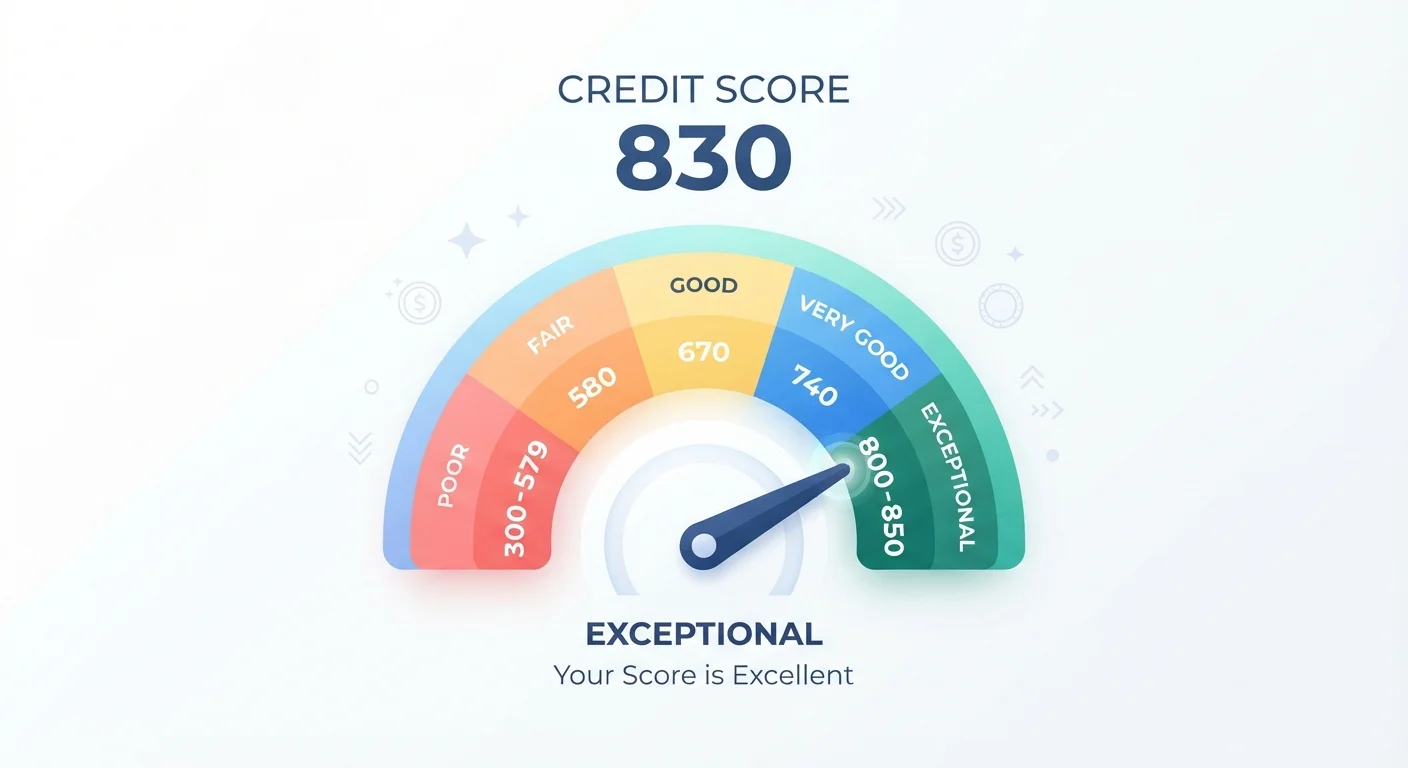
Generally, a FICO score of 670 or above is considered 'good,' while 740 and above is 'very good.' Scores above 800 are considered exceptional. These thresholds can influence the interest rates and terms lenders offer you, though each lender sets its own criteria.
Your score recalculates whenever your lenders report new information to the credit bureaus, which typically happens monthly. That means your score can shift up or down each month based on balance changes, new accounts, or payment activity.
No. Checking your own score is called a 'soft inquiry' and has no effect on your score. Only 'hard inquiries' — triggered when a lender checks your credit for a new application — can cause a small, temporary dip.
Yes. Becoming an authorized user on someone else's account, opening a secured credit card, or taking out a credit-builder loan are common starting points. Consistent on-time payments are the fastest way to establish a positive history.
Not all lenders report to all three major bureaus (Equifax, Experian, and TransUnion), so the underlying data can differ. Different scoring models can also produce different numbers from the same data.
The content provided on our blog site traverses numerous categories, offering readers valuable and practical information. Readers can use the editorial team’s research and data to gain more insights into their topics of interest. However, they are requested not to treat the articles as conclusive. The website team cannot be held responsible for differences in data or inaccuracies found across other platforms. Please also note that the site might also miss out on various schemes and offers available that the readers may find more beneficial than the ones we cover.