

Why the Envelope Method Still Makes Sense
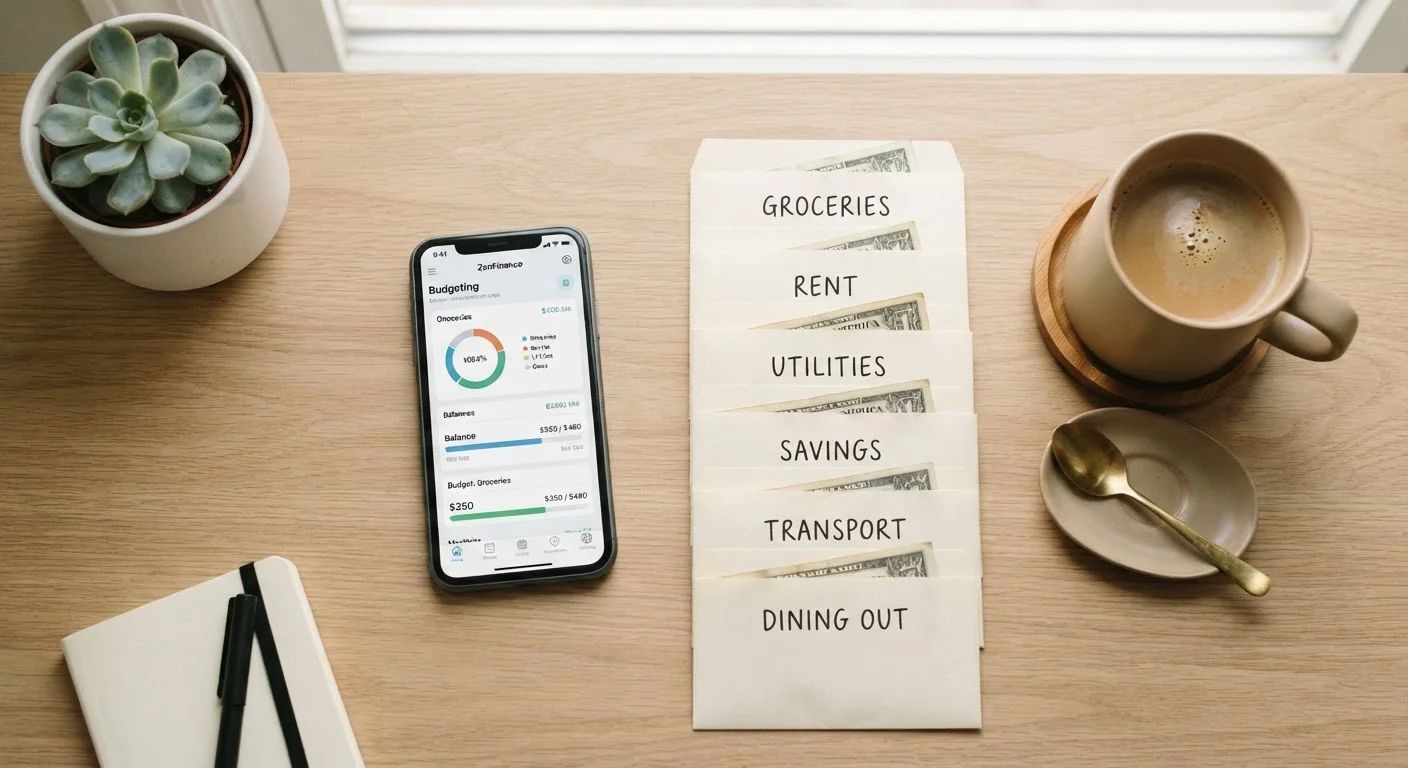
The traditional envelope system is simple: divide your cash into labeled envelopes — groceries, gas, eating out — and spend only what's inside each one. Once an envelope is empty, that category is done for the month. The physical limitation is the whole point.
Most people today rarely handle cash, which makes the original approach impractical. But the logic behind it is still sound. Pre-committing money to categories before you spend it forces intentional decisions and removes the ambiguity that makes overspending easy. Research in behavioral economics consistently shows that mental (or physical) separation of funds reduces impulse spending.
Adapting the system digitally doesn't dilute it — it just changes the container. If you're new to budgeting vocabulary, the budgeting glossary for young adults explains terms like discretionary spending and net income that come up throughout this process. For a broader look at how this method compares to other frameworks, see Zero-Based Budgeting vs. the 50/30/20 Rule.
What you will need
How to Set Up Your Digital Envelopes
Follow these steps at the start of a new pay period. The whole setup should take under an hour the first time, and much less once it's routine.
Calculate your total monthly take-home income
Add up every reliable income source — wages, side work, freelance payments — and use the net figure (after taxes). If your income varies month to month, use a conservative estimate based on your three lowest recent months. Budgeting from an inflated number is the most common first-time mistake.
List every spending category you actually use
Go through one to three months of bank and card statements and write down every distinct type of spending. Common categories include: rent, utilities, groceries, transportation, eating out, personal care, entertainment, clothing, medical, savings, and debt payments. Be specific — "food" is too broad if you spend very differently at the grocery store versus restaurants.
Assign a dollar amount to each envelope
Starting with fixed, non-negotiable costs (rent, minimum debt payments, utilities), assign amounts until every dollar of your take-home income is allocated. The total across all envelopes must equal — not exceed — your income. This zero-sum constraint is what makes the system work: every dollar has a job.
- Prioritize needs first, then savings, then discretionary spending.
- If the numbers don't balance, reduce discretionary envelopes — not savings.
Create your digital envelopes
You have two main options:
- Sub-accounts or savings buckets: Many online banks allow you to create multiple labeled savings pockets within one account. Transfer each envelope's allocation into the corresponding pocket at the start of the month.
- Budgeting app categories: Apps that support envelope-style tracking let you set category limits and log each purchase against them. Check the budgeting apps vs. pen-and-paper guide to decide which tool fits how you actually work.
Either method works. The key is that your envelope balance is visible and updated with every transaction.
Track every transaction in real time
Each time you spend, deduct it from the relevant envelope immediately — not at the end of the week. The friction of real-time logging is intentional. It keeps you aware of remaining balances and creates a brief pause before each purchase.
If you use a budgeting app, enable transaction notifications or sync your bank account so entries appear automatically. Then spend two minutes confirming and categorizing each one.
Enforce the rule: stop spending when an envelope is empty
This is the step most people skip — and it's the whole point. When your dining-out envelope hits zero, you don't eat out again until next month. If an urgent need arises, you may move money from a lower-priority envelope, but you document the transfer and understand the trade-off. Never borrow from next month's income.
Review and adjust at the end of each month
After the first full month, compare what you budgeted to what you actually spent. Envelopes that were consistently over- or under-funded need recalibration. Adjust amounts for the next month based on real data, not assumptions. Over time, your envelope amounts become an accurate picture of your life rather than a guess.
Consider building a small buffer — even $20–$50 — into irregular-expense envelopes for costs that vary. For more strategies on managing unpredictable expenses, the Saving & Emergency Funds hub covers how to build a financial cushion alongside your monthly budget.
Review Your Categories Before You Finalize
First-time envelope budgeters often discover missing categories mid-month — things like parking, haircuts, or annual subscriptions. Before locking in your envelopes, scan a full 90 days of transactions. Building in a small 'miscellaneous' envelope of $20–$40 also absorbs genuinely unexpected costs without forcing you to raid another category.
One common mistake is under-categorizing. Lumping all spending into three or four giant buckets makes it hard to see where money actually goes. Aim for 8–12 categories that match your real habits. The article spending categories most budgets forget is worth reviewing before you finalize your list — irregular costs like car registration and medical copays derail many first-time budgets.
Once your system is running, a quick weekly review — 10 minutes, same day each week — keeps the numbers honest and surfaces problems before they compound. For deeper context on how this fits into a complete financial plan, Building a Budget That Actually Reflects Your Life walks through the full picture end to end.
This article provides general financial education and is not personalized financial advice. Consider speaking with a qualified financial professional about decisions specific to your situation.
The content provided on our blog site traverses numerous categories, offering readers valuable and practical information. Readers can use the editorial team’s research and data to gain more insights into their topics of interest. However, they are requested not to treat the articles as conclusive. The website team cannot be held responsible for differences in data or inaccuracies found across other platforms. Please also note that the site might also miss out on various schemes and offers available that the readers may find more beneficial than the ones we cover.