

Why Water Heater Maintenance Actually Matters
Most homeowners never think about their water heater until it fails — and by then, they're facing a cold shower and a repair bill ranging from a few hundred to over a thousand dollars. The good news is that a standard tank water heater can last 10 to 15 years with basic upkeep, but that lifespan drops significantly when routine care is skipped.
Beyond cost, a neglected water heater can pose real safety risks. Sediment buildup reduces efficiency and stresses the tank lining. A faulty pressure relief valve can allow dangerous pressure to accumulate. These aren't dramatic worst-case scenarios — they're the predictable results of deferred maintenance.
If you're working through your first year of homeownership, this task fits neatly into the broader upkeep calendar described in our first-year homeowner maintenance guide.
Quick Actions You Can Take Right Now
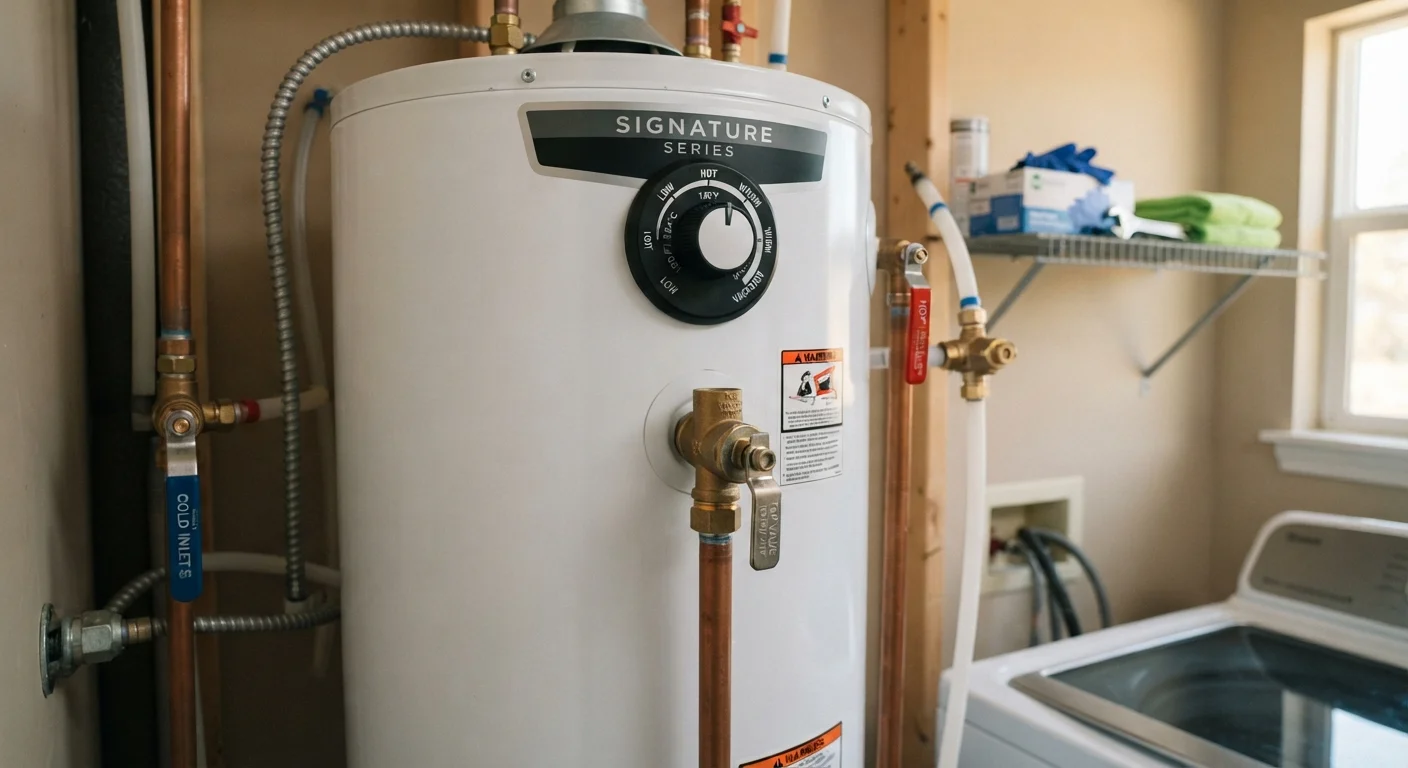
Not every water heater task requires tools or scheduling. Several of the most impactful steps take under ten minutes and should be on every homeowner's or renter's radar. Start with the temperature setting — it's one of the most commonly overlooked adjustments.
For a fuller picture of which upkeep tasks get deferred most often and what that costs, see our piece on maintenance tasks new homeowners put off.
When to Call a Professional
Water heaters involve electricity or gas, pressurized water, and exhaust venting — combinations that can be dangerous without proper training. Certain tasks, including replacing a gas valve, repairing a flue, or addressing a leak at the tank itself, should always be handled by a licensed plumber or HVAC technician. Many jurisdictions also require permits for water heater replacements, so check local requirements before attempting any major work.
Renters: Know Your Responsibilities
In most rental situations, water heater maintenance and replacement is the landlord's responsibility. However, you can still report warning signs — unusual noises, rust-colored water, inconsistent hot water supply, or visible corrosion — promptly to your property manager. Catching issues early protects you from disruption and helps your landlord avoid a more expensive repair. Check your lease for any maintenance obligations specific to your unit.
Keeping your water heater in shape is part of a broader pattern of proactive home care. Our quarterly home maintenance checklist can help you build these tasks into a regular routine so nothing slips through the cracks. And just as routine upkeep prevents expensive surprises with a vehicle — see our guide on keeping a car running on a tight budget — the same logic applies at home.
This article is for general informational purposes only. For work involving gas lines, electrical systems, or structural components, always consult a licensed professional and verify local permit requirements before proceeding.
The content provided on our blog site traverses numerous categories, offering readers valuable and practical information. Readers can use the editorial team’s research and data to gain more insights into their topics of interest. However, they are requested not to treat the articles as conclusive. The website team cannot be held responsible for differences in data or inaccuracies found across other platforms. Please also note that the site might also miss out on various schemes and offers available that the readers may find more beneficial than the ones we cover.