

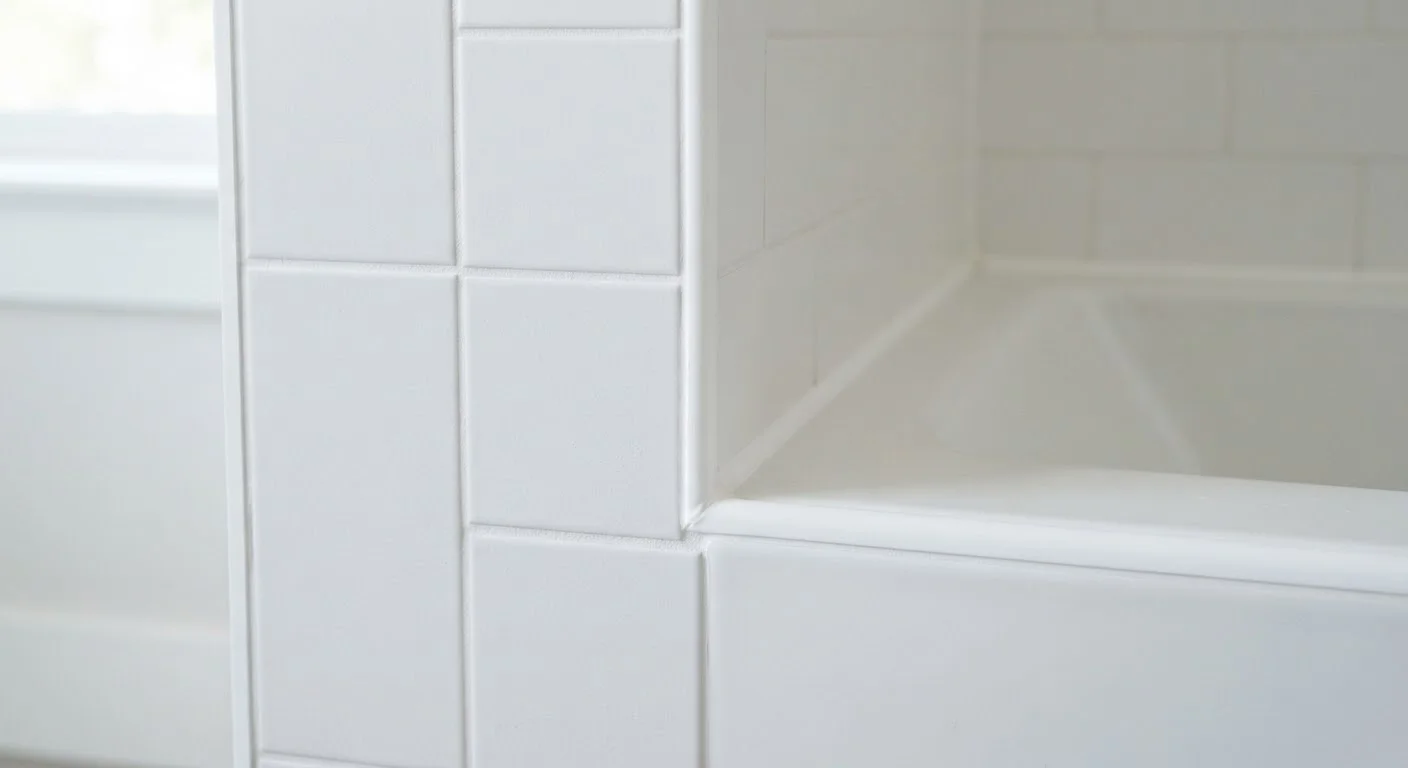
Why These Three Products Get Confused
Walk into any home improvement store and you'll find grout, caulk, and sealant shelved near each other — sometimes in nearly identical tubes. All three are used in bathrooms, all three deal with gaps or surfaces, and all three are meant to keep water out. But they're not interchangeable, and using the wrong one in the wrong spot is one of the more common mistakes new homeowners make.
Getting this right matters because bathrooms are high-moisture environments where small failures — a cracked grout line, a peeling caulk bead, an unsealed tile surface — can quietly lead to mold, rot, or structural water damage behind your walls. Understanding what each material does, and where it belongs, is a foundational maintenance skill. It's the kind of thing covered in a quarterly home maintenance routine but rarely explained in depth.
| Grout material type | Cement-based (rigid when cured) |
| Caulk material type | Silicone or siliconized latex (flexible when cured) |
| Sealant function | Penetrating or topical protective coating over grout |
| Where to use grout | Joints between tiles on flat, stable surfaces |
| Where to use caulk | Corners, tub-to-wall joints, fixture perimeters, changes of plane |
| Grout sealant reapplication | Typically every 1–3 years depending on use and moisture |
Grout: The Filler Between Tiles
Grout fills the joints between individual tiles. It's a cement-based material (sometimes with added polymers or epoxy) that hardens into a firm, slightly rough surface. Its job is structural as much as aesthetic — it holds the tile installation together and prevents tiles from shifting or chipping against each other.
There are two main types most homeowners encounter:
- Sanded grout — used for wider joints (typically 1/8 inch or more). The sand gives it body and reduces shrinkage.
- Unsanded grout — used for narrow joints (under 1/8 inch) and on delicate tile surfaces like polished marble, which sanded grout would scratch.
Grout is rigid when cured. That rigidity is its strength in flat tile fields, but it's also its limitation: it cracks when surfaces flex. This is why grout is never the right choice for corners, edges, or the joint where a tub deck meets the wall.
Grout
A cement-based material used to fill the joints between tiles. It hardens rigidly, provides structural support to the tile installation, and comes in sanded and unsanded varieties depending on joint width.
Caulk
A flexible, waterproof compound applied as a continuous bead at joints where surfaces meet at different planes or angles. It remains slightly pliable after curing to accommodate movement and thermal expansion.
Grout sealant
A liquid protective coating applied over cured grout to prevent moisture absorption, staining, and mold growth. It does not fill gaps and must be reapplied periodically.
Change of plane
Any location where two surfaces meet at an angle — such as a wall meeting a floor or a tub deck meeting a wall. These joints require flexible caulk rather than rigid grout.
Sanded grout
Grout that contains fine sand aggregate, used for tile joints wider than approximately 1/8 inch. The sand reduces shrinkage and adds body to the mix.
Epoxy grout
A high-performance grout made from epoxy resins rather than cement. It is highly stain- and chemical-resistant, though harder to work with and typically used in commercial or high-demand settings.
Caulk: The Flexible Joint Sealer
Caulk is a flexible, waterproof compound applied as a bead that remains slightly pliable even after curing. That flexibility is the key distinction. Wherever two surfaces meet at a change of plane — wall-to-floor, tub deck-to-wall, around a toilet base, around a sink rim — there will be natural movement as surfaces expand, contract, and settle. Grout would crack in those spots; caulk accommodates the movement.
For bathroom use, look for 100% silicone or a siliconized latex formula rated for kitchen and bath. These resist mold, clean up reasonably well, and bond to tile, porcelain, and fiberglass without peeling. Caulk is also what you'll use around your shower door frame, plumbing fixtures, and any penetration through a tile wall.
Caulk has a lifespan. In a regularly used shower or tub surround, it typically holds for several years before it begins to peel, shrink, or discolor. Replacing it is a manageable DIY task — and one that new homeowners routinely put off until water damage has already started. If you're also dealing with drafts at windows or doors, it helps to know that caulk and weatherstripping serve different purposes in those contexts too.
Sealant: The Protective Layer Over Grout
Sealant is a penetrating or topical liquid applied over cured grout (and sometimes unglazed tile) to protect it from staining and moisture absorption. Grout is porous by nature. Without a sealant, grout absorbs soap residue, body oils, and water — leading to discoloration and mold growth inside the joint itself.
Grout sealant doesn't replace grout or fill gaps. Think of it as a protective coating that sits on or inside the grout surface. It's transparent when dry and needs to be reapplied periodically — typically every one to three years depending on traffic and moisture exposure. If water no longer beads on your grout lines, it's time to reseal.
Glazed Tile Usually Doesn't Need Sealing
Most standard ceramic and porcelain tiles have a fired glaze that makes the tile surface non-porous — only the grout joints need sealing. Natural stone tiles (marble, travertine, slate) are different: both the tile surface and the grout joints typically require a sealant. Always verify with the manufacturer's care instructions before applying any product to your specific tile.
Glazed ceramic tiles generally don't require sealing — their surface is already non-porous. Unglazed tile (like natural stone or terracotta) often needs both grout sealing and tile sealing. When in doubt, check the tile manufacturer's guidance or consult a tile professional.
Misusing these three materials is among the home maintenance myths that quietly cost money. Applying grout where caulk belongs, or skipping sealant altogether, sets up failures that take time to become visible — and by then, the fix is harder and more expensive.
This article is for general informational purposes only. For structural tile work, permitted renovations, or suspected water damage behind walls, consult a licensed tile contractor or building professional.
The content provided on our blog site traverses numerous categories, offering readers valuable and practical information. Readers can use the editorial team’s research and data to gain more insights into their topics of interest. However, they are requested not to treat the articles as conclusive. The website team cannot be held responsible for differences in data or inaccuracies found across other platforms. Please also note that the site might also miss out on various schemes and offers available that the readers may find more beneficial than the ones we cover.