

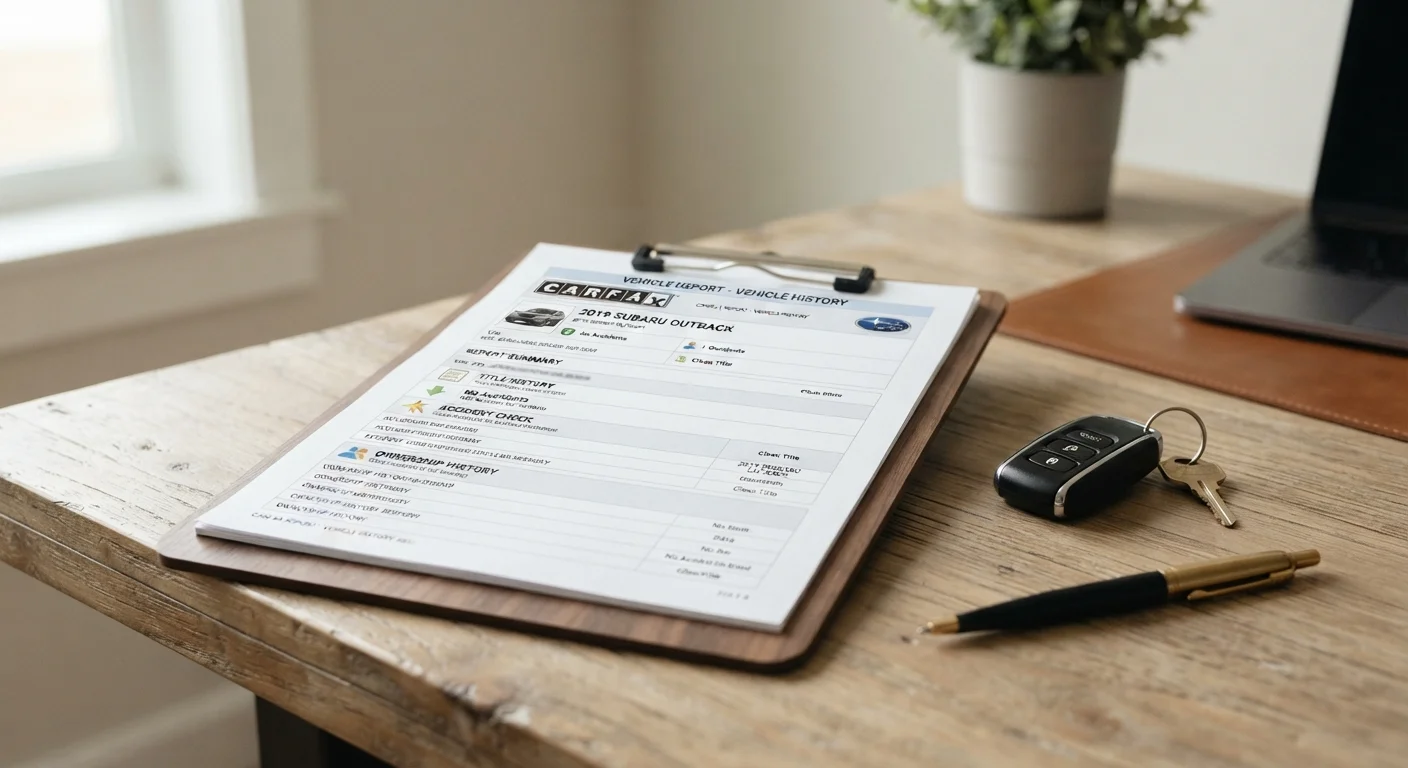
Why a Vehicle History Report Matters
When you're shopping for a used car, the seller controls what you see - but a vehicle history report pulls data from sources they can't edit. Insurers, state DMVs, auto auctions, and repair shops all feed information into services that compile these reports, giving you an independent look at what a vehicle has actually been through.
This matters most for first-time buyers. Without experience spotting warning signs on a lot, the report is one of the few objective tools you have. It won't replace a hands-on inspection, but it will tell you whether it's even worth scheduling one. If you're still weighing whether to go used at all, our breakdown of new vs. used car trade-offs covers the full financial picture.
What you will need
What Each Section of the Report Is Telling You
Reports are typically organized into several distinct categories. Here's what to look for in each one.
Title History
This section shows how ownership has changed hands and flags any title brands - official notations that change a vehicle's legal status. Common brands include:
- Salvage: The vehicle was declared a total loss by an insurer, usually due to severe damage or theft.
- Rebuilt/Reconstructed: A salvage vehicle was repaired and passed a state inspection to return to the road. These can be roadworthy but are harder to insure and typically sell at a discount.
- Lemon law buyback: The manufacturer repurchased the vehicle after it repeatedly failed to meet quality standards.
- Flood damage: Water intrusion severe enough to be recorded - a serious long-term reliability risk.
Accident and Damage Records
Look at the severity, not just the count. A minor parking-lot scrape handled through a body shop is very different from a reported airbag deployment or frame damage. Pay attention to which areas of the vehicle were affected - structural or front-end damage in particular warrants scrutiny from a mechanic.
Flood and Salvage Titles Carry Long-Term Risks
Flood-damaged vehicles can develop electrical and corrosion problems that emerge months or years later, well after purchase. Salvage and rebuilt titles often result in reduced insurance coverage options and significantly lower resale value. If the report shows either designation, factor these trade-offs carefully into your decision - and consult a licensed mechanic with experience in flood or collision-damaged vehicles before proceeding.
Odometer Readings
The report logs mileage at every recorded event. If readings ever go backward or show an implausible jump, that's a major red flag for odometer rollback - a form of fraud that inflates the vehicle's apparent value. Even without rollback, cross-check the listed mileage against the car's current odometer when you inspect it in person.
Service and Inspection Records
Not all maintenance shows up here - shops that don't report to data aggregators won't appear. But when records are present, they can help you verify that oil changes, major services, and state inspections happened roughly on schedule. Gaps don't automatically mean neglect, but they're worth asking the seller about. For context on what a well-maintained car's service timeline should look like, see our guide on routine car maintenance every owner should understand.
Number of Previous Owners and Use Type
Multiple owners in a short timeframe can indicate recurring problems. Also check whether the car was used as a rental, fleet, or commercial vehicle - these tend to accumulate wear differently than privately owned cars.
How to Get and Use the Report
Follow these steps each time you seriously consider a used vehicle.
Locate the VIN Before Anything Else
The 17-character VIN is the report's key. Verify that the VIN on the report matches the one physically on the vehicle - on the dashboard (visible through the windshield), on the driver's side door jamb, and on any title documents. A mismatch is an immediate red flag.
Check the Title Status First
Scroll to the title history section before reading anything else. A clean title with no brands is your baseline. If you see salvage, rebuilt, flood, or lemon law designations, decide immediately whether you're willing to pursue that vehicle further - these categories carry meaningful trade-offs in insurance costs, resale value, and reliability.
Trace the Odometer Readings Chronologically
Read each recorded mileage entry in order from oldest to newest. The numbers should increase steadily and plausibly based on the vehicle's age and use. Flag any entry where mileage drops or stays flat across multiple events - those anomalies are worth investigating.
Review Accident Records in Detail
Note each reported incident's date, severity, and affected area. Look for language like "airbag deployment," "frame damage," or "total loss" - these suggest significant structural events. A car with only minor cosmetic incidents in its history is in a very different position than one with multiple moderate-to-severe accidents.
Note Service Records and Ownership Gaps
Check whether maintenance events appear at reasonable intervals. Count the number of owners and note how long each held the vehicle. Short ownership periods - especially multiple owners within one or two years - are worth asking about directly.
Use the Report to Prioritize Your Inspection
Bring a printed or digital copy of the report to your in-person inspection. If the report shows a prior rear-end collision, ask your mechanic to specifically evaluate the rear structure and bumper supports. Let the report guide where the mechanic focuses attention, not just what looks obvious on the surface.
Once you've worked through the report, use the findings to guide your pre-purchase checklist - the two tools work best together.
A Clean Report Isn't a Guarantee
Vehicle history reports only capture events that were reported to the relevant agencies. Cash repairs, unreported accidents, and maintenance done at non-reporting shops won't appear. Always treat the report as one input among several - not as definitive proof of a vehicle's condition.
This article provides general educational information about vehicle history reports and is not a substitute for professional mechanical inspection or legal advice. Report data depends on what has been disclosed to reporting agencies and may not reflect the vehicle's complete history.
The content provided on our blog site traverses numerous categories, offering readers valuable and practical information. Readers can use the editorial team’s research and data to gain more insights into their topics of interest. However, they are requested not to treat the articles as conclusive. The website team cannot be held responsible for differences in data or inaccuracies found across other platforms. Please also note that the site might also miss out on various schemes and offers available that the readers may find more beneficial than the ones we cover.