

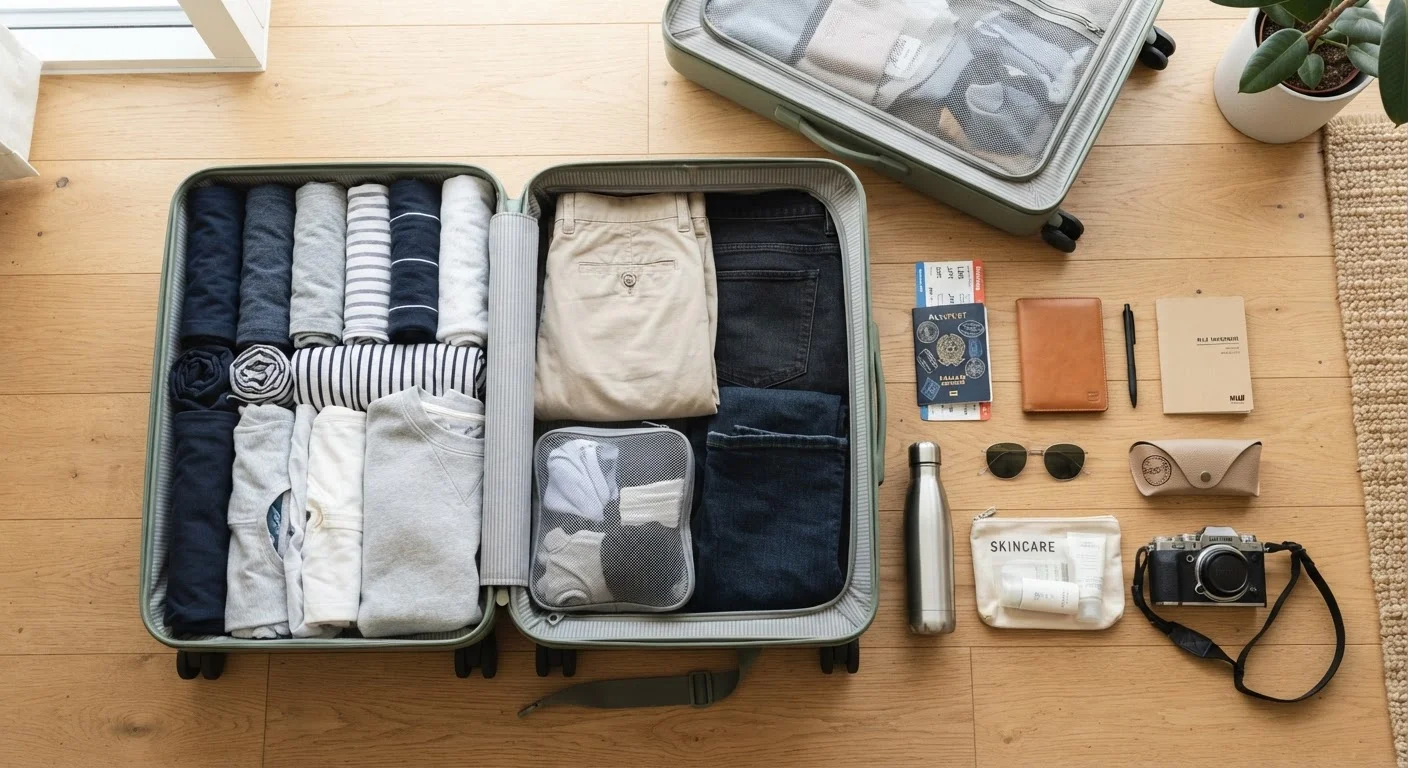
Why Most Travelers Pack Too Much
Overpacking is one of the most universal travel mistakes — and it costs real money. Checked bag fees on domestic and international flights can add up quickly, and hauling a heavy bag through cobblestone streets or up a hostel staircase drains energy you'd rather spend exploring. The good news: with a bit of structure, almost anyone can pack lighter without the nagging feeling they've forgotten something critical.
The core mindset shift is this — packing isn't about covering every scenario. It's about covering your specific trip. A week-long city break and a two-week beach trip call for completely different gear, but both can fit in a carry-on if you're strategic. For a deeper look at how carry-on travel works in practice, see carry-on only travel pros and cons.
Think in terms of cost per use
Before adding any item to your bag, ask: how many times will I actually use this? A full-size hair dryer used once doesn't justify the space it takes. Most hotels and many hostels provide them on request — it's worth checking before packing one.
Before You Pack: Do These Two Things First
Before opening a single drawer, spend five minutes on two quick research tasks. First, check the weather forecast for your destination across every day of your trip — not just the average. Second, list your actual planned activities: sightseeing, hiking, dining out, beach days. This two-minute audit eliminates the vague anxiety that leads to packing four pairs of shoes "just in case."
If you're still in the trip-planning stage and haven't locked in a destination, the article on planning around a budget is a great starting point for thinking through your options.
What you will need
Step-by-Step: How to Pack Light
Follow these steps in order. Each one builds on the last, and skipping ahead tends to recreate the overpacking cycle you're trying to break.
Choose your bag before you choose what to pack
Pick your bag first — not after. Commit to a carry-on or personal item size before you start pulling clothes. This creates a hard physical constraint that keeps decision-making honest. If you're unsure whether carry-on-only is realistic for your trip length, most travelers find it works well for trips up to 14 days with the right wardrobe strategy.
Write a master list based on your trip itinerary
Using your weather check and activity list, write out every category of item you think you need: clothing, toiletries, electronics, documents, medications. Don't edit yet — just get it all on paper. This step makes your assumptions visible so you can challenge them in the next step.
Apply the 'one outfit per 3 days' clothing rule
Plan for one bottom (pants, shorts, or skirt) per three days, and no more than two tops per bottom. Choose pieces in neutral colors that mix and match easily. Factor in laundry — most accommodations, laundromats, or local services make washing clothes mid-trip straightforward and inexpensive.
Cut your toiletries list in half
Go through your toiletries list and mark anything available at a standard pharmacy as optional. Bring only what is truly difficult to find abroad or what you rely on for medical or skin-sensitivity reasons. Decant liquids into small reusable containers to save both space and weight, and keep all liquids in a single clear pouch for security screening.
Pack and weigh before you close the bag
Pack everything, then lift your bag. If it feels uncomfortable to carry for 20 minutes, remove items until it doesn't. A simple handheld luggage scale (or a bathroom scale and some subtraction) can confirm you're within airline weight limits. Do a final scan of your master list to make sure documents, medications, and payment methods are accounted for.
Don't Skip Your Essential Documents
No packing strategy should compromise your documents or medications. Keep your passport, visa paperwork, travel insurance details, and any prescription medications in your personal item or top-access bag pocket — not in checked luggage. Losing access to these mid-trip creates problems that no local pharmacy or market can fix.
What You Can Safely Skip (and Why)
Here's a liberating truth that experienced travelers internalize fast: almost anything you forget can be replaced. Pharmacies, supermarkets, and convenience stores exist in virtually every destination. Toothpaste, shampoo, sunscreen, basic medication — these are available worldwide, frequently at lower prices than at home.
The short list of genuinely irreplaceable items includes: your passport and any required visas, prescription medications, travel insurance documentation, and payment methods. Everything else has a workaround. Pair this mindset with the planning habits covered in habits of organized travelers, and you'll find the pre-trip anxiety that drives overpacking starts to fade.
First-time travelers especially benefit from reviewing the things first-time travelers forget to plan for — it shifts focus to the genuinely overlooked items (like local transit cards or currency exchange) rather than the physical goods that are easy to source on arrival.
The content provided on our blog site traverses numerous categories, offering readers valuable and practical information. Readers can use the editorial team’s research and data to gain more insights into their topics of interest. However, they are requested not to treat the articles as conclusive. The website team cannot be held responsible for differences in data or inaccuracies found across other platforms. Please also note that the site might also miss out on various schemes and offers available that the readers may find more beneficial than the ones we cover.