

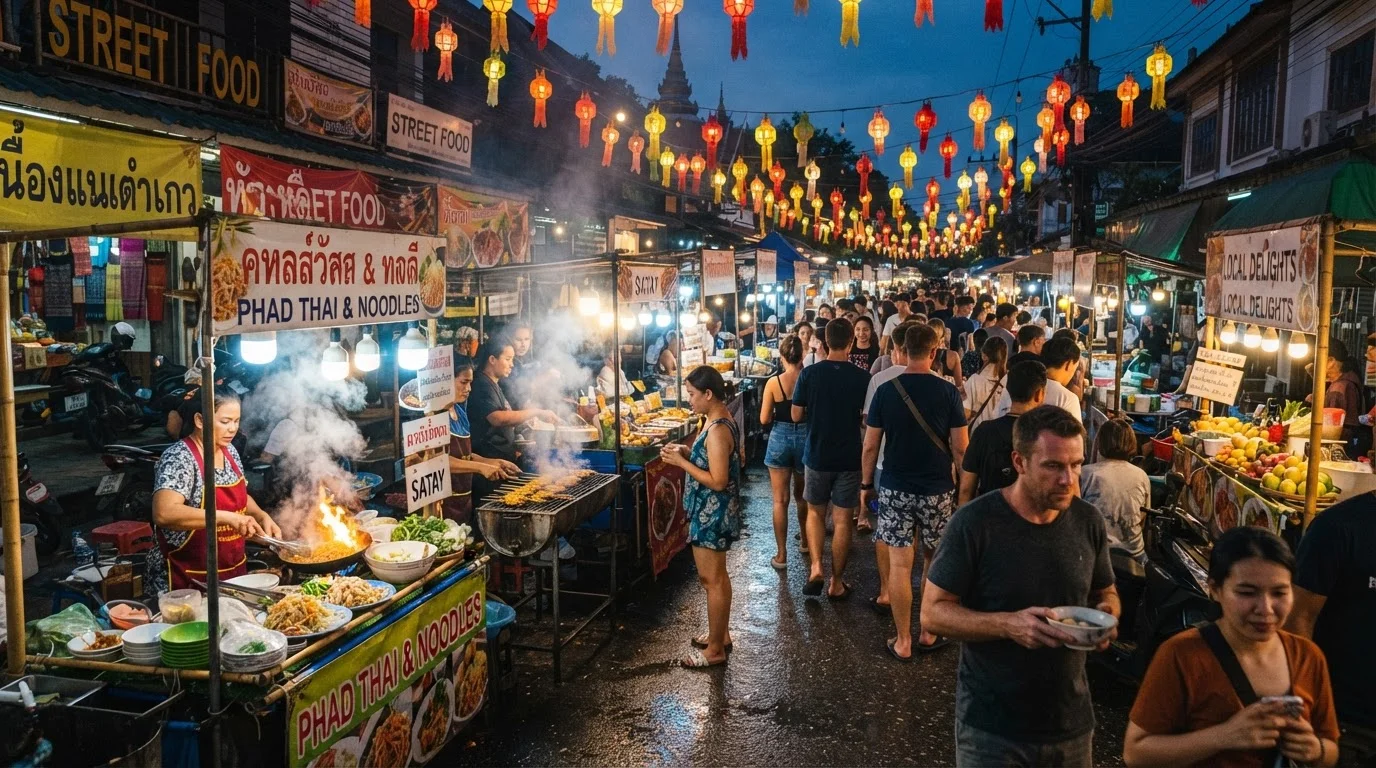
Why Food Is One of the Easiest Travel Costs to Control
Flights and accommodation tend to be fixed before you land, but food costs are negotiable every single day. In many countries, a full, satisfying meal at a local eatery costs less than a coffee at an airport café back home. The gap between what tourists pay and what locals pay for food is often dramatic — and almost entirely a product of location and habit, not quality.
For budget travelers, eating strategically isn't about deprivation. It's about trading tourist-zone markup for neighborhood flavor. If you're building out your broader trip plan, our destination and timing guide can help you choose places where your food dollar stretches furthest from the start.
40–60%
Potential savings eating away from tourist zones
Travel cost researchers and budget travel communities consistently document price gaps of 40–60% between tourist-area restaurants and local neighborhood equivalents in popular European and Asian destinations.
$3–8
Typical street meal cost in Southeast Asia
Widely reported average cost for a filling street-food meal in countries like Thailand, Vietnam, and Indonesia, compared to $15–30 or more at tourist-facing restaurants in the same cities.
Core Practices for Eating Well on Less
These aren't extreme measures — they're the habits seasoned budget travelers use as second nature. Build even a few of them into your routine and you'll likely spend noticeably less while eating more memorably.
Eat where locals eat, not where tourists congregate.
Restaurants adjacent to major tourist attractions typically charge a significant premium — sometimes two to three times local prices — for the foot traffic alone. Moving just a few blocks away from the main square or waterfront can cut your meal cost substantially without sacrificing quality.
Make street food and market stalls your default, not your backup.
In much of Asia, Latin America, and the Middle East, street food is not a budget compromise — it's the culinary tradition. Stalls specialize in one or two dishes, cook them constantly, and price them for everyday locals. The food is often fresher and more flavorful than mid-range restaurants targeting visitors.
Visit grocery stores and local markets for at least one meal a day.
Supermarkets and fresh produce markets reveal what locals actually buy and eat — and prices are transparent. Assembling a picnic lunch from bread, cheese, fruit, and local snacks is often both cheaper and more enjoyable than a sit-down midday meal.
Eat the big meal at lunch, not dinner.
Many countries offer fixed-price lunch menus (called a 'menú del día,' 'prix fixe,' or equivalent) that include multiple courses at a fraction of the dinner price. Restaurants fill seats during the midday lull with these deals; the same kitchen, the same food, significantly less cost.
Learn a few words of the local language around food.
Being able to ask 'what do you recommend?' or point to what a local is eating opens doors that English-only menus don't. It also signals respect, which vendors and restaurateurs notice and often reciprocate with better service and honest recommendations.
Avoid ordering drinks, especially alcohol, at sit-down restaurants.
Beverages — particularly bottled water, soft drinks, and wine at tourist-facing restaurants — are among the highest-markup items on any menu. They can easily double a bill. Carrying a reusable water bottle and sourcing drinks from convenience stores or markets removes this cost almost entirely.
Quick Wins You Can Apply on Day One
You don't need to overhaul your whole travel style overnight. A few small decisions on your first full day abroad can set a money-smart pattern that carries through the entire trip.
Use Google Maps Reviews Strategically
Search for a type of food near your location and filter reviews by the local language rather than English. Restaurants reviewed almost exclusively by locals — with few or no English-language reviews — are usually priced for locals too. It's a quick, reliable signal that you've found somewhere worth eating.
Eating Smart Is Part of Traveling Smart
Food is one of the great joys of international travel — and it doesn't have to be expensive to be extraordinary. The traveler who eats a bowl of pho in a plastic-stool noodle shop, or grabs a fresh empanada from a morning market, often walks away with a better story and a fuller stomach than someone who spent five times as much at a hotel restaurant.
Keep tabs on what you're spending day to day. Our budgeting basics hub has simple frameworks for tracking daily expenses that translate well to travel. And if you want the full picture on managing money across borders — from ATM fees to card surcharges — check out The Budget Traveler's Currency and Payment Reference Guide.
For a complete overview of first-trip planning on a tight budget, the Budget Travel on a First Trip Abroad guide ties all these strategies together in one place.
Food Safety Abroad: A Practical Note
Street food safety varies by destination, sanitation standards, and individual health factors. General guidance: look for stalls with high turnover (food cooked fresh constantly), avoid raw produce washed in tap water in regions with known water-quality concerns, and observe whether locals are eating there in numbers. If you have specific dietary restrictions or underlying health conditions, consult a healthcare professional or travel medicine specialist before your trip for personalized guidance.
The content provided on our blog site traverses numerous categories, offering readers valuable and practical information. Readers can use the editorial team’s research and data to gain more insights into their topics of interest. However, they are requested not to treat the articles as conclusive. The website team cannot be held responsible for differences in data or inaccuracies found across other platforms. Please also note that the site might also miss out on various schemes and offers available that the readers may find more beneficial than the ones we cover.