

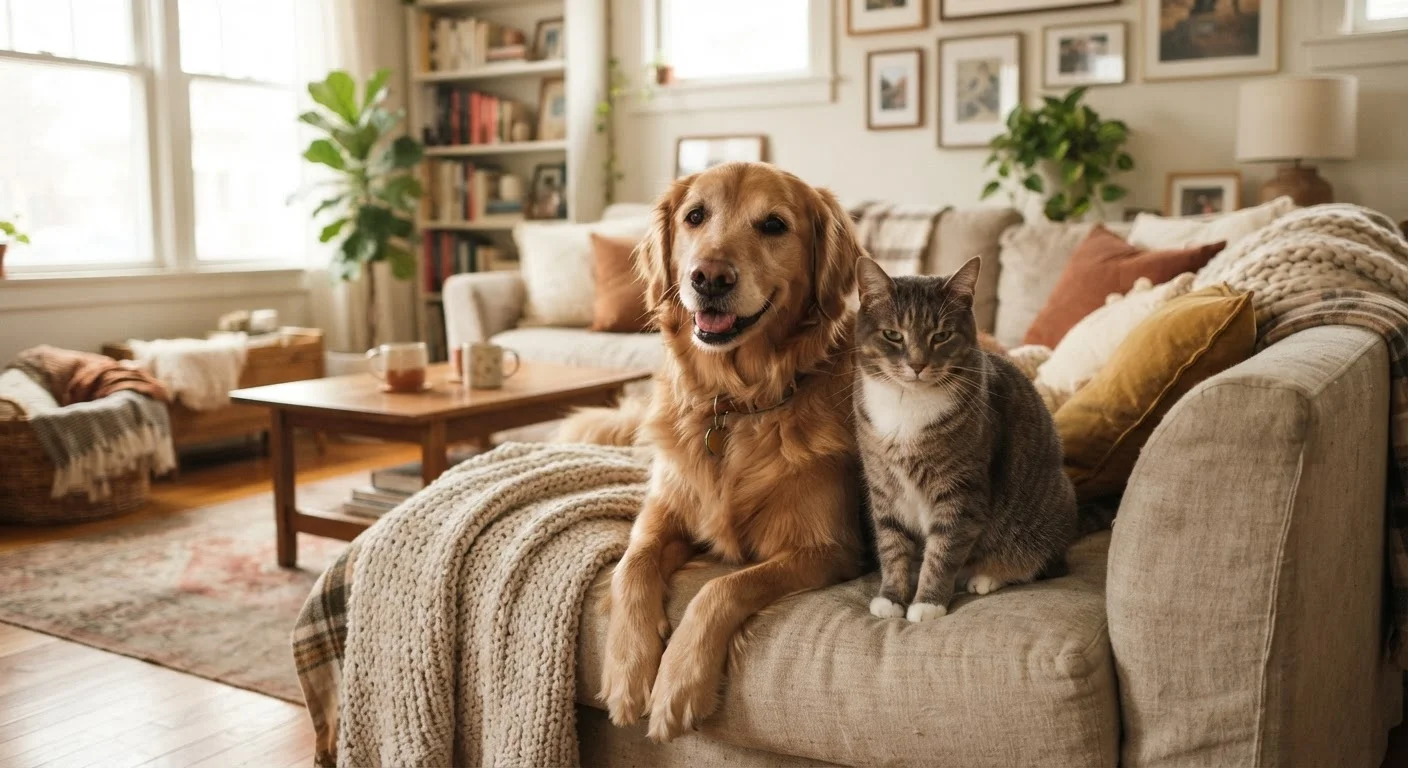
Option A
Dog
The engaged, high-involvement companion.
Best for: Active individuals or families who have time for daily walks, training, and hands-on bonding.
Option B
Cat
The independent, lower-maintenance companion.
Best for: Busy or space-limited households that want genuine companionship without a demanding daily routine.
Time and Attention: The Biggest Dividing Line
Before you think about cost, think about your calendar. Dogs need structured time every single day — typically two to four walks, active play, and consistent training, especially in the first year. Many behaviorists suggest that leaving a dog alone for more than four to six hours regularly can lead to anxiety and destructive behavior. That has real financial consequences: dog walkers, doggy daycare, and boarding all add to your tab.
Cats are built differently. They sleep up to 16 hours a day and can entertain themselves with toys, window perches, and scratching posts. A cat left alone during a standard workday is generally fine. That independence doesn't mean cats are emotionally low-maintenance — they benefit from daily interaction — but the schedule pressure is far less intense.
If your lifestyle involves frequent travel or unpredictable hours, factor in coverage costs before deciding. Our breakdown of hidden pet ownership costs walks through exactly what tends to blindside first-timers.
| Criterion | Dog | Cat |
|---|---|---|
| Daily time commitment | 2–4 hours (walks, play, training) | 30–60 minutes (play, bonding) |
| Estimated annual food cost | $400–$900+ (breed-dependent) | $200–$400 |
| Grooming cost | $0–$800+/year (breed-dependent) | Usually $0 (self-grooming) |
| Boarding/pet-sitting cost | $25–$85/night | $10–$25/night or less |
| Apartment suitability | Limited (breed matters) | Generally well-suited |
| Alone-time tolerance | Low (4–6 hours max) | High (8–10 hours typical) |
| Training requirements | Significant (especially year one) | Minimal |
What You'll Actually Spend: A Realistic Cost Comparison
Adoption fees vary widely — often $50–$300 at a shelter for either species — but that's just the entry point. Annual ongoing expenses tell a more honest story.
Dogs generally cost more across the board. Larger breeds eat significantly more food; grooming appointments (for certain coats) can run $50–$100 or more each visit; and training classes, especially for puppies, are a worthwhile but real expense. Boarding a dog for a week can easily cost $200–$500 depending on your area.
Cats are leaner on recurring costs. They eat less, require no professional grooming for most short-haired breeds, and don't need boarding unless you're gone multiple days. Litter is the main recurring supply cost that dogs don't share.
Veterinary care is significant for both — and unpredictable. Wellness visits, vaccinations, spay/neuter surgery, and dental care apply to dogs and cats alike. It's worth exploring how to handle those expenses before an emergency hits. See our comparison of pet insurance vs. a dedicated savings account for a grounded look at your options.
$1,500–$2,000+
Estimated first-year cost for a dog
The American Society for the Prevention of Cruelty to Animals (ASPCA) has historically estimated first-year dog ownership costs in this range, excluding unexpected veterinary expenses.
$1,000–$1,500
Estimated first-year cost for a cat
First-year cat costs tend to be lower due to reduced food, grooming, and boarding needs, though vet startup costs (spay/neuter, vaccines) remain significant.
~67%
U.S. households that own a pet
According to the American Pet Products Association's National Pet Owners Survey, roughly two-thirds of American households have at least one pet.
Space, Housing, and Lifestyle Fit
Where you live shapes this decision as much as anything else. Dogs — particularly medium to large breeds — need space to move and a consistent outlet for physical energy. Many landlords restrict dogs by size or breed, and some charge higher pet deposits for them. If you rent, check your lease carefully before adopting.
Cats adapt remarkably well to apartments. Vertical space (cat trees, shelves) matters more than floor square footage, and most landlords who allow pets are more comfortable with cats. If you're still weighing the rent-vs-buy equation more broadly, our article on renting vs. buying trade-offs may help you think through that layer too.
For cat owners specifically, the indoor vs. outdoor question carries its own health and safety implications. Understanding the indoor vs. outdoor trade-offs for cats can help you make a more informed choice once you've adopted.
Don't Overlook Long-Term Commitment
Dogs commonly live 10–15 years; cats often live 12–18 years or longer. Adopting either species is a long-term financial and emotional commitment that outlasts most leases, jobs, and life phases. Think beyond the first year when running your numbers. Our guide to pet ownership from adoption to senior years covers what to expect at every stage.
The content provided on our blog site traverses numerous categories, offering readers valuable and practical information. Readers can use the editorial team’s research and data to gain more insights into their topics of interest. However, they are requested not to treat the articles as conclusive. The website team cannot be held responsible for differences in data or inaccuracies found across other platforms. Please also note that the site might also miss out on various schemes and offers available that the readers may find more beneficial than the ones we cover.