

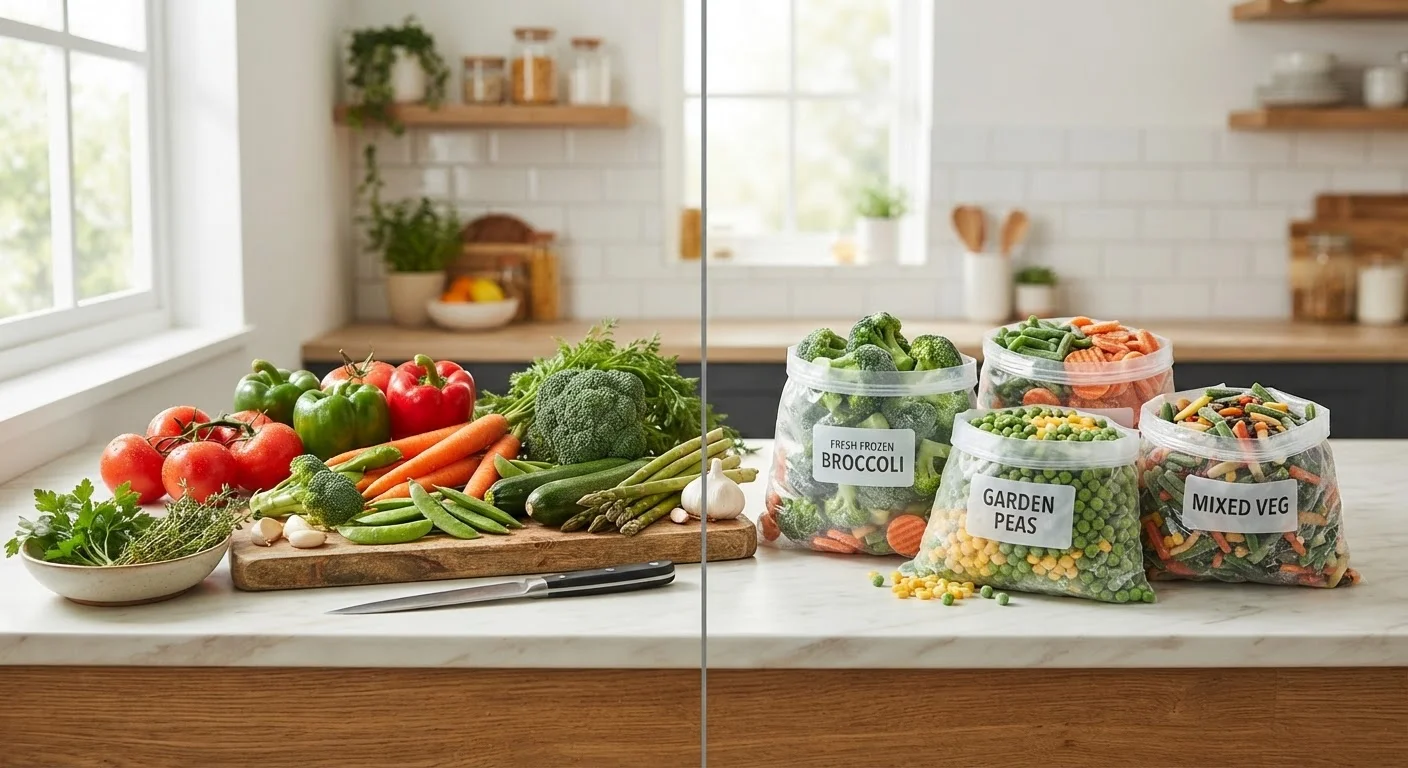
Option A
Fresh Produce
The traditional, market-aisle standard.
Best for: Ideal for consumers with easy access to farmers markets or grocery stores and who cook frequently enough to use produce before it spoils.
Option B
Frozen Produce
The convenient, nutrient-locked alternative.
Best for: Best for budget-conscious shoppers, those with irregular cooking schedules, or anyone living far from well-stocked produce sections.
Where the Nutrition Debate Actually Begins
The idea that fresh is always nutritionally superior is deeply ingrained — but the science tells a more nuanced story. What matters most isn't the category a vegetable or fruit falls into; it's the timeline and conditions between harvest and your plate.
Fresh produce starts losing nutrients the moment it's picked. Research published in peer-reviewed food science journals has shown that some vegetables, like spinach and green beans, can lose a measurable percentage of certain vitamins within days of harvest — well before they reach your local store. By the time fresh broccoli has traveled from a farm, sat in a distribution warehouse, and spent days in a refrigerator case, its vitamin content may be considerably lower than you'd expect.
Frozen produce, by contrast, is typically harvested at peak ripeness and flash-frozen within hours. This rapid freezing process slows enzymatic activity and oxidation — the two main processes that break down nutrients after harvest. The result is that many frozen vegetables and fruits retain a significant portion of their nutritional value from the moment of freezing onward. For a deeper look at where produce fits within the broader food spectrum, see our guide to whole foods vs. processed foods.
What Freezing Actually Does to Vitamins and Minerals
Before freezing, most commercial vegetables go through a brief heat process called blanching — a quick exposure to steam or hot water intended to deactivate enzymes that cause texture and color changes. Blanching does result in some loss of water-soluble vitamins, particularly vitamin C and some B vitamins. However, studies comparing frozen and fresh produce stored for several days generally find that frozen items remain comparable or nutritionally competitive.
| Criterion | Fresh Produce | Frozen Produce |
|---|---|---|
| Nutrient retention at purchase | Variable; declines with transit time | Generally high; locked in at harvest |
| Vitamin C levels | Can drop significantly after days in transit | Some loss from blanching; then stable |
| Minerals | Largely stable | Largely stable |
| Texture & flavor | Superior when truly fresh and in-season | Can soften; best in cooked dishes |
| Cost per serving | Generally higher | Generally lower |
| Shelf life | Days to one week | Several months |
| Food waste risk | Higher | Lower |
Fat-soluble vitamins — A, D, E, and K — and most minerals are relatively stable throughout the freezing process. Antioxidants such as beta-carotene and lutein are largely preserved as well. The overall picture is that freezing is a reasonable way to lock in much of what nature put into a fruit or vegetable in the first place.
~15–55%
Vitamin C loss in fresh vs. frozen spinach after 3 days
A 2017 study from the University of Chester found vitamin C levels in fresh spinach stored for three days dropped substantially compared to frozen counterparts.
~30%
Of Americans rarely meet daily vegetable recommendations
CDC dietary data suggests a large share of U.S. adults fall short of recommended vegetable intake, underscoring that availability and affordability matter more than produce format.
Practical Considerations: Cost, Access, and Waste
Nutrition science aside, real-world eating decisions involve more than vitamin percentages. Frozen produce tends to cost significantly less per serving than fresh, especially for items like berries, peas, corn, and edamame. For young adults managing tight budgets, this difference can meaningfully affect how much produce makes it onto the plate each week — and eating any vegetables consistently is far more important than the form they come in.
Access is another layer. Depending on where you live, a well-stocked freezer aisle may offer far more variety year-round than the fresh section. Frozen produce also dramatically reduces food waste: there's no pressure to use up a bunch of kale before it yellows, and portion control is straightforward.
What About Canned Produce?
Canned vegetables and fruit occupy a middle ground worth knowing about. The canning process uses high heat, which degrades more heat-sensitive vitamins than freezing does. However, canned produce is often the most affordable and shelf-stable option, making it a genuinely useful choice — particularly for staples like tomatoes, beans, and pumpkin. When choosing canned options, checking sodium and added sugar content on the nutrition label is a reasonable habit to develop.
The bottom line is that neither format is universally superior. A thoughtful mix — fresh items you know you'll use quickly, and frozen staples for everything else — reflects both the science and the practical realities most people face.
This article is for general informational purposes only and is not a substitute for personalized nutrition or medical advice. Consult a registered dietitian or qualified healthcare professional for guidance tailored to your individual needs.
The content provided on our blog site traverses numerous categories, offering readers valuable and practical information. Readers can use the editorial team’s research and data to gain more insights into their topics of interest. However, they are requested not to treat the articles as conclusive. The website team cannot be held responsible for differences in data or inaccuracies found across other platforms. Please also note that the site might also miss out on various schemes and offers available that the readers may find more beneficial than the ones we cover.