

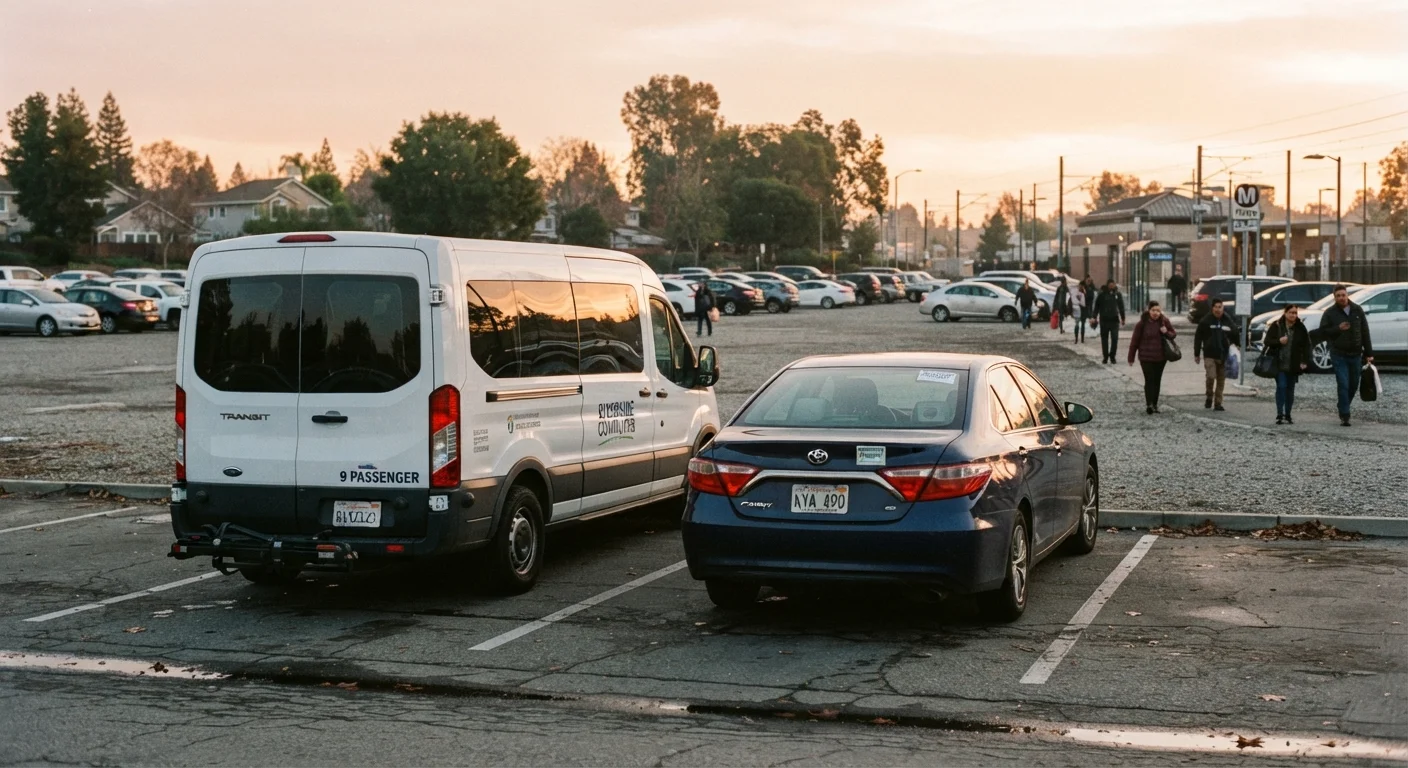
Option A
Vanpool
The structured, employer-linked shared commute.
Best for: Commuters traveling longer distances who want a consistent, organized ride-sharing arrangement with a dedicated vehicle.
Option B
Carpool
The flexible, peer-to-peer ride-sharing arrangement.
Best for: Commuters with reliable schedules who live near colleagues or neighbors and want to split everyday driving costs informally.
How Each Arrangement Actually Works
The terms "vanpool" and "carpool" are often used interchangeably, but they describe meaningfully different commuting setups. Understanding the mechanics of each helps you figure out which fits your situation.
Carpools are informal ride-sharing arrangements between two or more people - typically coworkers or neighbors - using one participant's personal vehicle. Drivers usually rotate, and costs are split based on fuel or a flat agreement. There's no central organization required, and most carpools are arranged through direct conversation. For a deeper look at making these arrangements work long-term, see setting up a carpool that actually sticks.
Vanpools operate differently. A group of commuters - often seven to fifteen people - shares a dedicated van for a fixed commute route. The van is typically leased through a regional transit agency, an employer, or a third-party vanpool program. One person acts as the primary driver (often in exchange for a reduced or waived fare), and participants pay a monthly fee that covers the vehicle lease, fuel, insurance, and maintenance. The route and schedule are set in advance and don't flex easily.
| Criterion | Vanpool | Carpool |
|---|---|---|
| Vehicle used | Dedicated leased van (7-15 seats) | Personal vehicle of a participant |
| Organization | Formal program via employer or agency | Informal arrangement between individuals |
| Typical group size | 7-15 commuters | 2-5 commuters |
| Cost structure | Fixed monthly fee per rider | Split fuel and parking costs |
| Pre-tax benefit eligibility | Often eligible under commuter benefits | Generally not eligible |
| Schedule flexibility | Low - fixed route and time | Higher - adjustable by group |
| Best commute distance | Longer distances (20+ miles) | Short to medium distances |
| Setup effort | Higher - requires program enrollment | Lower - informal agreement |
Cost Differences Worth Knowing
Both options cost less than driving solo, but the savings profile looks different depending on which you choose.
With a carpool, savings come from splitting gas and parking. If you rotate driving, you also reduce wear on your own vehicle. The savings are real but modest - typically proportional to the number of riders and how far you travel. The real economics of carpooling include factors many people overlook, like parking subsidies and HOV lane time savings.
With a vanpool, the cost structure is more predictable. Monthly fees vary by program, distance, and group size, but because costs are spread across more riders and the vehicle is dedicated to commuting, per-mile costs can be lower than a carpool over long distances. Crucially, vanpool expenses often qualify under employer commuter benefits programs, allowing you to pay with pre-tax dollars and reduce your taxable income.
~$1,000+
Estimated annual savings per vanpool rider
The US Department of Transportation has cited figures suggesting vanpool participants can save over $1,000 annually compared to driving alone, depending on commute distance and fuel costs.
$315/mo
2024 pre-tax commuter benefit limit (vanpool/transit)
The IRS sets annual limits on pre-tax commuter benefits; in 2024, the monthly limit for qualified transportation including vanpools was $315, allowing meaningful tax savings.
For a side-by-side view of how vanpools and carpools compare against other commuting modes on a per-mile basis, the commuter cost breakdown offers useful context.
Flexibility, Commitment, and Practical Friction
Cost isn't the only variable. The day-to-day experience of each option differs considerably.
Carpools are flexible by nature - but that flexibility is also their weakness. If your carpool partner needs to stay late, changes jobs, or moves, the arrangement can fall apart quickly. Scheduling conflicts are common, and there's no backup system. That said, for commuters with consistent schedules and a tight-knit group of neighbors or colleagues, carpools can work smoothly for years.
Vanpools demand more commitment upfront. You're signing on to a fixed route, fixed schedule, and a monthly payment. Missing your van means finding alternate transportation that day. However, because the group is larger and managed through a program, there's more redundancy - alternate drivers can often step in, and the arrangement is less likely to collapse if one person drops out.
What Happens If Your Vanpool Group Shrinks?
Most vanpool programs have minimum rider requirements to keep the arrangement financially viable. If enough members drop out, the program may dissolve or costs per remaining rider may increase. Before joining, ask the program coordinator how rider changes are handled and what protections exist. This is especially worth clarifying before committing to a long-term monthly agreement.
If you're exploring alternatives to traditional transit more broadly - including employer shuttles, park-and-ride lots, and e-scooters - the overview of overlooked commuting strategies covers the wider landscape.
This article provides general information about commuting options and is not financial or legal advice. Costs, program availability, and tax treatment vary by employer, location, and individual circumstances. Consult a qualified professional for guidance specific to your situation.
The content provided on our blog site traverses numerous categories, offering readers valuable and practical information. Readers can use the editorial team’s research and data to gain more insights into their topics of interest. However, they are requested not to treat the articles as conclusive. The website team cannot be held responsible for differences in data or inaccuracies found across other platforms. Please also note that the site might also miss out on various schemes and offers available that the readers may find more beneficial than the ones we cover.