

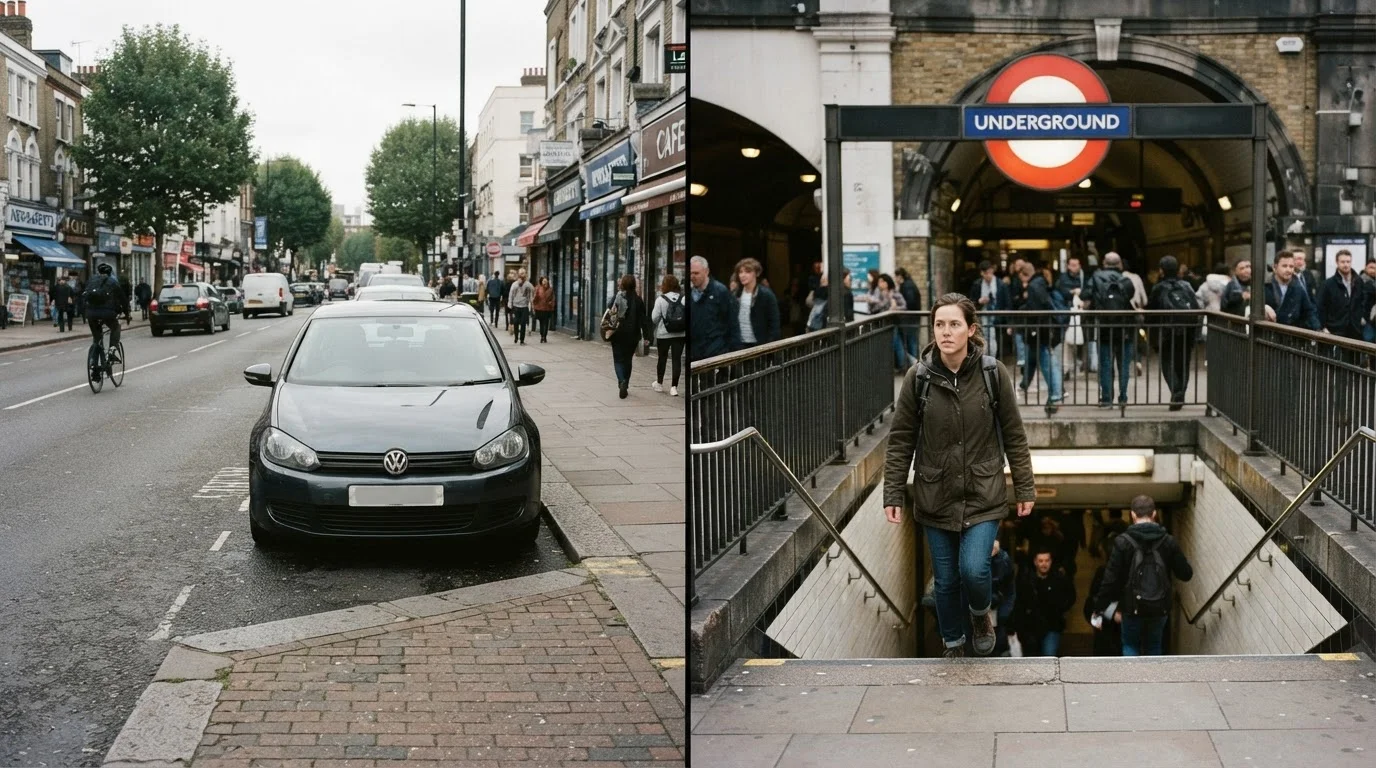
Option A
Car Ownership
The familiar, flexible-but expensive-default.
Best for: People with irregular schedules, limited transit access, or job requirements that demand personal vehicle use.
Option B
Going Car-Free
The leaner, lower-cost alternative for the right city and lifestyle.
Best for: Urban residents with reliable public transit who can combine walking, biking, and ride-hailing without sacrificing convenience.
What Car Ownership Actually Costs You Each Year
Most people anchor on the monthly car payment when budgeting for a vehicle. But that number is only one piece of a much larger picture. According to AAA's annual Your Driving Costs study, the average American driver spends roughly $10,000-$12,000 per year on vehicle ownership when all costs are included-that's anywhere from $833 to $1,000 per month.
What makes up the rest? Think beyond the loan payment to fuel, auto insurance premiums, routine maintenance (oil changes, tires, brake pads), registration fees, and the often-overlooked cost of depreciation-the loss in a car's value over time. A new vehicle can lose 15-20% of its value in the first year alone. For a deeper breakdown, see the real cost of owning a car beyond the sticker price.
Parking adds yet another layer. In many US cities, monthly garage parking runs $150-$400. Even in suburban areas, driveway maintenance, tolls, and parking tickets quietly add up. Insurance alone varies widely based on your age, location, driving history, and coverage level-visit our auto insurance guide for context on what shapes those premiums.
$10,728
Average annual car ownership cost (US)
AAA's Your Driving Costs study estimates average total vehicle ownership costs for a new car, including depreciation, fuel, insurance, and fees.
15-20%
New car value lost in year one
Depreciation is typically the single largest hidden cost of owning a new vehicle, according to automotive industry analyses.
$1,500-$2,500
Typical annual car-free transit budget
Estimated based on monthly transit pass costs, bike-share memberships, and moderate ride-hailing use in major US cities.
The Real Cost of Going Car-Free
Going car-free eliminates your largest line items-loan payments, insurance, registration, and depreciation-but it's not cost-free. You'll shift spending to transit passes, bike-share memberships, ride-hailing apps, and occasional car rentals or car-share services for trips that don't fit public transit.
In most major US cities, an unlimited monthly transit pass runs $100-$130. Add occasional ride-hail trips-say, $60-$80 per month-and a bike-share membership ($100-$150 per year), and a realistic annual car-free transportation budget often lands in the $1,500-$2,500 range. That's a meaningful gap compared to $10,000+ for car ownership.
The catch is convenience. Car-free commuting works well when your city's transit network is frequent, reliable, and covers your actual routes. It becomes stressful and time-consuming when it doesn't. The trade-off isn't just financial-it's time, flexibility, and weather tolerance. Carpooling is one middle-ground option that cuts costs without full reliance on public transit.
| Criterion | Car Ownership | Going Car-Free |
|---|---|---|
| Estimated annual cost | $10,000-$12,000+ | $1,500-$2,500 |
| Insurance required | Yes - mandatory | No |
| Depreciation exposure | Yes - ongoing | None |
| Flexibility & convenience | High - go anywhere, anytime | Limited by transit routes/hours |
| Maintenance responsibility | Owner's full responsibility | None |
| Works well in rural/suburban areas | Yes | Rarely |
| Works well in dense urban areas | Often costly (parking, traffic) | Yes - often preferable |
Hidden Trade-Offs That Don't Show Up in a Budget
Numbers only tell part of the story. Car ownership offers independence-the ability to leave when you want, carry what you need, and reach destinations that transit simply doesn't serve. That flexibility has real value, especially for people with caregiving responsibilities, physical limitations, or jobs in areas with poor transit coverage.
Going car-free, on the other hand, can reduce financial stress in ways that compound over time. Redirecting even $500 per month away from car costs and toward savings, student loans, or an emergency fund changes a person's financial trajectory meaningfully. Similar logic applies to evaluating other large recurring expenses-our piece on owning vs. renting explores that same framework for housing.
The Middle Path: Hybrid Transportation
You don't have to choose between full car ownership and going entirely car-free. Many cost-conscious commuters combine a transit pass with occasional car rentals, car-share memberships (like Zipcar or local equivalents), and ride-hailing for specific trips. This hybrid approach can keep annual transportation spending well below full ownership costs while preserving flexibility for situations where transit falls short. Run the numbers for your actual usage before assuming you need a personal vehicle every day.
There's also an environmental dimension worth considering. Households without personal vehicles generally have lower carbon footprints, though the impact varies significantly depending on how local electricity is generated and how transit systems are powered in your region.
The decision also affects where you can realistically live. Going car-free may constrain your housing choices to transit-accessible neighborhoods, which can carry higher rents. That's a real cost that belongs in your calculation-one worth examining alongside common car ownership myths that can distort these comparisons.
The content provided on our blog site traverses numerous categories, offering readers valuable and practical information. Readers can use the editorial team’s research and data to gain more insights into their topics of interest. However, they are requested not to treat the articles as conclusive. The website team cannot be held responsible for differences in data or inaccuracies found across other platforms. Please also note that the site might also miss out on various schemes and offers available that the readers may find more beneficial than the ones we cover.