

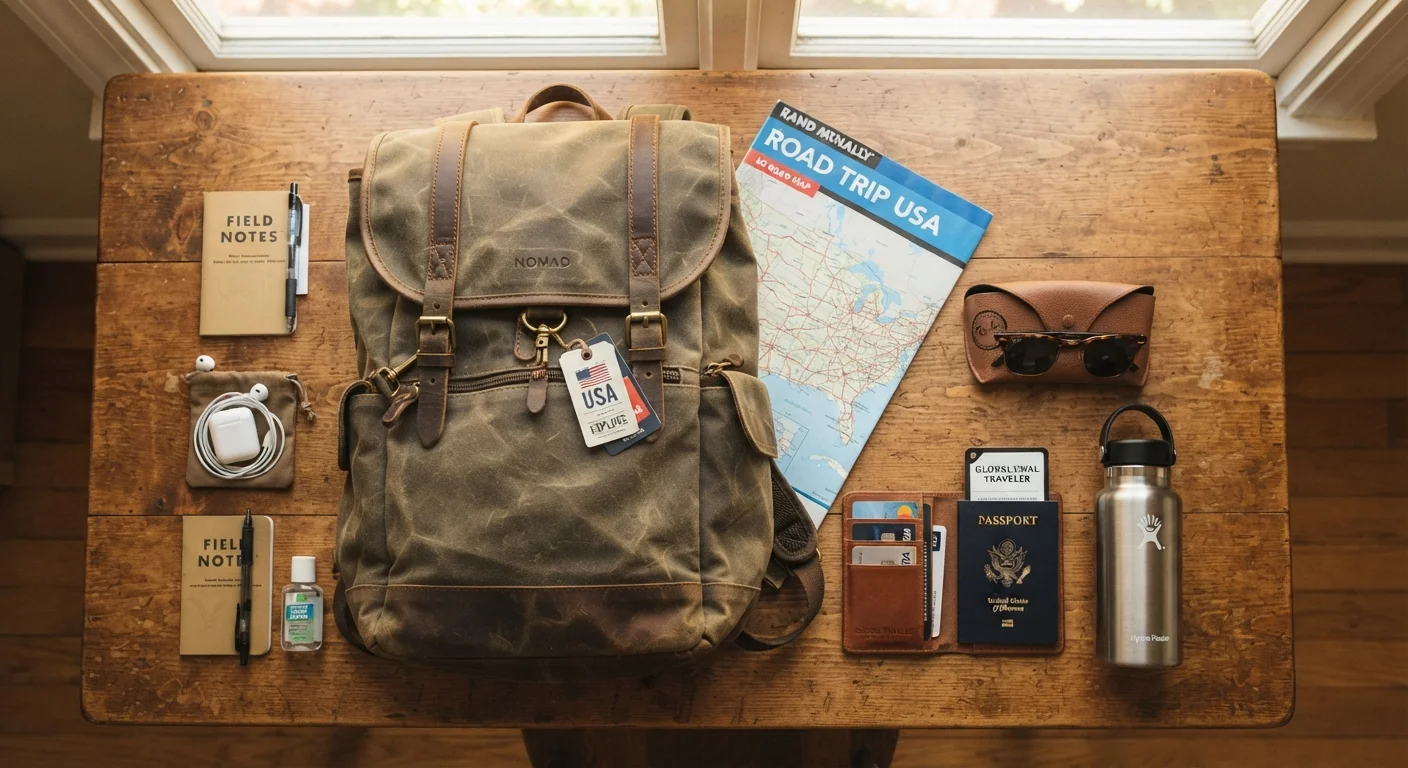
Summary
28 items · 30–60 minutes
Why a Pre-Trip Checklist Changes Everything
Domestic US travel is genuinely one of the great bargains in modern adventure — no passport lines, no currency exchange, and a continent's worth of national parks, coastal cities, mountain towns, and cultural landmarks waiting within driving or short-flight distance. But even the most laid-back road trip benefits from a quick audit before you leave the driveway.
This checklist covers every category that experienced travelers consistently review before a domestic trip: documents, reservations, route logistics, safety prep, finances, and packing. Whether you're flying to a new city or hitting the open highway, running through these items typically takes under an hour and saves real headaches on the road. For a deeper dive into building a full trip from scratch, see our first-timer's complete roadmap.
Work through the groups below a day or two before departure — not the morning of — so you have time to act on anything you catch.
Documents & ID
Reservations & Bookings
Route & Logistics
Safety & Health Prep
Finances & Budget
Packing Essentials
Tools That Make Pre-Trip Prep Easier
You don't need fancy software to stay organized, but a few free tools genuinely reduce friction. Use them alongside this checklist rather than as a replacement for it.
Google Maps (offline mode)
Download maps of your destination for turn-by-turn navigation without a cell signal.
Notes or Google Docs app
Store a single document with all confirmation numbers, addresses, and emergency contacts accessible offline.
Your state DMV website
Verify your license is Real ID-compliant before a domestic flight.
Recreation.gov
Book timed entry permits and camping reservations at national parks and federal recreation areas.
Portable battery pack
Keep your phone charged during long driving or hiking days when outlets aren't available.
One habit worth borrowing from seasoned travelers: once reservations are confirmed, screenshot or download every confirmation to your phone's camera roll. If an app crashes or Wi-Fi disappears, you'll still have the info. For more habits that make the difference between a stressful and stress-free trip, check out what organized travelers consistently do.
Real ID Enforcement Affects Domestic Flyers
Starting May 7, 2025, the TSA requires a Real ID-compliant driver's license, state ID, or an acceptable alternative (such as a US passport) for domestic air travel. If your ID is not compliant, you may be denied boarding. Check your state DMV's website to confirm your ID's status well before your departure date.
Don't Rely Solely on Cell Service for Navigation
Many popular US destinations — including national parks, mountain passes, and rural highways — have limited or no cell coverage. Downloading offline maps before you leave is not optional for these routes; it's a genuine safety measure. A paper map or printed directions serve as a useful secondary backup.
Need help making sure your budget is airtight before you even pack a bag? Our pre-trip budget planning checklist walks through every cost category so nothing sneaks up on you. And if this is your first solo road trip, don't miss our guide to planning your first solo road trip across the US.
The content provided on our blog site traverses numerous categories, offering readers valuable and practical information. Readers can use the editorial team’s research and data to gain more insights into their topics of interest. However, they are requested not to treat the articles as conclusive. The website team cannot be held responsible for differences in data or inaccuracies found across other platforms. Please also note that the site might also miss out on various schemes and offers available that the readers may find more beneficial than the ones we cover.