

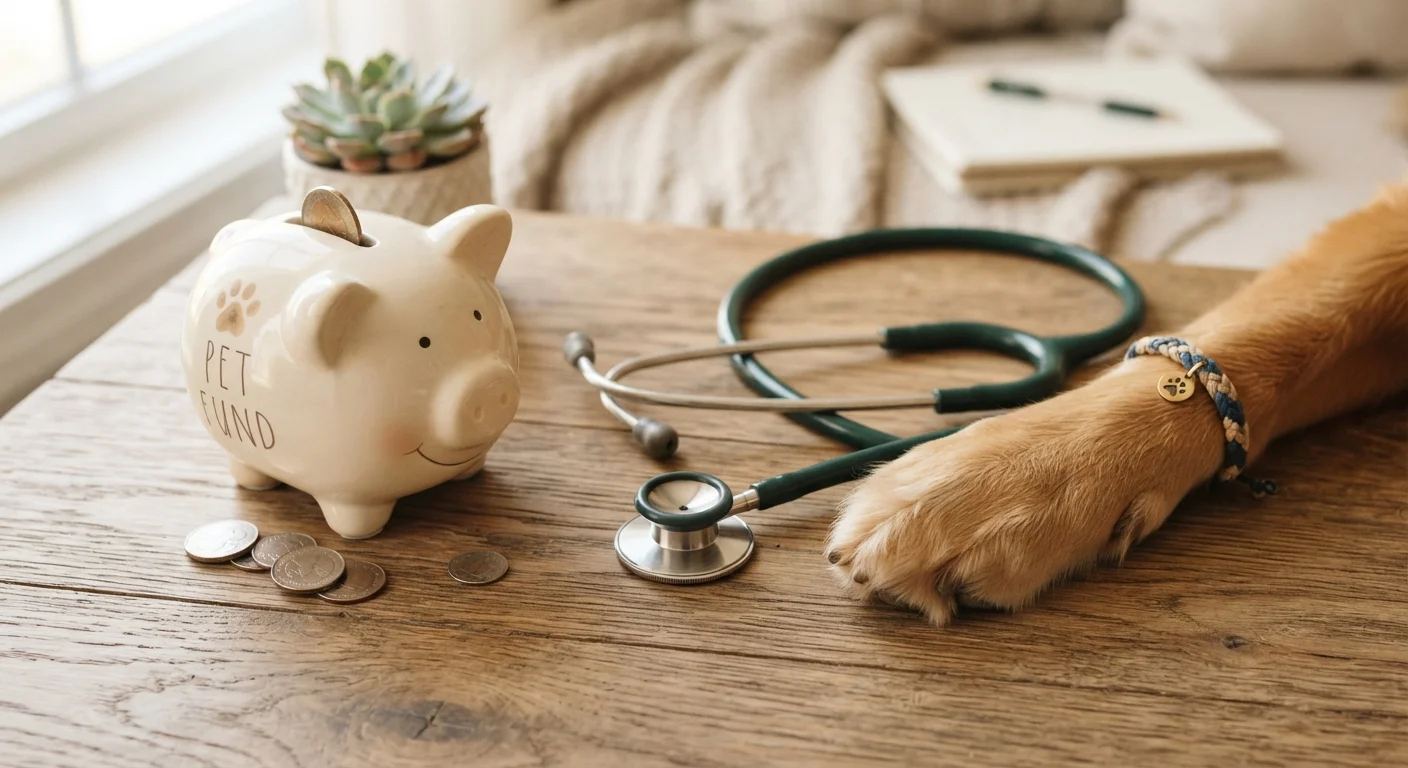
Why a Pet Emergency Fund Deserves Its Own Bucket
Emergency vet visits are among the most financially jarring surprises a pet owner faces. A dog who swallows something he shouldn't, a cat with a sudden urinary blockage, or a broken leg from a backyard fall can generate bills ranging from several hundred to several thousand dollars—often with very little warning.
Your general emergency fund is meant to cover job loss, car repairs, or medical costs for you. Folding pet emergencies into that same pool can leave you short when you need both at once. A dedicated pet fund is a separate savings bucket with a clear, single purpose: covering unexpected animal care costs without derailing the rest of your financial safety net. For a broader look at what owning a pet actually costs day-to-day, see the real cost of pet ownership before you set your savings target.
Separate Funds, Clearer Decisions
When a pet emergency strikes, you're already emotionally stressed. Having a clearly labeled, dedicated account means you don't have to make complicated financial decisions in the moment—you know exactly what's available and what it's for. That mental clarity alone is worth the setup effort.
What to Know Before You Start
Before making your first transfer, get a realistic picture of your pet's risk profile. Older pets, certain breeds, and animals with pre-existing conditions tend to generate higher vet costs. Your veterinarian can be a useful source of honest guidance here—ask what conditions are common for your pet's species, breed, and age.
Also consider whether pet insurance might reduce the size of the fund you need to self-fund. Insurance and a savings account are not mutually exclusive; many pet owners use both. For a clear-eyed comparison, weigh the trade-offs between pet insurance and a dedicated savings account before committing to either approach alone.
What you will need
How to Build Your Pet Emergency Fund Step by Step
The steps below are designed to get your fund up and running quickly, even if you're starting from zero. If you've never built any kind of savings reserve before, you may also find it helpful to review how to build an emergency fund from absolute zero for foundational saving strategies that apply here too.
Set a realistic savings target
A common starting benchmark is $1,000 to $3,000 for a single healthy pet. This range covers most urgent care visits and minor surgeries without being so large that saving feels impossible. If you have multiple pets, are insuring none of them, or have a senior animal, consider aiming for the higher end of that range or beyond.
Don't let the final number paralyze you. Your first milestone can simply be $500—enough to handle many urgent but non-catastrophic situations.
Open a dedicated, separate account
Keep pet emergency savings physically separate from your checking account and your general emergency fund. A high-yield savings account works well here—it earns a bit of interest while staying accessible when you need it fast. Giving the account a clear label (such as "Pet Emergency") reinforces its purpose and makes you less likely to dip into it casually.
Decide on a monthly contribution amount
Work backward from your target. If you want $1,500 saved within 18 months, you need to set aside roughly $84 per month. If that's too steep, extend your timeline or lower your initial milestone. Even $25 to $50 per month builds meaningful protection within a year.
Look at your current budget for small, flexible expenses—a subscription you rarely use, a dining-out line item you can trim slightly—and redirect that amount to your pet fund without restructuring your entire financial life.
Automate your contributions
Set up an automatic transfer from your checking account to your pet savings account on the same day each month—ideally shortly after your paycheck lands. Automation removes the decision entirely, which is the single most reliable way to make saving stick. Treat the transfer like a recurring bill that isn't optional.
Know when and how to use the fund
The pet emergency fund is for genuine, unexpected medical needs—not routine annual checkups, which should be budgeted as a predictable expense. Examples of appropriate uses include emergency surgery, after-hours urgent care, imaging like X-rays or ultrasounds for an acute condition, or hospitalization. When in doubt, ask yourself: Was this cost foreseeable and plannable? If yes, it belongs in your regular pet budget, not your emergency fund.
Don't Wait Until Your Pet Is Sick to Start
The most common regret pet owners share is not starting a fund sooner. Emergencies don't wait until you're financially ready. Even a partially funded account—say, $300 or $400—can meaningfully reduce the amount you'd need to put on a credit card or borrow in a crisis. Start now with whatever you can realistically spare.
Keeping the Fund Healthy Over Time
Once you've hit your initial target, the job isn't done. Revisit your savings goal any time your pet's health status changes significantly—after a major diagnosis, after adopting a second animal, or as your pet moves into senior years. If you ever draw from the fund, treat replenishing it as a financial priority, just as you would with any emergency reserve.
Staying current on preventive care is one of the best ways to reduce the likelihood of a large, unexpected bill. Routine wellness visits, dental cleanings, and keeping vaccines up to date all reduce risk. For a practical reference on timing, see vaccination schedules for cats and dogs. When you're ready to pressure-test your overall emergency preparedness, use this emergency fund readiness checklist to spot any gaps.
This article is for general informational and educational purposes only and does not constitute financial or veterinary advice. Consult a licensed financial professional for guidance specific to your situation, and a qualified veterinarian for your pet's health needs.
The content provided on our blog site traverses numerous categories, offering readers valuable and practical information. Readers can use the editorial team’s research and data to gain more insights into their topics of interest. However, they are requested not to treat the articles as conclusive. The website team cannot be held responsible for differences in data or inaccuracies found across other platforms. Please also note that the site might also miss out on various schemes and offers available that the readers may find more beneficial than the ones we cover.