

Our Verdict
Raising children in a small home involves genuine trade-offs, but most families find the challenges are navigable with the right strategies in place. The financial breathing room, the closeness it fosters, and the creativity it demands often become things families look back on with appreciation rather than regret.
Families who prioritize financial flexibility, value close-knit daily life, and are willing to invest energy in organization and intentional routines.
The Financial Reality of a Smaller Footprint
For many young families, a smaller home isn't a compromise — it's a deliberate financial decision. Lower mortgage or rent payments, reduced utility costs, and smaller property tax bills can collectively free up hundreds of dollars each month. That's money that can go toward childcare, education savings, or simply building an emergency fund.
Families living in smaller spaces also tend to buy less stuff by necessity. When there's no room for it, impulse purchases slow down. This kind of built-in restraint can quietly reinforce healthier spending habits over time. If you're navigating the financial side of growing your family, our guide on growing your family when money is tight covers how families with limited income manage costs and find support.
~$1,000
Average monthly savings vs. larger home
Housing cost differences between smaller and larger homes vary widely by region, but families in many U.S. markets report meaningful monthly savings by choosing smaller square footage.
500 sq ft
Average new home size in the 1950s
The U.S. Census Bureau has documented that average American home sizes grew dramatically over the latter half of the 20th century, meaning earlier generations routinely raised large families in very compact spaces.
What Families Gain — and What They Give Up
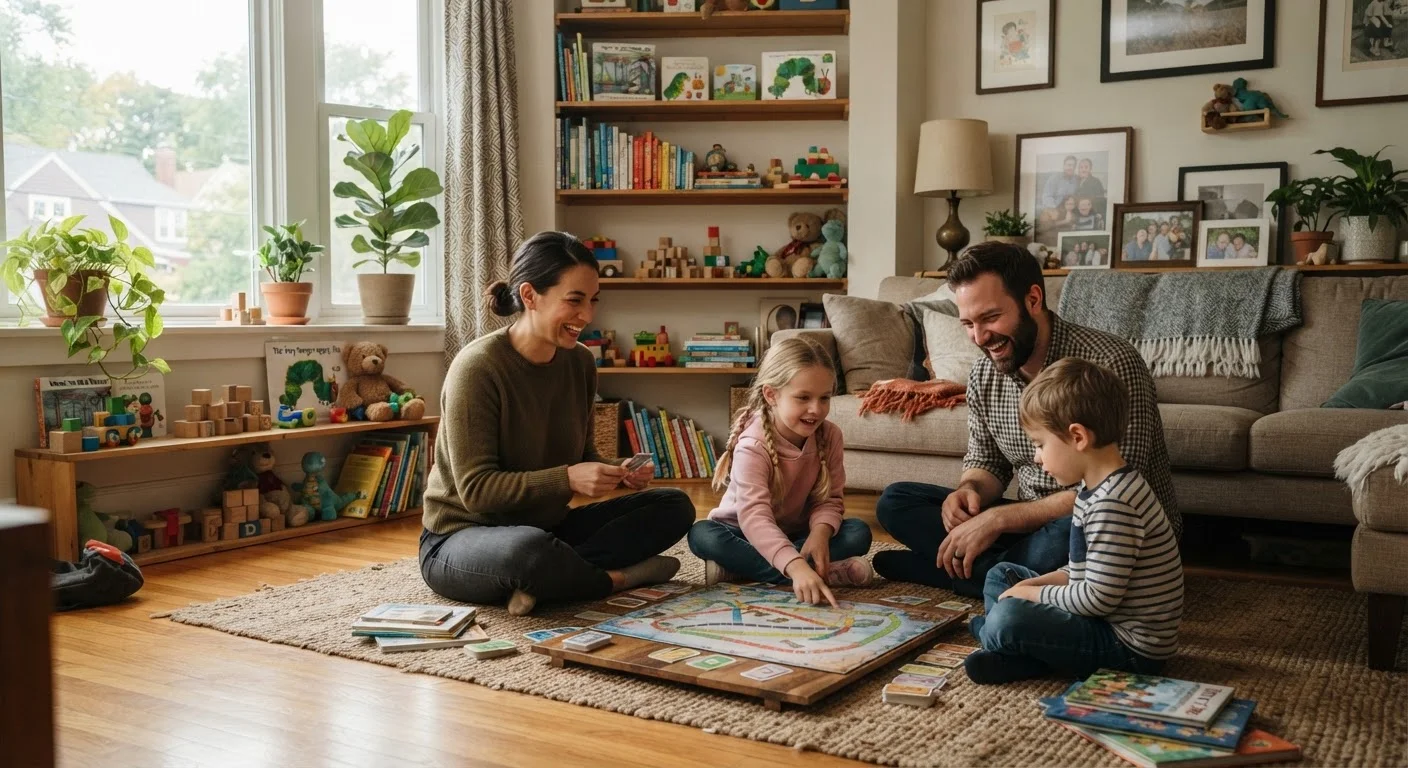
Living in close quarters tends to pull families together — literally. Shared spaces mean more spontaneous conversations, game nights that happen because there's nowhere else to be, and a general awareness of each other's moods and needs. Many parents describe this proximity as an unexpected gift.
That said, it comes with friction. Noise carries easily. A child doing homework at the kitchen table while dinner is being made is a common scenario that requires patience from everyone involved. Privacy — for parents and older kids alike — has to be created intentionally rather than assumed.
Lower housing costs free up family budget
Smaller homes typically come with lower rent or mortgage payments, reduced utility bills, and smaller maintenance costs — money that can be redirected toward childcare, savings, or family experiences.
Natural proximity encourages family closeness
Shared living areas create more opportunities for spontaneous connection. Many families report that limited square footage actually strengthened their relationships over time.
Easier to supervise young children
In a compact home, a parent is rarely more than a few steps away from a toddler or young child, which can reduce anxiety and improve response time in safety situations.
Children develop creativity and adaptability
When kids don't have endless space or stuff, they tend to become more imaginative in how they play and more flexible when circumstances change — skills with long-term benefits.
Less space means less to clean and maintain
Smaller square footage translates directly into less time spent on housekeeping, which matters a great deal to busy parents juggling work, childcare, and daily life.
Noise and lack of privacy are constant challenges
Sound travels easily in small homes, making it hard for parents to decompress or for older kids to concentrate. Creating even a small sense of acoustic separation often requires deliberate effort.
Limited dedicated space for homework or play
Without a dedicated playroom or study area, spaces must serve multiple purposes simultaneously — which works, but requires coordination and can cause friction during busy hours.
Clutter accumulates faster and feels more disruptive
In a small home, a few items left out of place can make an entire room feel chaotic. Maintaining order requires consistent habits from every family member, including young children.
Guests and extended family visits become complicated
Hosting grandparents or arranging sleepovers is logistically trickier when square footage is limited, which can affect family social life and support networks.
Growing children may eventually feel cramped
What works for a toddler may feel restrictive to a teenager who needs more personal space and independence. Families often need to reassess arrangements as children age.
Smart Strategies That Actually Work
Families who thrive in small spaces tend to rely on a few consistent principles. First, they treat organization as non-negotiable. Vertical storage, under-bed bins, and multi-purpose furniture (a storage ottoman, a fold-down desk) reduce visual clutter and make the space feel larger than it is.
Second, they lean on routines. A predictable daily structure reduces conflict over shared spaces because everyone knows when the living room becomes a homework zone, when it's play time, and when it's quiet time. For help building something sustainable, see our piece on building a family routine that doesn't fall apart by Wednesday.
Third, they get outside. Parks, libraries, and community centers effectively extend a small home's square footage. Treating outdoor space as part of the family's living area — not just occasional recreation — makes a real difference in day-to-day life.
Outdoor Space Can Function as Extra Square Footage
Families in smaller homes often find that intentional use of outdoor areas — whether a backyard, a nearby park, or a community playground — meaningfully expands their effective living space. Building regular outdoor time into the family routine isn't just good for physical health; it also relieves the pressure that comes from everyone being indoors together all day. Even in urban settings, public libraries, recreation centers, and community programs can serve a similar function.
Safety and Development in a Compact Space
Small homes require thoughtful childproofing, particularly because everything is closer together. Sharp corners, accessible cabinets, and stairways all need attention. The good news is that a smaller layout can actually make supervision easier — you're rarely far from where your child is. For a thorough walkthrough of home safety measures, our childproofing guide covers everything from cabinet locks to outdoor hazards.
On the developmental side, children in smaller homes often learn to share, negotiate space, and entertain themselves creatively. These aren't trivial skills — adaptability and resourcefulness show up repeatedly as traits that serve kids well into adulthood. The limitations of small spaces can quietly become strengths in disguise.
The content provided on our blog site traverses numerous categories, offering readers valuable and practical information. Readers can use the editorial team’s research and data to gain more insights into their topics of interest. However, they are requested not to treat the articles as conclusive. The website team cannot be held responsible for differences in data or inaccuracies found across other platforms. Please also note that the site might also miss out on various schemes and offers available that the readers may find more beneficial than the ones we cover.