
Our Verdict
Community college is a legitimate, often financially sound starting point — not a consolation prize. It works best when students enter with a clear academic plan, understand transfer requirements early, and actively use available support resources. The tradeoffs around campus life and transfer complexity are real, but manageable with preparation.
Students who are cost-conscious, undecided on a major, balancing work or family, or looking to strengthen their academic record before transferring to a four-year institution.
The Real Cost Difference
Tuition at a public two-year college averages around $3,900 per year, compared to roughly $11,260 at a public four-year institution and over $41,000 at private four-year colleges, according to data from the College Board. For students who complete their first two years at a community college before transferring, the savings can reach tens of thousands of dollars — without necessarily changing where they earn their bachelor's degree.
This cost advantage is especially meaningful for students who are paying out of pocket, working while enrolled, or trying to minimize reliance on student loans. Financial aid, including Pell Grants, is also available at community colleges, and some states offer additional grant programs specifically for two-year students. That said, living expenses, transportation, and fees vary by region and can significantly affect the real total cost.
See the full college planning guide for a breakdown of how financial aid works across different institution types.
$3,900
Average annual community college tuition
According to College Board's Trends in College Pricing data, this compares to roughly $11,260 at public four-year institutions.
~40%
Share of U.S. undergraduates at two-year colleges
The American Association of Community Colleges reports that two-year institutions enroll approximately 40% of all undergraduate students in the U.S.
Academic Access and Flexibility
Community colleges use open enrollment, meaning most accept any applicant with a high school diploma or equivalent. This makes them accessible to students who didn't perform strongly in high school, those returning to education after a gap, and adults balancing work or caregiving responsibilities. Class sizes tend to be smaller than introductory lecture halls at large universities, which can support more direct faculty interaction.
Flexible scheduling — including evening, weekend, and online courses — allows students to work while enrolled, a practical necessity for many. However, academic rigor varies significantly by program and institution. Some courses map directly to university-level work; others may not satisfy transfer requirements without careful vetting.
Check Transfer Requirements Before You Register
Different four-year institutions — even within the same state system — may have distinct course requirements for transfer admission into specific majors. A course that satisfies general education at one school may not count toward your intended major at another. Meet with a counselor in your first semester to map out a transfer plan, and get any agreements in writing or through your institution's official transfer planning portal.
Transferring: Opportunities and Obstacles
The transfer pathway is where community college planning gets complicated. Many states have formal articulation agreements that guarantee credit transfers between two-year and four-year public institutions when students meet certain requirements. California's TAG (Transfer Admission Guarantee) program and similar initiatives in other states are examples of structured pathways that can work well — but only when students follow them precisely.
In practice, students who don't meet with an academic counselor early, take courses without confirming transferability, or change their intended major mid-path risk losing credits that don't apply at their destination school. Research by the National Student Clearinghouse has found that a substantial share of transfer students lose credits in the process, which can extend time to degree and add costs.
For students weighing all their options before committing, the college application timeline provides useful context on how four-year application cycles work in parallel.
Substantially lower tuition than four-year institutions
Average annual tuition at public two-year colleges is roughly one-third of public four-year rates, offering significant savings for students who plan their transfer path carefully.
Open enrollment reduces admissions barriers
Students who underperformed academically in high school or are returning after time away can gain access to higher education without being filtered out by selective admissions processes.
Flexible scheduling accommodates work and family
Evening, weekend, and hybrid course options make it possible to stay employed or manage caregiving responsibilities while pursuing a degree.
Smaller classes can support closer faculty interaction
Unlike large introductory lectures at research universities, two-year college courses often have lower enrollment, giving students more direct access to instructors.
State transfer agreements can streamline the path to a bachelor's
Formal articulation agreements in many states allow students to transfer to public four-year universities with junior standing when specific coursework requirements are met.
Credit transfer is not automatic or guaranteed
Without careful planning, credits earned at a two-year college may not apply toward the major or general education requirements at the transfer institution, potentially extending time to degree.
Limited on-campus experience and extracurriculars
Most community college students commute, and fewer campus organizations, athletic programs, and residential life options exist compared to four-year schools.
Transfer completion rates are lower than often assumed
Research from the National Student Clearinghouse indicates that a significant share of students who intend to transfer do not complete a bachelor's degree within six years, often due to life circumstances or planning gaps.
Some employers and graduate programs still weight institution prestige
While the degree itself matters most, students in highly competitive fields or targeting selective graduate programs may face perception challenges they'll need to address proactively.
Financial aid structures differ from four-year schools
Some scholarships and institutional aid programs are not available to two-year students, and aid packaging may look different — students should verify their full aid picture before enrolling.
Campus Experience and Social Dynamics
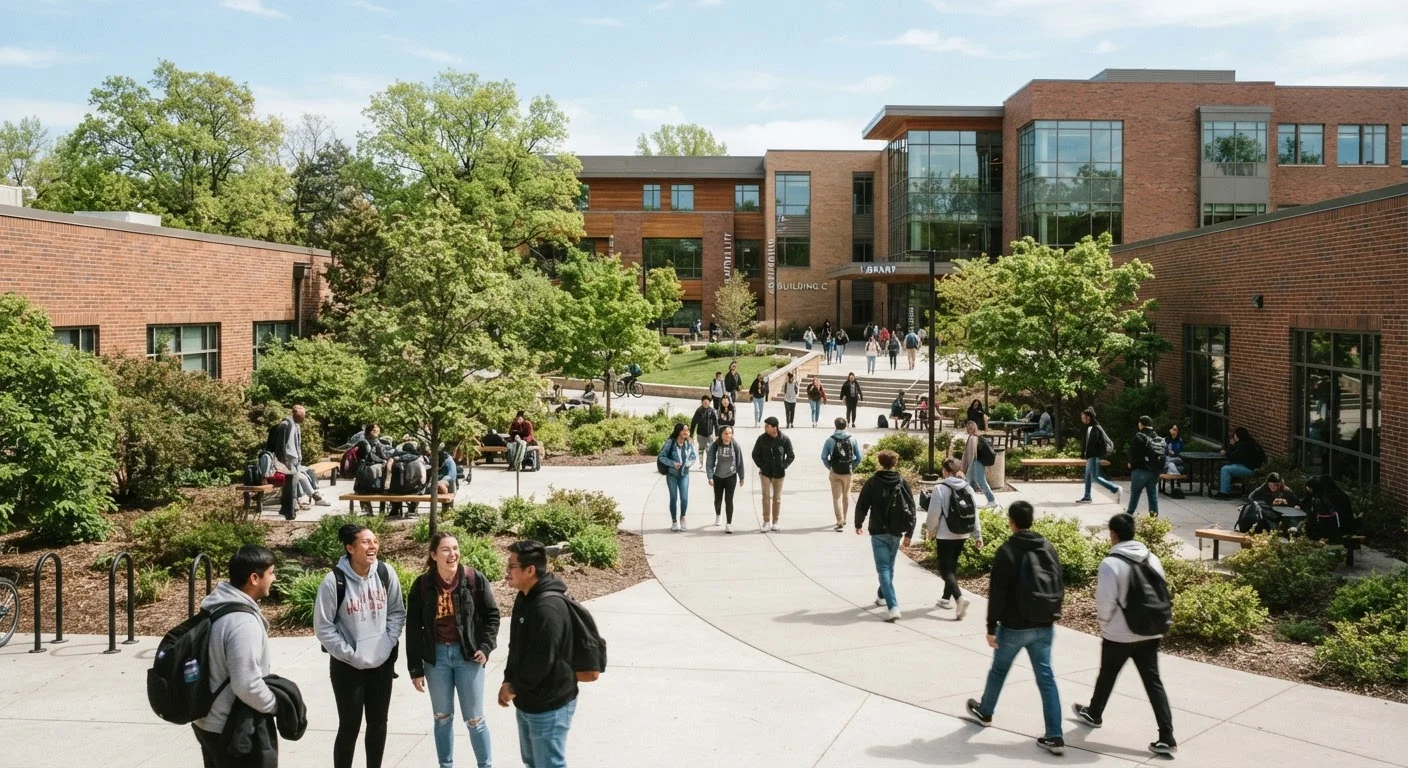
The campus experience at a community college is structurally different from a residential four-year university. Most community college students commute, and fewer participate in extracurricular clubs, athletics, or on-campus organizations — partly because fewer such opportunities exist and partly due to scheduling constraints. Students looking for a traditional residential college experience with dormitories, Greek life, or large sports programs will generally not find that at a two-year institution.
This doesn't make the experience lesser — it makes it different. Many students thrive in an environment with fewer social pressures and more focus on coursework. But for students who view college partly as a social and developmental experience, this tradeoff is worth factoring in honestly. Commuting also adds practical considerations around transportation costs and time. Explore commuting options and transit strategies if daily travel is a major factor in your planning.
Ultimately, community college suits students who enter with clear goals. Those still exploring what higher education means for them should also consider what factors shape genuine college fit beyond cost and prestige.
The content provided on our blog site traverses numerous categories, offering readers valuable and practical information. Readers can use the editorial team’s research and data to gain more insights into their topics of interest. However, they are requested not to treat the articles as conclusive. The website team cannot be held responsible for differences in data or inaccuracies found across other platforms. Please also note that the site might also miss out on various schemes and offers available that the readers may find more beneficial than the ones we cover.