

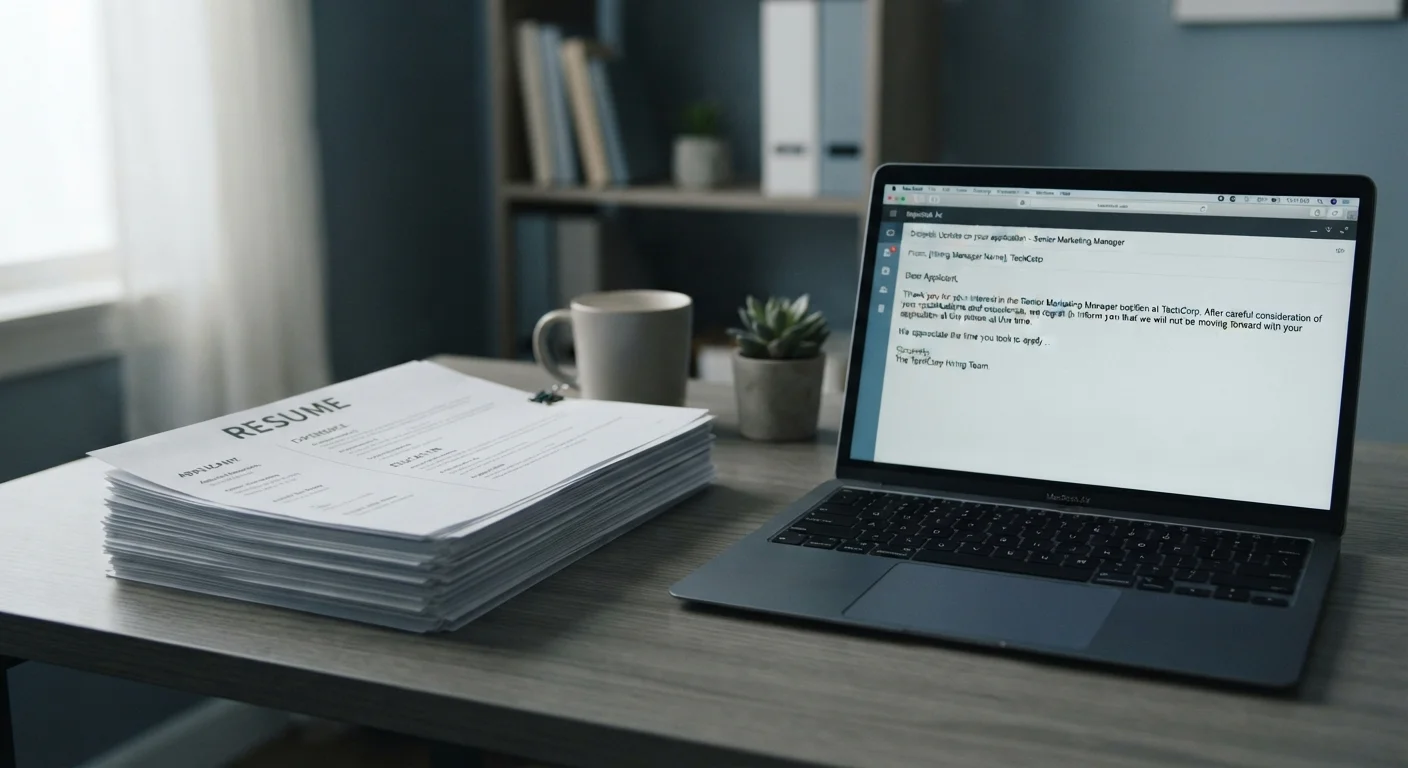
The Invisible Barrier Between You and the Hiring Manager
Submitting a resume and hearing nothing back is one of the most demoralizing experiences in a job search - especially when you know you're qualified. The problem often isn't your credentials. It's that your application is being eliminated automatically, before a single human being looks at it.
Most companies with more than a few dozen employees use Applicant Tracking Systems (ATS) - software that parses, filters, and ranks incoming applications based on programmed criteria. According to research from Harvard Business School, a significant share of applicants are screened out by these systems before reaching a recruiter. Understanding how ATS works - and the specific mistakes that trigger rejection - gives you a meaningful edge over applicants who don't.
This isn't about gaming the system. It's about making sure qualified work doesn't go unseen. For a broader look at what else may be holding your search back, see our guide to job search myths for new graduates.
Submitting a generic resume not tailored to the job description.
Why it happens: Writing a new resume for every posting feels time-consuming, so many applicants send the same document to dozens of employers.
Using creative formatting - columns, tables, graphics, or text boxes - that ATS software cannot parse correctly.
Why it happens: Visually interesting resume templates are widely available and look impressive to the human eye, leading applicants to assume they'll stand out positively.
Leaving out measurable results and replacing them with vague duty descriptions.
Why it happens: First-time job seekers often don't think of their experience in quantified terms, especially if they've primarily held part-time or volunteer roles.
Including an objective statement instead of a professional summary.
Why it happens: Older resume templates still circulate widely online, and entry-level candidates are often advised to lead with an objective to explain career goals.
Using non-standard section headings that ATS software doesn't recognize.
Why it happens: Applicants try to make their resume feel unique by renaming sections - "My Journey" instead of "Work Experience," for example.
How to Audit and Fix Your Application Before You Submit
Avoiding these mistakes isn't complicated, but it does require intentional effort before every application - not a one-time resume polish.
75%
Resumes filtered before human review
A Harvard Business School report estimated that roughly 75% of resumes are rejected by ATS software before reaching a recruiter at companies using these systems.
6 seconds
Average recruiter resume scan time
Eye-tracking research published by the Ladders found that recruiters spend an average of about six seconds on an initial resume review when one does reach them.
Start with the job description. Read it carefully and extract the specific skills, tools, and qualifications listed. These are the keywords the ATS is likely scanning for. Compare them against your current resume and add missing terms where you can truthfully claim that experience.
Run a format check. Open your resume in a plain text editor and see how it looks. If the content is jumbled or out of order, an ATS will read it the same way. Fix multi-column layouts, remove text boxes, and replace decorative fonts with standard ones like Arial, Calibri, or Georgia.
Match your file type to the posting. When instructions don't specify, a .docx file is generally safer for ATS parsing than a PDF. PDFs can cause formatting errors in some older systems.
Your LinkedIn profile also functions as a secondary filter. Recruiters who receive an ATS-flagged application may check your profile before moving on - a complete, keyword-rich profile can recover an application. Our LinkedIn field guide for first-time job seekers walks through exactly how to set that up.
Don't Stuff Keywords Without Context
Some applicants respond to ATS advice by pasting long lists of keywords into their resume in white text or tiny fonts - a technique known as "keyword stuffing." Modern ATS platforms are designed to detect this, and if a human recruiter sees it, your application will be dismissed immediately. Only include skills and terms you can genuinely speak to in an interview.
The content provided on our blog site traverses numerous categories, offering readers valuable and practical information. Readers can use the editorial team’s research and data to gain more insights into their topics of interest. However, they are requested not to treat the articles as conclusive. The website team cannot be held responsible for differences in data or inaccuracies found across other platforms. Please also note that the site might also miss out on various schemes and offers available that the readers may find more beneficial than the ones we cover.