

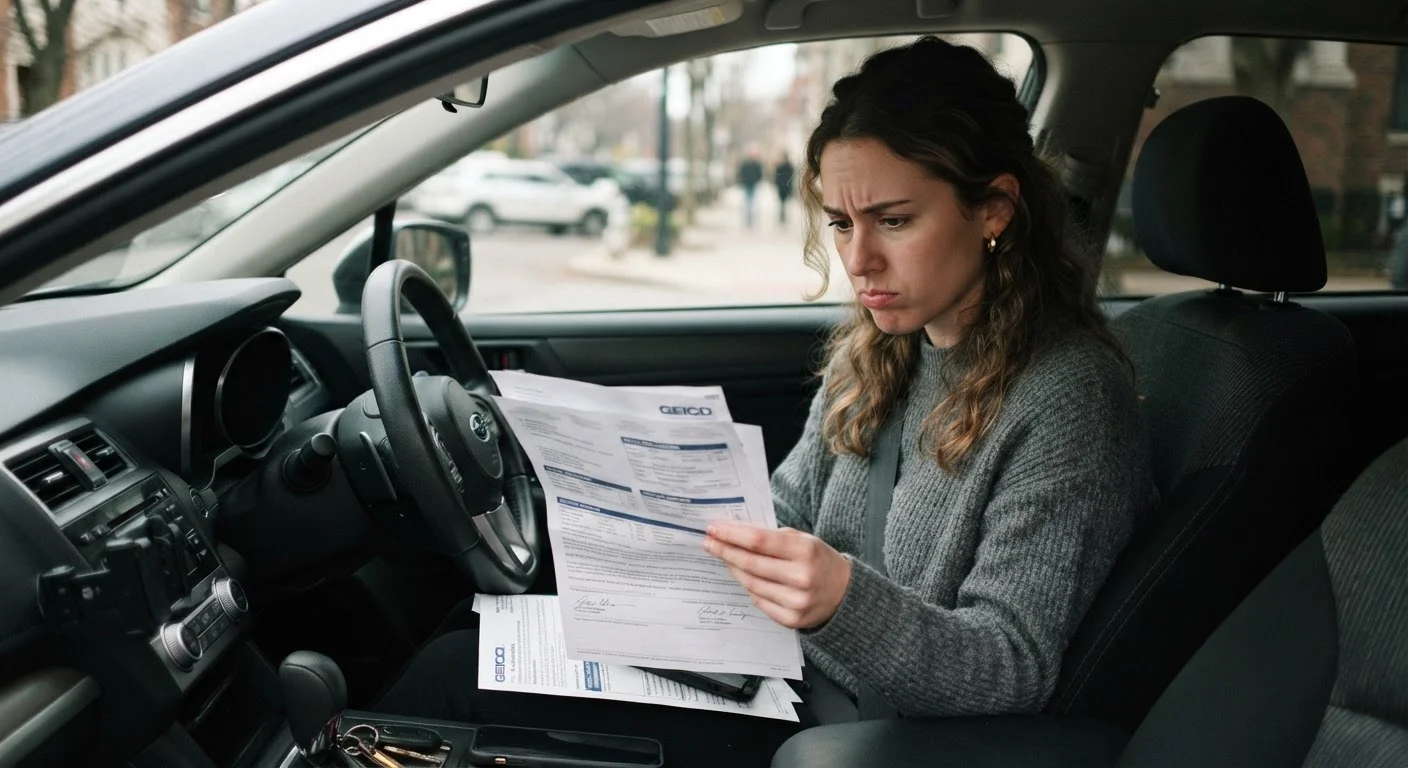
Why Young Drivers Are Especially Vulnerable to Coverage Gaps
Auto insurance is a contract built on details - and most people never read it until they need it. For young drivers, this creates a real financial vulnerability. Coverage gaps aren't just theoretical; they translate into out-of-pocket expenses that can run into thousands of dollars after even a minor accident.
The core problem isn't ignorance - it's that auto insurance is sold in a way that buries the most important decisions inside policy language most people find confusing. To get a solid foundation on what each coverage type actually does, Car Insurance Decoded is a strong starting point before reviewing your own policy.
~13%
Uninsured drivers on US roads
According to the Insurance Research Council, roughly one in eight drivers in the United States is uninsured, underscoring why uninsured motorist coverage matters.
Up to 30%
Potential vehicle depreciation at purchase
Industry estimates suggest a new vehicle can lose a significant portion of its value within the first year, which is why gap insurance is particularly relevant for financed cars.
The mistakes below are the most common gaps young drivers leave - and each one is fixable once you know where to look.
The Most Costly Coverage Mistakes - and How to Fix Them
Each of the following mistakes represents a real scenario where a driver believed they were covered and discovered they weren't - at the worst possible moment.
Carrying only state-minimum liability limits.
Why it happens: Young drivers on tight budgets gravitate toward the lowest legal option to reduce their monthly premium.
Skipping uninsured or underinsured motorist (UM/UIM) coverage.
Why it happens: It sounds redundant - you're already buying insurance, so why pay for coverage against drivers who don't have it?
Assuming a rental car is automatically covered after an accident.
Why it happens: Many drivers believe their standard policy includes rental reimbursement, but it is usually a separate, optional endorsement.
Financing or leasing a car without gap insurance.
Why it happens: Gap insurance isn't a standard term in everyday vocabulary, and lenders don't always explain why it matters at signing.
Choosing a deductible based solely on the premium discount.
Why it happens: A higher deductible visibly lowers the monthly premium, which appeals to budget-conscious drivers who don't think past the monthly bill.
Not reviewing coverage after a major life change.
Why it happens: Auto insurance feels like a set-it-and-forget-it purchase, and reviewing it requires effort that's easy to defer.
Minimum Coverage Is Not Full Protection
State-mandated minimums only guarantee you're legal to drive - they don't guarantee you're financially protected. If damages from an at-fault accident exceed your liability limits, you can be held personally responsible for the difference. Young drivers especially should understand that meeting the legal minimum and having adequate coverage are two very different things. Consult a licensed insurance agent to evaluate whether your limits reflect your actual financial exposure.
It's also worth knowing whether your situation calls for staying on a parent's policy or getting your own. The financial and coverage implications differ more than most young drivers realize - this breakdown of the trade-offs can help you think it through.
Gaps Between Policies Are Not Harmless
If you let your policy lapse - even for a few days while switching insurers - you are uninsured during that window and exposed to significant liability. Beyond the legal risk, a lapsed policy is often flagged as a risk factor by insurers, which can raise your future premiums. Always confirm your new policy's start date before canceling an existing one. See this coverage continuity checklist before making any switch.
Coverage gaps aren't always the result of a bad decision - sometimes they come from widely repeated myths about how insurance works. Common auto insurance myths is worth reading alongside this article to catch any assumptions you may not know you're making.
This article is for general informational purposes only and does not constitute personalized insurance or financial advice. Coverage availability, requirements, and costs vary by state and insurer. Consult a licensed insurance professional to evaluate your specific situation.
The content provided on our blog site traverses numerous categories, offering readers valuable and practical information. Readers can use the editorial team’s research and data to gain more insights into their topics of interest. However, they are requested not to treat the articles as conclusive. The website team cannot be held responsible for differences in data or inaccuracies found across other platforms. Please also note that the site might also miss out on various schemes and offers available that the readers may find more beneficial than the ones we cover.